

Welcome to Digital Trends’ weekly recap of the revolutionary technology powering, connecting, and now driving next-gen electric vehicles.
Volkswagen appears keen to deliver on its promise to bring 8 affordable electric vehicles (EVs) to market by 2027, including a €20,000 euros (about $23,500) model.
At the International Mobility Show in Munich, Germany, the automaker showcased the tech that should make this feat a reality: It has developed a “unified cell”, a kind of lego-shaped battery cell design which can either be filled with NMC (nickel manganese cobalt) for long-range, premium EVs, or with LFP (lithium iron phosphate), for low-cost models.
The unified cell tech gives batteries the capacity of fast charging from 10% to 80% in under 25 minutes and a driving range of up to 280 miles.

Two of VW’s upcoming small and affordable EVs, the ID. Polo and the ID. Cross, will feature the new battery tech. (These models seem to already be creating quite a buzz for another reason: VW seems to have listened to customer feedback and has ditched a number of disruptive haptics controls to return to manual buttons).
But one thing is for sure: VW has hit the nail on the head by investing in battery tech. According to a Gartner study, battery costs represent close to 40%, or the biggest manufacturing expense, in the production of an EV.
The good news: Battery prices, mainly LFPs, have plummeted over the past 10 years to the point that EVs are expected to be cheaper to produce than regular cars by 2027.
Are expensive electric trucks on the way out?
Which brings us to another major EV news story, this time in the U.S.: After much raised expectations, and many delays, giant automaker Stellantis has decided to cancel what was supposed to be Ram’s first-ever electric pick-up truck. The official reason cited: Slowing demand.
The move wasn’t completely unexpected, with Stellantis having already postponed the launch several times, noting that there was more interest in its upcoming Ramcharger plug-in hybrid (PHEV). But the RAM electric truck, expected to be a direct competitor to the Chevrolet Silverado EV and the Ford F-150 Lightening, might have suffered from more than the changing whims of consumer: Its hefty price: Kelley Blue Book estimated the truck would be priced at around $58,000 for a basic model, with fully loaded versions likely topping $100,000.

And its battery? The very expensive NCM lithium ion type. The Ram electric truck’s estimated retail price was right in line with those of competitors – but that might be part of the problem: Sales of Ford and GM electric trucks have softened.
Kelley Blue Book notes that consumers are feeling more and more inflation pressures, with car prices having increased by about $12,000 to $15,000 on average over the past ten years.
GM, Ford commit to LFP batteries
Both Ford and GM have invested in LFP chemistry for their batteries. GM has partnered with LG Energy solutions to produce cheaper batteries. In Ford’s case, its newly announced next-gen platform is also geared towards more efficient, and therefore less costly, car production. But no doubt, its commitment to LFP batteries is a huge factor in its goal to produce EVs, including small trucks, priced closer to $25,000.
Newcomers in the robotaxi space
We recently reported that Stellantis is also backing away from self-driving technology, citing “limited demand” and high costs.
Meanwhile, the expansion of robotaxi services seems far from over in the U.S., starting with Lyft, which is attempting to catch up with Uber and Waymo.The ride-hailing company just launched robotaxi services in Atlanta in partnership with May Mobility. The service is still in pilot phase involving human safety operators in the front seat of Hybrid Toyota Sienna Autono-Maas vehicles. Both Waymo and Uber have already started delivering driverless rides since the beginning of summer.
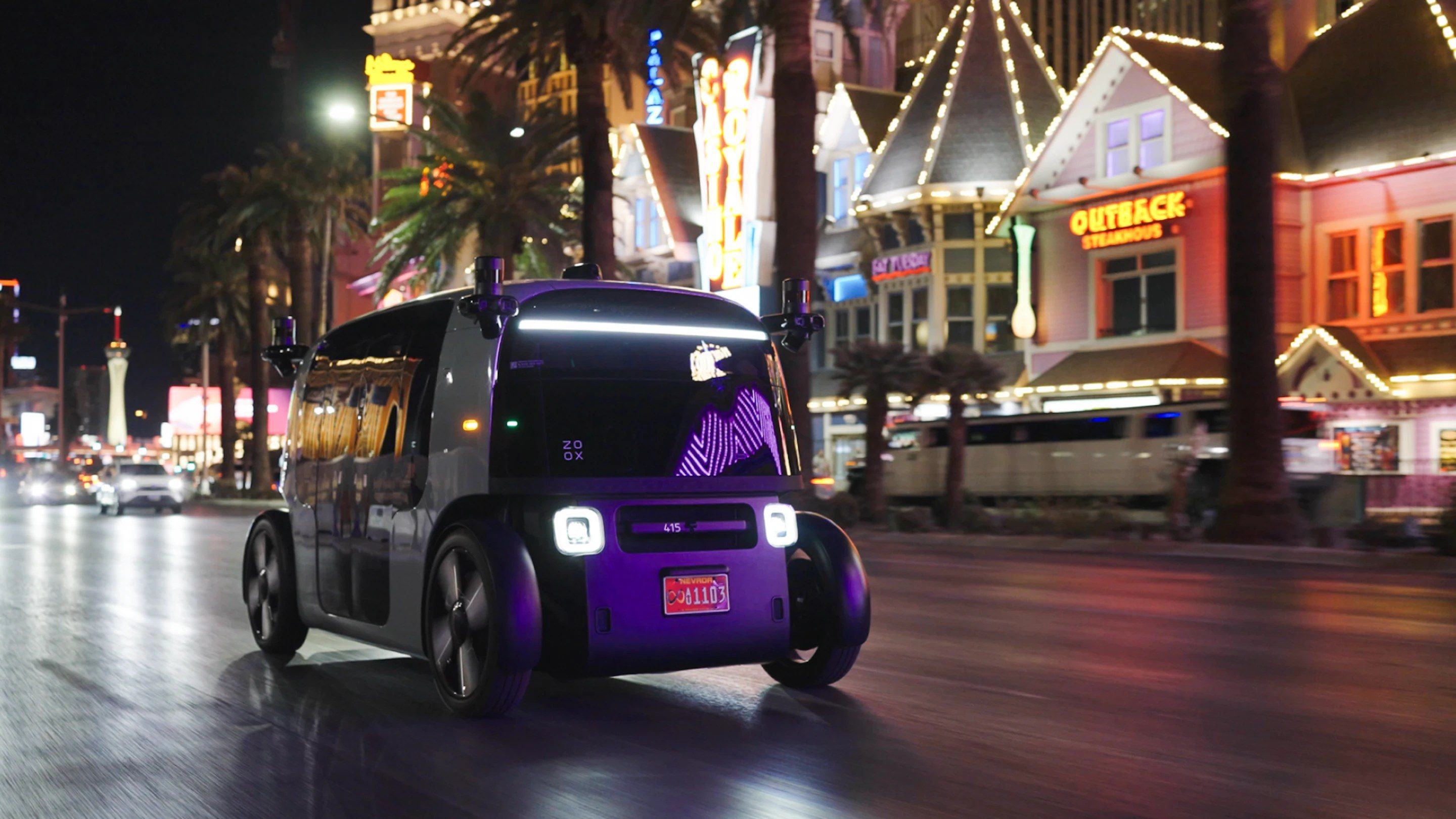
Amazon-backed Zoox also kicked off its robotaxi service offering free rides in a number of locations in Las Vegas. A San Francisco launch is expected before the end of the year, to be followed by Austin and Miami.
As for Tesla, which launched a pilot of its robotaxis in Austin in June, it’s now preparing to launch another one in Nevada. The testing period also includes a human safety monitor in every car. While the service in Austin has so far been offered by invite-only, recent reports suggest it will become “open access” sometime in September.