  1. Home
  2. Cars
  3. Emerging Tech
  4. News

Toyota unveils 2026 bZ: A smarter, longer-range electric SUV

Add as a preferred source on Google
toyota bz improved bz4x 2026 0002 1500x1112
Toyota bZ/Toyota USA Image used with permission by copyright holder

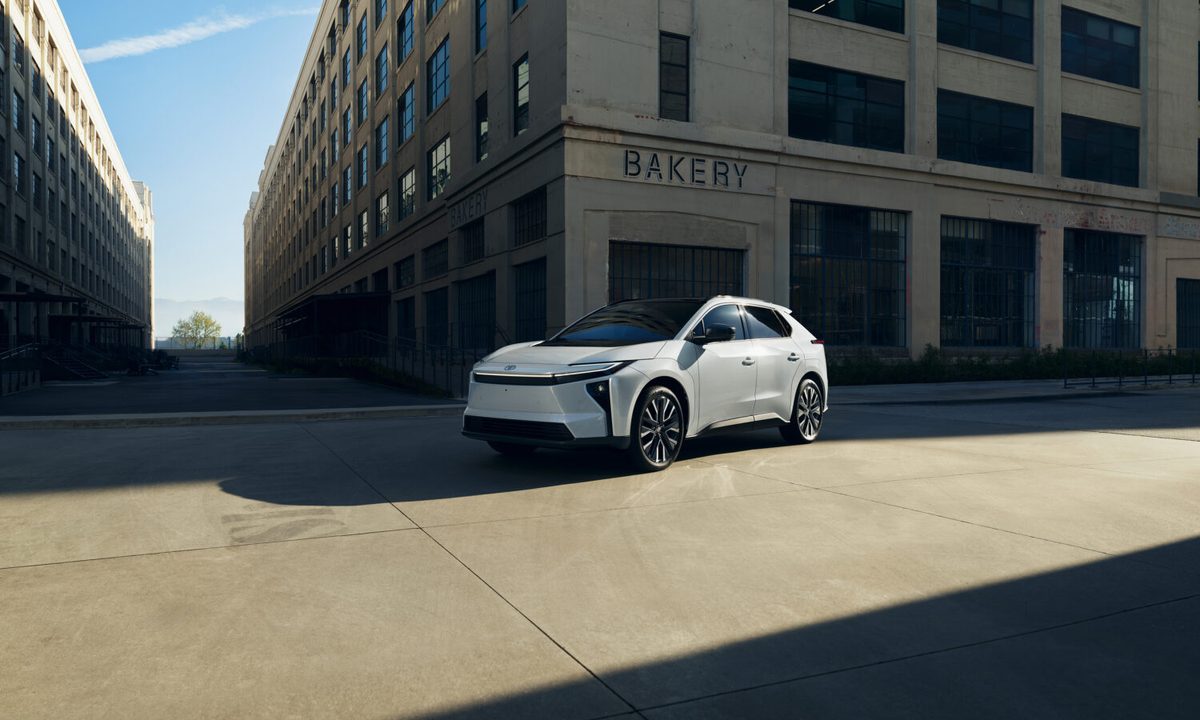
Toyota is back in the electric SUV game with the 2026 bZ, a major refresh of its bZ4X that finally delivers on two of the biggest demands from EV drivers: more range and faster charging.

The headline news is the improved driving range. Toyota now estimates up to 314 miles on a single charge for the front-wheel-drive model with the larger 74.7-kWh battery—about 60 miles more than the outgoing bZ4X. All-wheel-drive variants also get a boost, with up to 288 miles of range depending on trim.

Recommended Videos

Charging speeds haven’t increased in terms of raw kilowatts (still capped at 150 kW for DC fast charging), but Toyota has significantly improved how long peak speeds are sustained. With preconditioning enabled—especially helpful in colder weather—the new bZ can charge from 10% to 80% in about 30 minutes. Also new: Plug and Charge support for automatic payment at compatible stations and full adoption of the North American Charging Standard (NACS), meaning access to Tesla Superchargers will be standard by 2026.

Under the hood, or rather the floor, Toyota has swapped in higher-performance silicon carbide components to improve efficiency and power delivery. The AWD version now produces up to 338 horsepower and sprints from 0–60 mph in a brisk 4.9 seconds.

Toyota didn’t stop at just the powertrain. The exterior has been cleaned up, with body-colored wheel arches replacing the black cladding, and a sleeker front fascia. Inside, a larger 14-inch touchscreen now houses climate controls, giving the dash a more refined and less cluttered appearance. There’s also more usable storage thanks to a redesigned center console.

With the 2026 bZ, Toyota seems to be responding directly to critiques of the bZ4X. It’s faster, more efficient, and more driver-friendly—finally bringing Toyota’s EV efforts up to speed.

Nick Godt
Former Freelance reporter
Nick Godt has covered global business news on three continents for over 25 years.
Volvo’s parent just launched a $16,000 EV that looks shockingly luxurious
This $15,600 Geely EV has no business looking this premium
Geely Galaxy Starshine 7 Promo Image

Geely, the Chinese auto giant that also owns Volvo, has just unveiled a new RV that really does not look like it belongs anywhere near the budget end of the market.

The company has just kicked off the presales in China for the Galaxy Starshine 7, with its pricing starting at 112,900 yuan or about $16,550. For that money, buyers get a midsize electric sedan with a sleek fastback silhouette, full-width lighting, a richly trimmed cabin, and even an available dual-motor all-wheel-drive setup that can hit 0 to 100 km/h in 5.4 seconds.

Read more
Xiaomi makes dirt-cheap gadgets, but its CEO just ruled out cheap EVs
Xiaomi is staying out of the bargain EV fight
Xiaomi SU7 EV in blue

Xiaomi has been known for building some surprisingly cheap gadgets that still feel a little more premium than they should. But that philosophy apparently does not extend to electric cars.

According to ITHome, Xiaomi CEO Lei Jun said during a livestream for the company's SU7 endurance challenge on April 17 that Xiaomi will not make vehicles priced below 100,000 Yuan. That works out to be just under $15,000. Lei explained that if consumers expect an electric car to deliver strong intelligent features, software, and overall capability, the cost is harder to squeeze down that far.

Read more
The new electric Mercedes C-Class puts its giant screen front and center
Mercedes previews a richer electric C-Class interior with a dash-wide display, upgraded comfort features, and a stronger push to make the cabin feel like the main event
Car, Transportation, Vehicle

Mercedes-Benz is using the cabin to make its first electric C-Class feel like a bigger step than a normal model update. Ahead of the car’s April 20 world premiere, it has shown an interior centered on a sweeping digital display, extra space, and a more upscale finish that leans hard into comfort and theater.

The key visual is the new MBUX Hyperscreen, with Mercedes also offering a Superscreen setup. Both are designed to stretch the digital interface across the front of the car and blend the center console into the instrument panel, giving the dashboard a cleaner and more dramatic shape than the current C-Class.

Read more