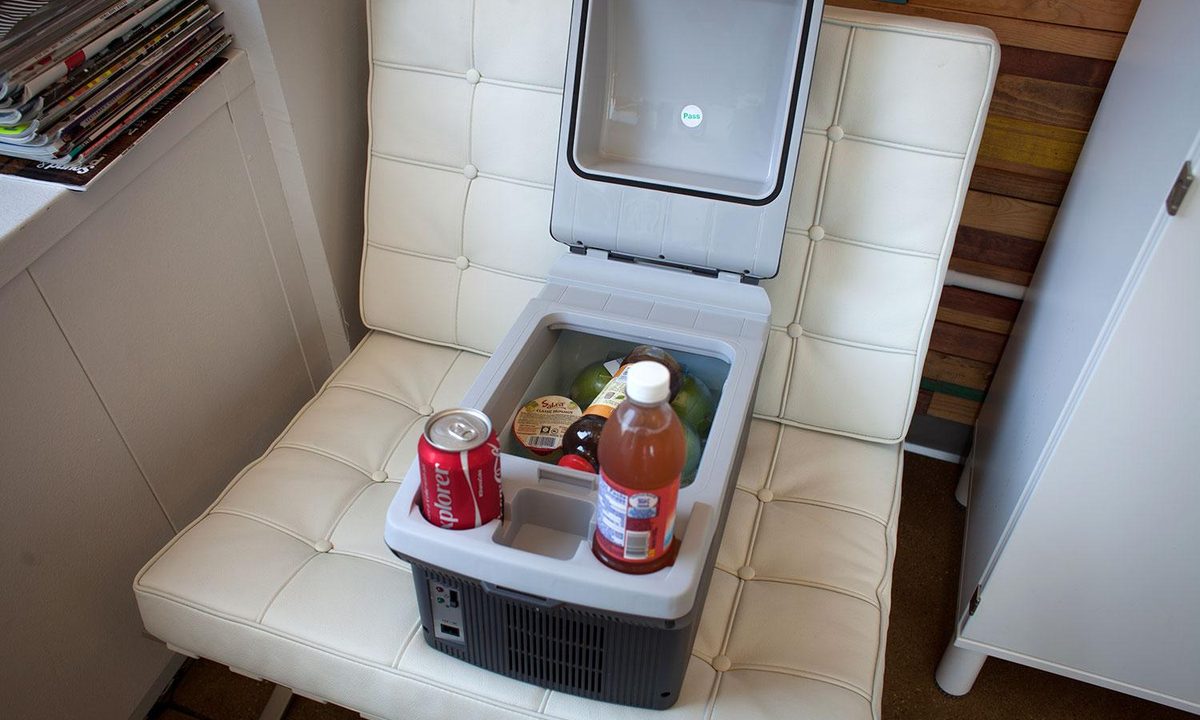
“A heating element offers a solid improvement on the traditional cooler, despite lack of overall oomph.”
- Lightweight compact design
- Large interior capacity
- Both cooling and heating features
- Largely dependent on exterior temperature
- Contents must first be hot/cold for efficient heating/cooling
“Why you can trust Digital Trends – We have a 20-year history of testing, reviewing, and rating products, services and apps to help you make a sound buying decision. Find out more about how we test and score products.“
Buy it now from:
Modern cars can drive and park themselves, alert you if there’s traffic up ahead, and even warm your tush to a different temperature than your passenger’s. Too bad they still can’t keep your iced tea icy.
A trip to the beach normally involves a heavy, ice-filled cooler that too often portends soggy contents when you arrive. On the other hand, keeping your take-out warm usually means cranking the heat and suffering through a sweaty ride home. We plugged in the Personal Fridge and Warmer from Wagan to see if the company’s solution left us hot or cold — or hopefully both.
Size and capacity
The Wagan Fridge/Warmer we reviewed had a 14-liter capacity, but the company offers an array of sizes from 6 liters up to 24 liters. Fourteen liters is a good size, however: It’s shaped like a printer or perhaps a small treasure chest, weighs in at a meager 8 pounds, and is easy to transport even at full capacity. At 18.5 inches long and 10.6 inches wide, the Wagan Personal Fridge/Warmer fits nicely in the middle seat or cargo area of most passenger cars and SUVs.
On the exterior the unit is constructed of durable plastic that’s easy to clean and includes two cup-holders on the top. The front has controls to change from off to warming or cooling modes, as well as a front fan vent to dispel heat. The fan emits some noise, but it wasn’t loud enough to be distracting.

The system comes with a 9-foot cord to plug the Wagan into any 12-volt car system. The cord stores inside a compartment on the top of the unit for transportation. Wagan also includes a strap to attach to the front and back of the unit for easy transportation.
The Wagan 14 Liter Personal Fridge/Warmer found itself at home in the middle of the rear seat in my 2012 Lincoln MKZ Hybrid. The cord was well within reach of the 12V power socket in my center console. Even packed to the brim with tuna salads and RC Cola (that’s how I roll) the unit was still light and slick enough to move around quite a bit while turning and braking. The strap — which is clearly meant to carry the fridge/warmer — can be used to fasten it down to a car seat or armrest and avoid having your lunch strewn across the backseat.
Plug it in
Once plugged in, Wagan needs you to start your car before turning on the device’s the warming or cooling functions. It ran without the car on in my tests, but the Wagan seemed to cool and heat faster and the fan ran better with the additional power from a running car. And as with any cooler, you’re better off making sure your contents are already somewhat warm or cold. The Wagan literature states that if the “surrounding temperature to the unit is too high, it will not cool as effectively.” The same is likely true for trying to heat items in the cold weather — but during the middle of the summer in Los Angeles, I was hard pressed to find a scenario for testing this.


The device is advertised as having a cooling range of 36°F (20°C) below ambient temperature and heating range up to 140°F (60°C). I found that cold drinks or food stowed away in the fridge would get down to a nice frigid level in about 30 minutes of driving. But trying to cool a few drinks that had been sitting in the hot car interior for a few hours was hopeless; the ambient temperature was simply too high for the device to function effectively.
Wagan recommends turning the device off and waiting 30 minutes prior to switching between heating and cooling. Heating worked very well in the hot weather (go figure), and take-out food stayed piping hot on the 15-minute drive home from a local Chinese restaurant. Interior vehicle temperature and the temperature of the contents placed inside the Wagan unit were the two biggest factors in performance. So you’ll need to find another way to cool your hot bowl of soup on the way home.
Conclusion
The DT Accessory Pack
Up your game and the get the most out of your gear with the following extras, hand-picked by our editors:
Asobu Perma-Frost Water ($18)
Bentgo Ice Lunch Chillers ($8)
EasyLunchboxes Lunch Box ($14)
The traditional ice cooler hasn’t yet been replaced, but the Wagan Personal Fridge certainly improves upon the idea. This device helps ensure your items are the same temperature when you take them out of the cooler as they were when you started your trip. It’s far less efficient at drastically changing the overall temperature of your food or beverages from one end of the spectrum to the next, but that’s rarely something we demand on trips.
For families who want to transport their fresh lunch and cold drinks from the house fridge to the beach, and hope to drink reasonably cold sodas, the Personal Fridge may be worth the $120. But if you’re expecting to store a mini-fridge in your car for consistently cold beverages on the road — in any climate — you’re best off investing in ice.
Highs
- Lightweight compact design
- Large interior capacity
- Both cooling and heating features
Lows
- Largely dependent on exterior temperature
- Contents must first be hot/cold for efficient heating/cooling