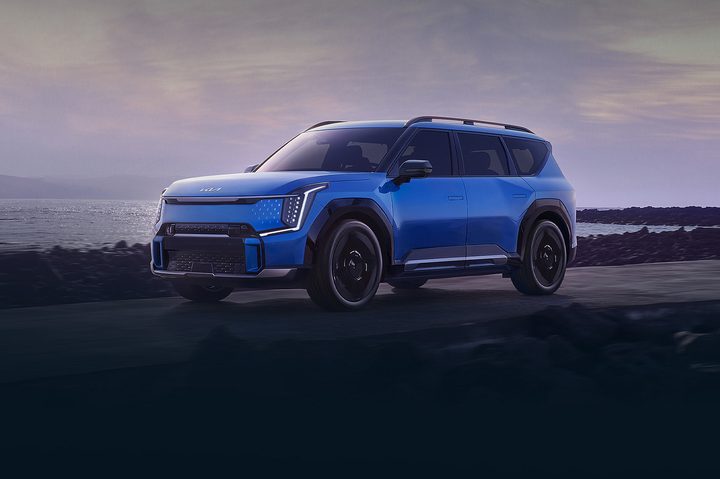
A big, new electric SUV is on the way — and it’s called the Kia EV9. Kia’s highly anticipated line topper will be big and spacious, offer a solid electric range, and will come at a lower price than much of the competition. Yeah, it’s kind of a big deal.
But while we think it might be one of the most compelling electric EVs to hit U.S. shores, would-be buyers may want to wait a little longer, if they can. Sure, the EV9 will likely be the best choice for most people who want a large SUV in its price range — but in a year or so, it’ll make an even more compelling case for itself. Here’s why.
Follow the money
The EV9 is set to be one of the cheapest electric SUVs out there, when you ignore imposters like the Mustang Mach-E and EV6, which are marketed as SUVs, but are really more crossovers. The base price of the EV9 has been announced to be $54,900. When you consider the fact that every single other large three-row electric SUV (like the Rivian R1S) starts at more than $80,000, the EV9 suddenly looks … cheap.
But it will soon get even cheaper.
The first generation of Kia EV9s will be built in South Korea and imported into the U.S., meaning that it will not qualify for the federal EV tax credit of up to $7,500. Kia, however, has said that it will start building the car at its new Georgia assembly plant starting in 2024.
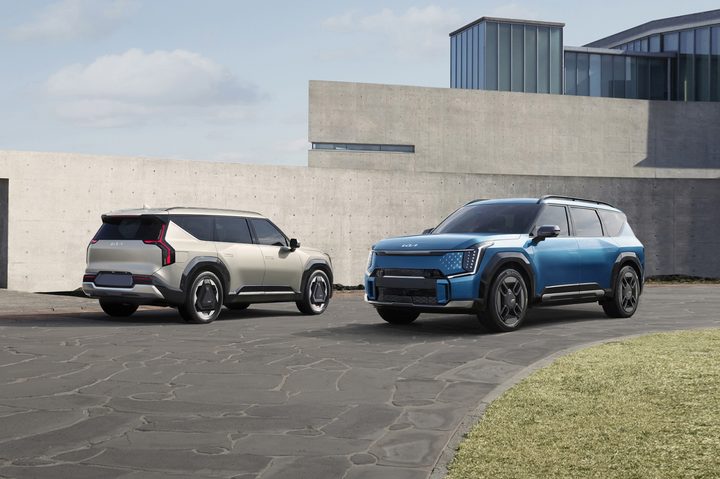
To be clear, there’s no guarantee that it’ll qualify for the tax credit when it does enter production in the U.S. Kia will have to make sure that production meets a series of requirements. And though the base model of the EV9 will likely qualify, you’ll need to stack on options carefully. SUVs over $80,000 do not qualify for the credit, and we’re pretty certain that you’ll be able to configure an EV9 over that amount. Full pricing for all models of the EV9 in the U.S. has yet to be revealed.
On top of the tax credit, when the car does start production in Georgia, it’s entirely possible that it’ll start at a lower price too, considering the fact that Kia won’t have to import it into the U.S. That, however, is purely speculation, and the other side of that argument is that Kia may want to keep prices higher to recoup the cost of building the plant in the first place.
To be safe, let’s say that it remains the same starting price — but does qualify for the tax credit. After you file your tax return and actually get the credit, the total will come out to $47,400. That’s very affordable for a car like this.
Convenience is king
There’s another reason you may want to hold off a little. The first-generation Kia EV9 in the U.S. will come equipped with a CCS charging port. This is the charging connector that’s found at charging stations like Electrify America right now. But the charging world in the U.S. is changing – and quick. Tesla has opened up its NACS charging connector, and Hyundai (Kia’s parent company) recently announced it will begin shipping cars with the connector in the fourth quarter of 2024. Kia’s timeline may not precisely match, but it’s sure to be close behind. Many charging networks have also announced that they’ll start the (very) long transition away from CCS and toward NACS.
That means that if you buy an EV9 now, slowly but surely, it’ll be harder to find a charging connector for your car.
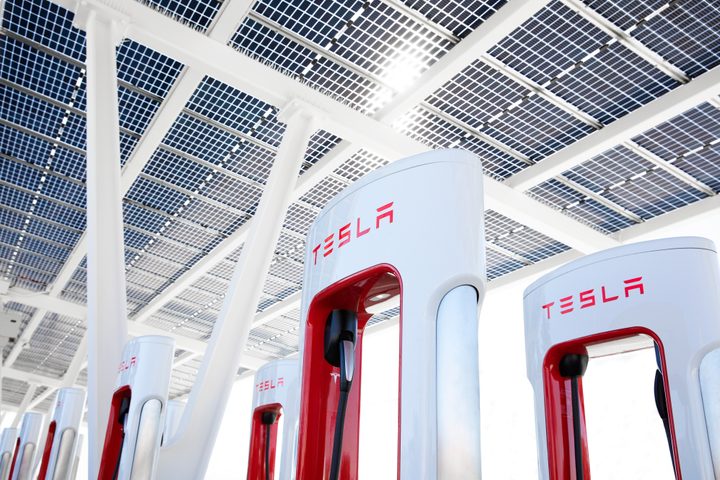
To be clear, it won’t be that much harder. All you’ll need to do is keep a CCS to NACS adapter in your car to be able to charge at NACS stations. Currently, Tesla has opened up only a handful of stations to non-Tesla cars, and Hyundai and Kia cars don’t seem to be able to connect to Tesla’s newer V3 stations. More stations are expected to become available between May and June of 2024.
But if you don’t want to have to use an adapter at charging stations in a few years (an admittedly small issue), it may be worth waiting until the end of 2024.
Competition is coming
What if the Kia EV9 isn’t the only affordable large-format electric SUV out there? That question will likely be answered pretty soon.
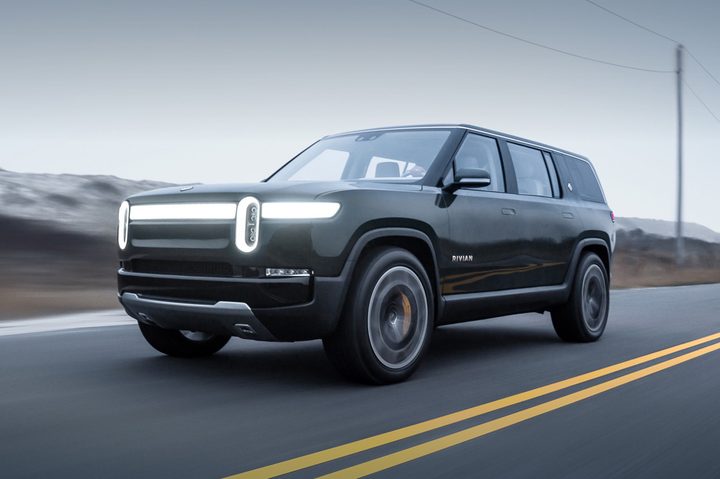
The fact is that big cars are king in North America, and manufacturers are racing to launch their own. This will breathe new life into the competition of electric SUVs.
Hyundai itself is launching a model soon, called the Ioniq 7. This will likely take a little longer to ship to the U.S., considering the fact that only a concept has been announced so far. On top of that, however, we’re expecting a cheaper Rivian SUV, more electric options from Ford, and so on. You may have to wait a few years, but you’ll soon have many more electric SUV options.
So who should buy now?
None of this necessarily means that buying now is a terrible idea. After all, when the Kia EV9 does launch in the U.S., it will be one of the few options out there. If you need a new large car, want something all-electric, can afford to spend the cash, and don’t mind the fact that you may need to use an adapter at charging stations in a few years, then the Kia EV9 is still worth buying. That’s especially true if you really can’t wait to buy. If you need a car, you need a car.
But, if you can wait, and any of the issues outlined here are issues for you, it’s absolutely worth waiting a little. The 2025 Kia EV9 will likely be even more compelling than the 2024 model.