  1. Home
  2. Cars
  3. Trash
  4. News

Waymo unveils design for a robotaxi without a steering wheel

Add as a preferred source on Google

Waymo has unveiled a design for a self-driving robotaxi without a steering wheel and pedals.

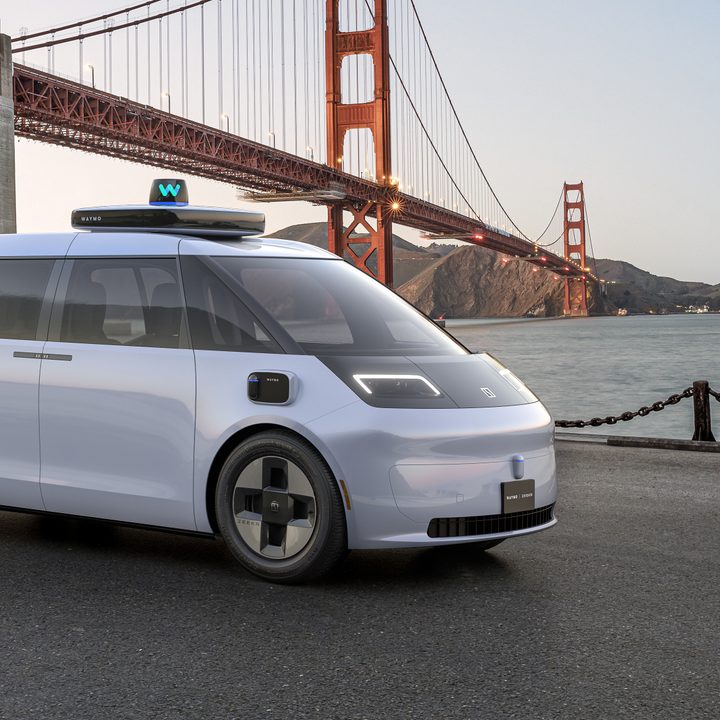
The autonomous-vehicle specialist announced this week that it’s partnered with Chinese automaker Geely to build a Zeekr minivan filled entirely with passenger seats.
The upcoming Zeekr vehicle from Waymo.
Built by Geely, Waymo’s autonomous Zeekr minivan will have no steering wheel or pedals. Waymo

The all-electric, self-driving minivan will be designed and developed in Gothenburg, Sweden, before being added to Waymo’s fleet “in the years to come,” according to the U.S. company.

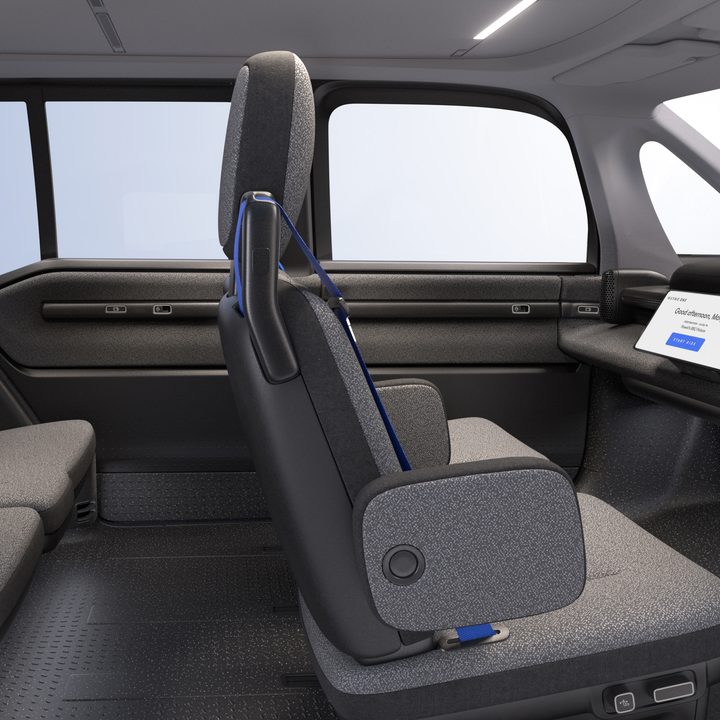
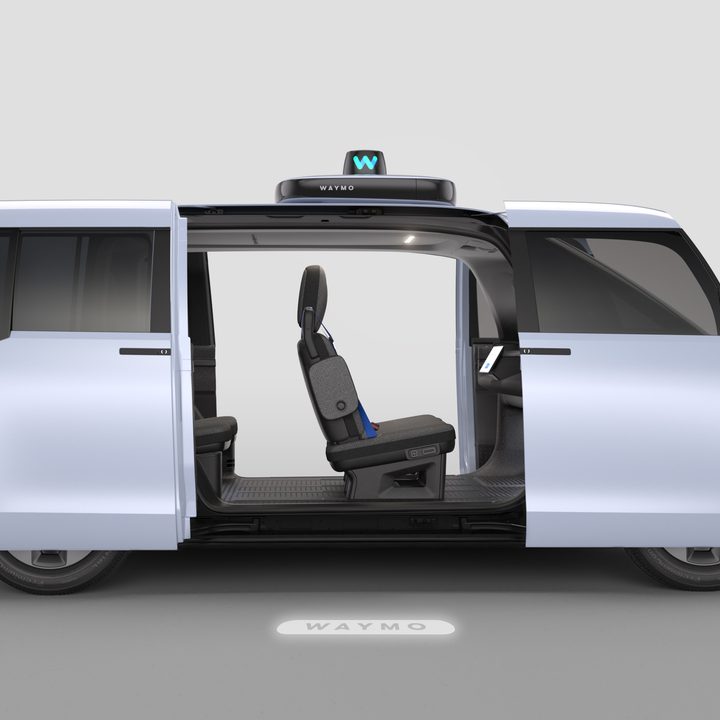
Announcing the Zeekr in a blog post, Waymo said the new vehicle features “a flat floor for more accessible entry, easy ingress and egress thanks to a B-pillarless design, low step-in height, generous head and legroom, and fully adjustable seats.”
The upcoming Zeekr vehicle from Geely.
Waymo

It added that riders traveling inside the Zeekr will experience “an interior without steering wheel and pedals, and with plenty of headroom, legroom and reclining seats, screens and chargers within arm’s reach, and an easy to configure and comfortable vehicle cabin.”

While Waymo appears keen to add the Zeekr minivan to its current fleet of autonomous vehicles that are undergoing testing on public roads, safety regulators will have the final say on whether to give the plan the green light, hence no firm timeline from Waymo.
The upcoming Zeekr vehicle from Waymo.
Waymo

Born out of Google’s autonomous-vehicle program that began in 2009, Alphabet-owned Waymo has been testing a range of vehicles fitted with advanced software and a slew of sensors and cameras that ensure safe travel.

In 2018, Waymo’s increasingly capable technology enabled the launch of an exploratory ridesharing service for a select group of local residents in Phoenix, Arizona, as part of its Waymo One initiative aimed at introducing its product to more members of the public.

Autonomous vehicles in Waymo’s current fleet all contain a steering wheel, and sometimes a safety driver, too, who’s ready to intervene should any anomalies be detected during a journey.

But in a move eagerly anticipated by many, Waymo has finally signaled a clear desire to introduce autonomous vehicles with a design worthy of the name.

Keen followers of Waymo’s story will know that the Zeekr won’t be its first autonomous vehicle to come without a steering wheel. Seven years ago it unveiled the Firefly, a tiny pod-like car designed to test early iterations of its autonomous software. The Firefly was retired in 2017 when Waymo decided to use larger, more conventional vehicles that traveled faster than the pod’s top speed of 25 mph.

Trevor Mogg
Contributing Editor
Not so many moons ago, Trevor moved from one tea-loving island nation that drives on the left (Britain) to another (Japan)…
After acing range and charging, Chinese EV brands flaunt three-wheel driving on SUVs
BYD, Aito, and Li Auto are making active suspension the new battleground after range and charging
Machine, Wheel, Transportation

Chinese EV brands have spent years trying to win on range, charging speed, and screens. Now the fight is getting stranger, with premium SUVs showing off three-wheel driving as the next battleground.

According to Car News China, BYD’s Denza B8 Flash Charge Edition, Huawei-backed Aito M9, and Li Auto L9 are all being used to show how active suspension can lift a wheel while the vehicle keeps moving at low speed. The demos look theatrical, and the intended uses are practical, including tire changes, off-road recovery, and crossing uneven ground without getting stuck.

Read more
This Android Auto update is trying to change how you drive and use your car
Road, Electronics, Credit Card

I use Android Auto every day, and at this point, it feels like a quiet co-driver sitting on my dashboard. That’s exactly why this upcoming refresh from Google actually matters. It is not just a visual tweak; it is a proper overhaul of how Android Auto should feel inside a modern car. The biggest change is the design. Google is bringing its Material 3 Expressive design language from phones into cars. That means Android Auto is getting a more modern, more fluid look with expressive fonts, smoother animations, and even support for wallpapers. This should really make the entire interface feel less rigid and more alive while you are driving.

Widgets finally make Android Auto feel useful at a glance

Read more
BYD’s latest EV costs just over $10,000, goes 250 miles, and packs a LiDAR, too
LiDAR, 250 miles, and a five-figure price tag: the 2026 Seagull is proof that the future of affordable EVs is already here, just not in the West.
BYD 2026 Seagull.

BYD has officially unveiled the 2026 Seagull, sold internationally as the Dolphin Mini or Dolphin Surf, and the numbers deserve your attention. 

The updated compact EV’s price starts from 69,900 yuan, which is around $10,300, in China, and tops out at 85,900 yuan, which is around $12,600. It debuted at the 2026 Beijing Auto Show before going on sale this week (via CarsNewsChina). 

Read more