
At its Peek Performance event, Apple just introduced the Studio Display monitor, an alternative to the company’s high-end Pro Display XDR monitor with a much lower price. Yet we’ve noticed four key problems with the Studio Display that make us a little apprehensive. Let’s see where Apple seems to have slipped up.
No HDR support

Apple positioned the Studio Display as a pro-level monitor, complete with a 5K resolution, “sensational” camera and audio setup, and the same nano-texture coating as the Pro Display XDR. Yet it lacks a key feature from its larger, more expensive sibling: Proper HDR support.
The Pro Display XDR earns its XDR moniker from its combination of brightness, contrast, and color. You get a massive 1,600 nits of peak brightness, a 1,000,000:1 contrast ratio, and 10-bit color depth. It’s one of the best monitors on the market, no question.

The Studio Display? It can’t hold a candle to the Pro Display XDR. Its brightness level of 600 nits is nowhere near that offered on the Pro Display XDR, while Apple doesn’t even mention the contrast ratio in its flashy Peek Performance video or on its website. That doesn’t exactly fill us with confidence.
Sure, the $1,599 Studio Display is much cheaper than the $4,999 Pro Display XDR. But aiming it at demanding studio users without these key HDR features is a real letdown.
ProMotion is absent
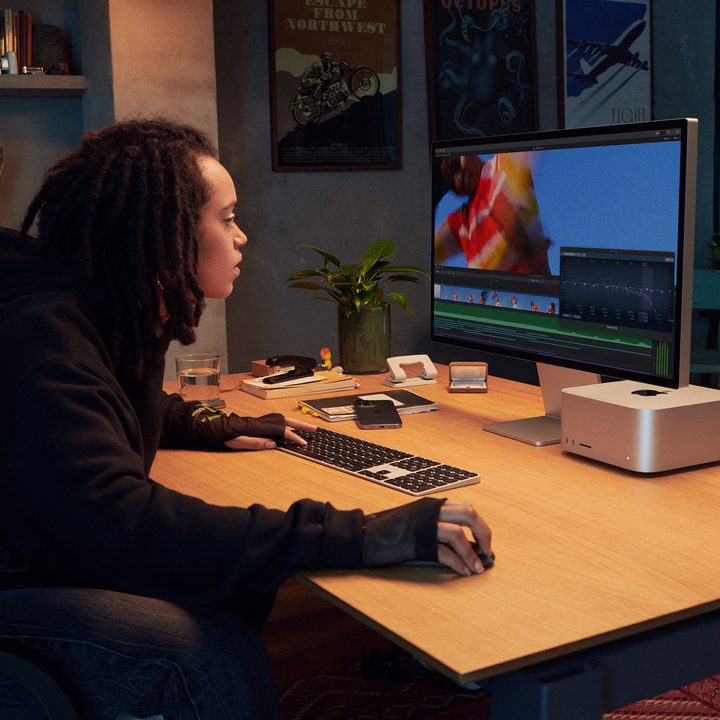
The lack of HDR is not the only display disappointment. The Studio Display also lacks Apple’s excellent ProMotion tech, which we love on the new MacBook Pro.
If you’re unfamiliar with it, ProMotion dynamically adjusts the display’s refresh rate up to 120Hz. If you’re looking at a static image, the refresh rate drops, usually to save battery life in iPhones and MacBooks. If you’re playing a game, the refresh rate increases. It’s so subtle you never notice the transition, but it makes a world of difference.
Yet Apple chose to omit it from the Studio Display. That’s a shame, because it’s exactly the type of tech that content creators and creative types can benefit from — in other words, exactly the sorts of people the Studio Display is aimed at.
Where is Face ID?
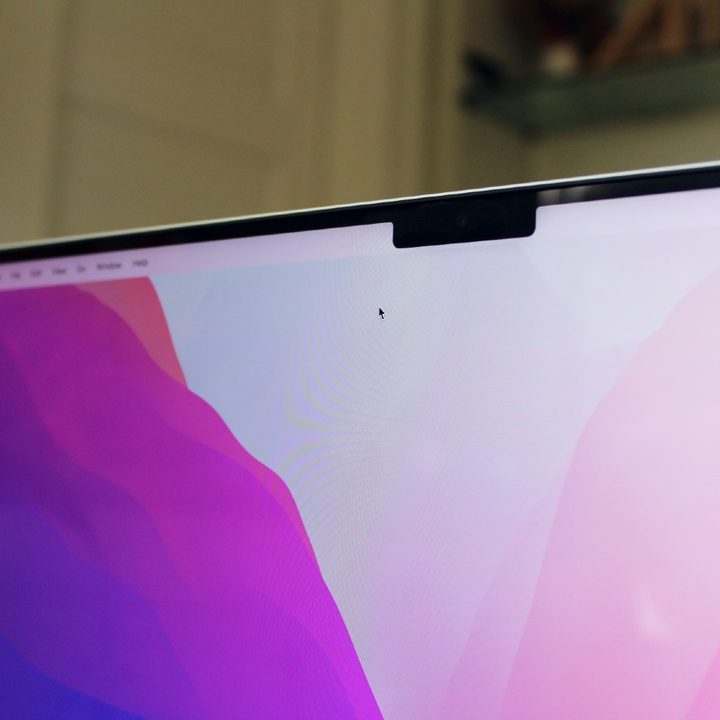
While the display itself leaves something to be desired, what lies just above the screen could also have been so much better. Sure, Apple included Center Stage, and it’s a great addition. But it decided against including Face ID inside that same front-facing camera array.
We’ve been calling on Apple to equip a Mac with Face ID for years (and made the case for Face ID on the Mac earlier in 2022), but still, the call goes unheeded. What’s worse, the Studio Display is the perfect device for Face ID.
For one thing, it comes with an Apple A13 Bionic chip, which enables Center Stage, Spatial Audio, and other features. The A13 Bionic already includes the Secure Enclave that protects your facial data when using Face ID — it’s in the iPhone 11, after all — so all Apple had to do was add some extra sensors to the top of the Studio Display.
Yet here we are, still waiting for the first Face ID-enabled Mac. We really don’t want to wait much longer.
A penny-pinching stand
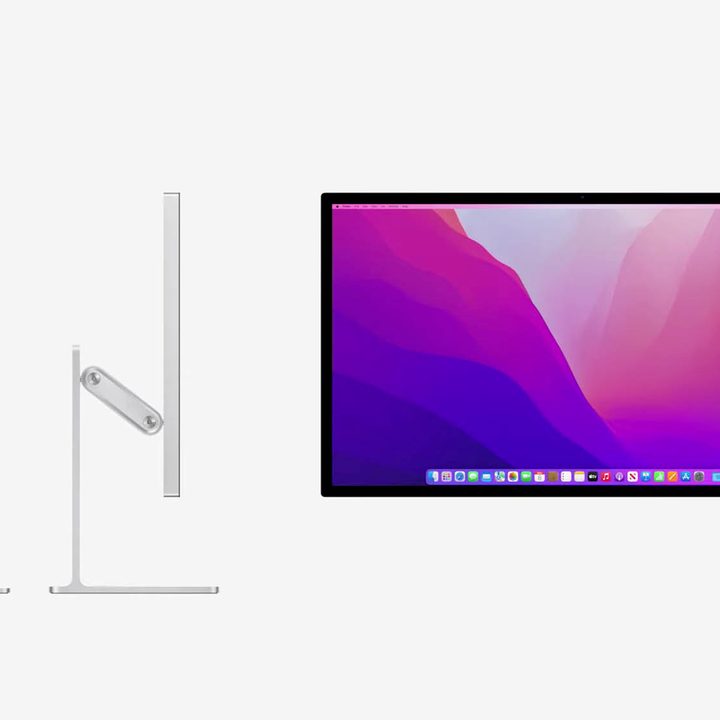
If you’ve ever used an iMac, you’ll be familiar with a seemingly small gripe: You can’t adjust its height. This seems to be Apple’s Achilles’ heel because the Studio Display also lacks this most basic of ergonomic adjustments.
Well, that’s not quite true. The entry-level Studio Display lacks it, but you can add it in with an upgraded stand. The problem? That functionality — and that functionality alone — costs a frankly ridiculous $400.
It certainly won’t help remove Apple’s reputation for overcharging, especially after it demanded $999 for the Pro Display XDR’ stand and $699 for the Mac Pro’s freaking wheels. If anything, it shows Apple just hasn’t learned the lessons of these previous meme-worthy bouts of avarice. Our advice? Get the basic stand and prop it up on a pile of books. You’ll be $400 better off.


