  1. Home
  2. Computing
  3. Legacy Archives

Apple Buys Low-Power Chipmaker P.A. Semi

Add as a preferred source on Google
Apple Buys Low-Power Chipmaker P.A. Semi
Image used with permission by copyright holder

Although neither company has yet to publicly confirm the the story, Forbes is reporting that Apple has entered into an agreement to buy low-power chipmaker P.A. Semi. Sources close to P.A. Semi put the deal in the $250 to $300 million range, although no exact figure has emerged.

P.A. Semi was founded in 2003 by Dan Dobberpul, who was a key designer on DEC’s Alpha and StrongARM processors, and the company currently develops high-performance, low-power chips for the telecommunications and wireless market.

Recommended Videos

No current Apple products use P.A. Semi processors, but industry speculation has Apple looking to PA Semi for chips to power future iPhones, as well as possible future iPods and other consumer electronics devices. Apple currently sources the iPhone processor from South Korea’s Samsung, based on designs licensed from the UK’s ARM. (Apple was one of the companies that formed ARM back in 1990, and, indeed, sales of ARM Holdings stock were about the only thing that kept the company’s head above the red line during some difficult financial quarters in the mid-1990s.) However, companies building ARM-based processors are increasingly looking to enter the ultra-mobile PC and mobile Internet device (MID) markets—and consuming more power as they grow. Purchasing P.A. Semi may give Apple a low-power option for its devices that is neither Intel’s Atom processor, or an overburdened ARM processor from another supplier.

Apple had been working with P.A. Semi a few years ago when the company was mulling its transition away from PowerPC processors. At the time, P.A. Semi was offering a 64-bit microprocessor that consumed a maximum of 13 watts at 2 GHz. Apple eventually went with Intel processors for its desktop and portable computers.

Geoff Duncan
Former Contributor
Geoff Duncan writes, programs, edits, plays music, and delights in making software misbehave. He's probably the only member…
Asus puts the outrageous dual-screen ROG Zephyrus Duo on the shelf at an eye-watering price
The ROG Zephyrus Duo isn't just a gaming laptop with two screens, it's the company’s most serious attempt yet to add more ambition to a "portable workstation" that’s capable of gaming.
Asus dual-screen laptop America.

Asus has decided that one screen isn’t simply enough on a laptop. The ROG Zephyrus Duo has returned to the market with two screens, with pre-orders now live for what the company is calling the world’s first 16-inch dual-screen gaming laptop.

Starting at $4,499.99 and going up to $5,499.99 for the top configuration, this is undoubtedly a machine that is built for people measuring their laptops with ambition, either for innovation or the desire to game on a dual-screen laptop. 

Read more
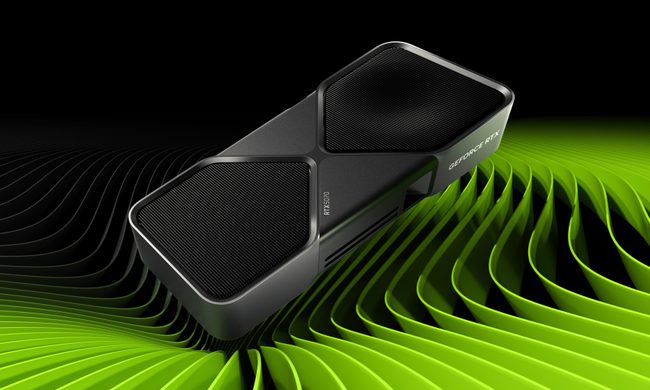
Nvidia quietly released a new version of GeForce RTX 5070 GPU inside a driver blog post
And more VRAM doesn't always mean more performance, and the pricing could make the RTX 5070 Ti a better value depending on final configurations.
The RTX 5070 in a graphic.

Nvidia just announced a new GPU variant in the weirdest way possible: buried it in a game driver update blog post. 

Alongside the release of its Game Ready 596.36 WHQL driver, the company also confirmed the launch of a 12GB GDDR7 configuration of the GeForce RTX 5070 laptop GPU. 

Read more
Dell 34 Plus USB-C monitor review: An ultrawide beauty with surprises you’ll love
Dell's curved monitor blends practical minimalism with a few neat perks of its own.
Dell 34 Plus USB-C Monitor - S3425DW

Quick Take

I’ve grown deeply suspicious of any monitor that calls itself a “productivity display.” They're not bad, per se. The real reason is that most of them are boring, and sluggish at adopting modern standards. Chunky black bezels, boring grey-on-grey corporate look that screams “I belong in a 2014 cubicle,” and a dull desk presence. I’ve never wanted any of them sitting on my workstation. So when I unboxed the Dell 34 Plus USB-C monitor (SKU is S3425DW), I was bracing for the usual disappointment. It was in for a surprise.

Read more