
Apple has discontinued the iMac Pro. After introducing it in 2017 as “the fastest, most powerful Mac ever made,” the company has apparently decided it has become redundant. It is a spectacular fall in a mere four years for the machine that signaled Apple’s renewed commitment to the Mac.
So, what went wrong? Did it lose its way among the upcoming Apple Silicon Macs or was it doomed from the beginning? As we pour one out for the iMac Pro, let’s consider what its failure tells us about the future of professional-level Macs.
The flaw at the heart of the design
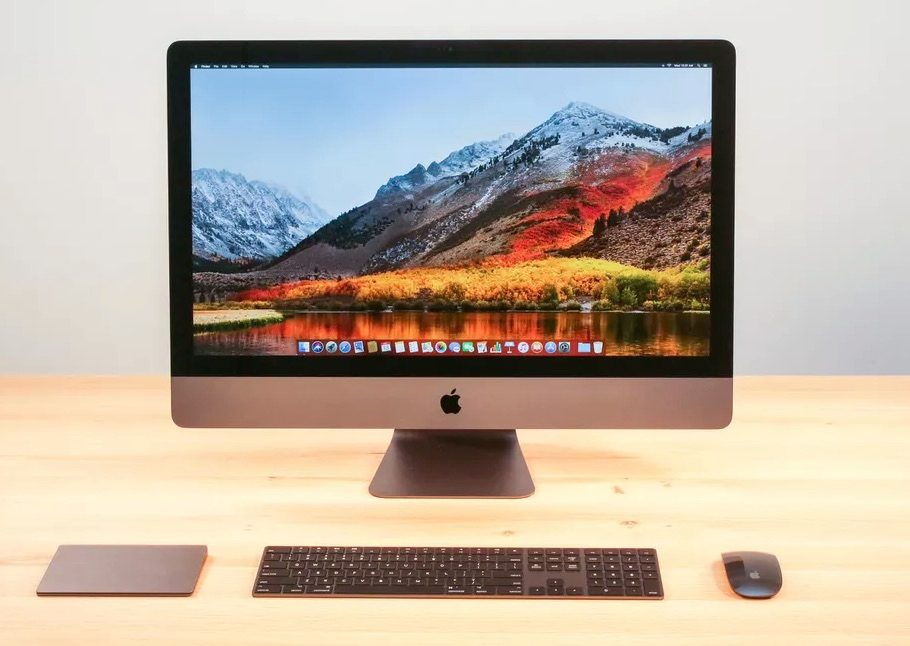
Despite all the onstage bluster at its unveiling, Apple likely knew it was taking a gamble with the iMac Pro.
Although it was housed in an iMac’s shell, the iMac Pro was a step above its all-in-one sibling. It married sleek design with workstation-class components, including Intel Xeon processors and AMD Radeon Pro Vega graphics chips. It was the first pro-level desktop Mac to come with an integrated display (a 5K one at that), as all previous efforts — from the Power Mac to the trash can-like Mac Pro from 2013 — consisted solely of the computer itself.
As impressive as it sounded on paper, the iMac Pro was fatally compromised by its design. For the creative professionals it was designed for, unhampered performance and upgradability are both must-have features. These areas were exactly where the iMac Pro tripped up, which was a repeat of the maligned 2013 Mac Pro.
Although Apple boasted of a top-notch cooling system in the iMac Pro, there would always be limitations to stuffing all those components behind the screen in a slim, all-in-one form factor. There just wasn’t the thermal headroom needed to fully utilize the components inside. But the lack of modularity was an even bigger issue.
It was wrong for its core audience (creative professionals) because it was not upgradable, leaving customers stuck with the same components even as their workloads got more demanding. Replacing an expensive computer every few years just isn’t tenable — at least not compared to the flexibility of a traditional desktop tower. Hence, the eventual return of that design with the 2019 Mac Pro. In the end, the iMac Pro was just a stopgap until we got to the Mac Pro — and it has lived in the shadow of the former ever since.
The shadow of the Mac Pro

Even before the iMac Pro came out, rumors abounded that Apple was revamping the Mac Pro into a machine that combined power with modularity — something Apple itself confirmed before the iMac Pro launch. You would be able to swap out any of its components for whatever you wanted, giving you a perpetually upgradable machin, the likes of which Apple had never made. Or so said the industry gossip.
In the end, the Mac Pro was never quite as modular as some of the more fervent dreamers had hoped, but all the talk inevitably cast a shadow over the decidedly non-upgradable iMac Pro, most likely stifling interest in it.
With the Mac Pro in the offering, convincing creative pros to opt for something with none of the upgradability and that would likely quickly be surpassed by the Mac Pro was a tough sell. After all, the shape of the iMac — its scooped back and razor-thin wedges — heavily limits how much power you can put inside it because it is exceedingly difficult to keep cool. A desktop machine with a focus on modularity like the Mac Pro would necessarily come with a more spacious chassis, thus increasing its cooling capacity and the power of its internal components.
And that is what we got. Apple had designed a range of attachable upgrades, from the Afterburner card to the MPX Modules, that would be impossible in the iMac Pro. For the first time in well over a decade, creative professionals had an Apple option that made more sense from a future-proofing perspective.
As soon as the Mac Pro launched in 2019, it was clear there was no real place for the iMac Pro. Even worse, rumors about Apple Silicon would create a whole new problem for the all-in-one.
The Apple Silicon dilemma
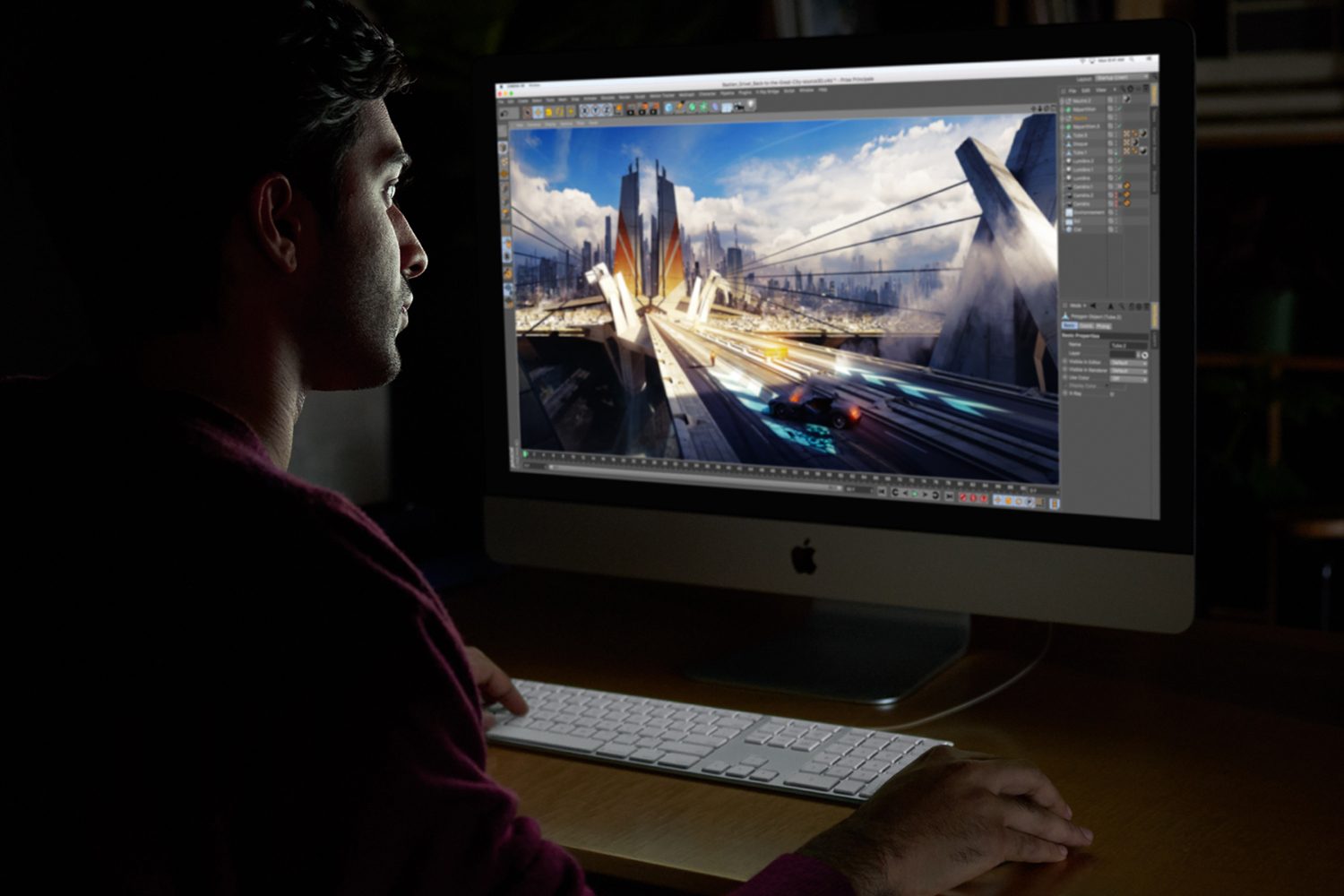
Before diving into the topic of Apple Silicon, I should first address just what came in the original iMac Pro. What did “the most powerful Mac ever made” get you in terms of processor performance? Well, it originally shipped with 8-core and 10-core Intel Xeon chips, plus an 18-core version that John Ternus, Apple’s vice president of hardware engineering, described as “really nutty.”
At the time, this seemed like a huge step for the Mac, which many people felt had been increasingly sidelined by the all-powerful iPhone. Yet, Apple knew that even the 18-core behemoth would soon be superseded by its own Apple Silicon chips — chips that the company was already working on in secret.
The difference between Intel’s and Apple’s chips has already been starkly outlined, especially in the Mac Mini, the most performant Apple Silicon computer yet. But the difference is even more glaring when the iMac Pro is thrown into the mix.
Today, you can buy a 10-core iMac Pro that scores 1117 in Geekbench 5’s single-core test and 9386 in its multi-core test. When we reviewed the Mac Mini, it scored 1744 and 7659, respectively. Trading blows, right? Although Geekbench results are far from a comprehensive look at performance, they demonstrate the pickle that these high-end Intel-based Macs have been in.
That’s especially true when you consider the price. The 10-core iMac Pro will set you back $4,999. The Mac Mini? $699.
Of course, Apple knew it couldn’t just snap its fingers and give the iMac Pro an Apple Silicon chip — it had to wait for Pro apps to be ready. It also had to develop its own professional-level performance. But the longer Apple waited, the more irrelevant the iMac Pro’s Intel chips would become compared to the M1 and its successors.
Something much better is coming

The death of the iMac Pro, though, is far from the death of high-performance Macs. If you need a professional workstation to get your work done, the outlook is still very favorable in Apple land. The Mac Pro, while expensive, is laser-focused on creative pros and still offers a great option if power is what you need. There are rumors that Apple is planning to update it with more powerful Intel chips, potentially this year, so it is not going the same way as the iMac Pro.
At the same time, Apple is reportedly working on a half-size Mac Pro that would come with an Apple Silicon chip and look like an enlarged Mac Mini.
Apple could easily stuff a high-powered M-series chip into the iMac Pro, but the Apple Silicon chips make it unnecessary. The regular iMac is due for a major revamp as early as this spring, when it is widely expected to come with Apple Silicon chips of its own. This could bring a big performance boost and put the standard iMac near the level of the current iMac Pro.
Yet at the same time, top-end Apple Silicon chips of the type that would be perfect for the iMac Pro are likely not ready yet. With the entry-level iMac offering what was previously considered pro-level performance on the one hand, and a lack of truly iMac Pro-class Apple Silicon chips on the horizon, there is no place for the iMac Pro to go.
So yes, the future of the iMac Pro is grim. The good news? For creative pros, the death of the iMac Pro doesn’t mean Apple is getting cold feet about catering to this audience. It’s merely making room for all the exciting Macs ahead.


