  1. Home
  2. Computing
  3. News

Apple’s new M3 Pro might come with an unexpected downgrade

Add as a preferred source on Google

There’s no doubt that the introduction of new M3 chips was the main event at Apple’s Scary Fast show. Yet, it looks possible that the M3 Pro might actually have a significant downgrade compared to the Apple silicon chips that came before it.

Apple explained that the M3 Pro chip in the 16-inch and 14-inch MacBook Pro is up to 40% faster than the M1 Pro in the 16-inch MacBook Pro. Yet, as spotted by MacRumors, there are some situations where the latest chips actually look a little worse than their predecessors — at least on paper.
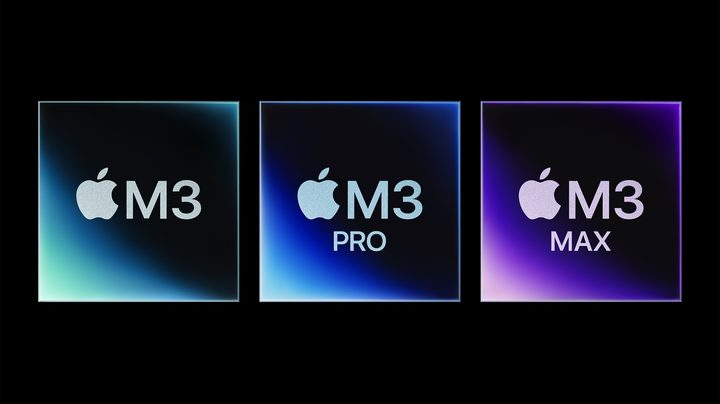
Logos for Apple's M3 chips.
Apple

For instance, the M3 Pro comes with 150GBps memory bandwidth, which is 25% less than the 200GBps found in the M1 Pro and M2 Pro. One variant of the M3 Max, meanwhile, has 300GBps memory bandwidth, while its M2 Max equivalent comes with 400GBps.

Recommended Videos

Because Apple spent most of the show comparing the M3 chips to the M1 series, it’s hard to actually know how much of a difference in performance there will be over the M2 chips. It’s possible that Apple’s comparisons mask a lower performance leap over the M2 than had been hoped, or that improvements elsewhere make these downgrades less relevant.

Waiting for real-world testing
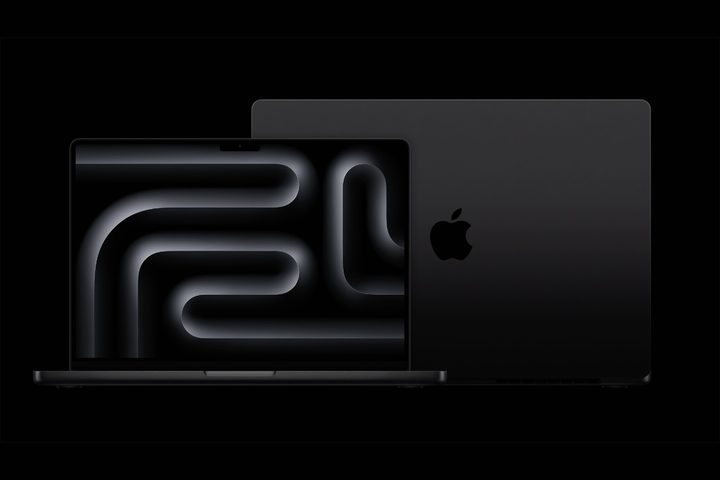
Two MacBooks Pro renders side by side against a black backround.
Apple

The reduced memory bandwidth is not the only way the M3 Pro has changed versus what came before. Apple has tweaked the core configurations so that the M3 Pro with a 12-core CPU comes with six performance cores and six efficiency cores. The 12-core M2 Pro, though, has eight performance cores and four efficiency cores.

There’s another thing to consider. Every M3-series chip comes with a 16-core Neural Engine, just like the A17 Pro in the latest iPhones. However, while the A17 Pro’s Neural Engine can perform 35 TOPS (trillion operations per second), the M3 maxes out at 18 TOPS.

It’s unclear if any of this will actually be a problem. It could be that the performance cores in the M3 Pro are more powerful than those in the M2 Pro, so Apple doesn’t need to pack as many of them in. Similarly, Macs might be able to hand off more processing to the GPU than an iPhone can, meaning the Neural Engine doesn’t require as much power.

Ultimately, we won’t know for sure until we get the latest MacBook Pro models in for testing. Until then, we’ll have to keep our fingers crossed that the gains from the M3 chip are as impressive as Apple has claimed.

Alex Blake
Alex Blake has been working with Digital Trends since 2019, where he spends most of his time writing about Mac computers…
Qualcomm reveals flagship XR processor and new framework for AI glasses
Accessories, Glasses, Sunglasses

Qualcomm is laying the groundwork for the next generation of XR hardware with two announcements that target both the brains inside future headsets and the tools needed to build them.

At Augmented World Expo 2026, the company unveiled Snapdragon Reality Elite, its new flagship XR platform designed for devices running Android XR and other mixed-reality experiences. Qualcomm also introduced Snapdragon START, a new initiative aimed at helping brands bring AI-powered smart glasses and wearable devices to market more quickly.

Read more
Google releases Android 17 for Pixel phones
Gemini Intelligence arrives later this year for selected devices.
Electronics, Mobile Phone, Phone

After months of rumors and two keynote events in May 2026, Google has finally released Android 17, the stable version. It's rolling out to eligible Pixel devices today, including models in the Pixel 6 lineup, all the way to the latest Pixel 10 series.

The stable build contains plenty of features showcased at The Android Show and Google I/O, but if you were hoping to get your hands on Gemini Intelligence, that will ship later this summer to “select advanced devices.” With that out of the way, here’s what Android 17 offers at launch.

Read more
Microsoft’s new Surface Pro 12 is its best 2-in-1 PC yet, but also its most expensive
The best Surface Pro yet comes with the highest asking price yet.
Computer, Electronics, Laptop

Microsoft just announced what is arguably its best Surface Pro yet. The 12th Edition of the Surface Pro 13-inch brings meaningful upgrades across the board, including both CPU and GPU performance, and, at the same time, the battery life. 

All the upgrades surely make it an easy recommendation for someone looking for a capable 2-in-1 laptop that functions as a tablet when required, but allows you to attach a keyboard for getting things done even faster. There is just one thing standing in the way, and that involves your wallet. 

Read more