
Apple’s Mac engineers have been on a tear in recent years, with high-performance chips appearing at every turn. That’s led to a lot of fevered speculation about what Apple is planning next, with rumors running wild about a secretive chip codenamed “Hidra” that’s reportedly in the works.
If you’ve been wondering what to expect from the Hidra chip and want to make sense of all the rumors, you’re in the right place. We’ve combed the internet for all the latest ideas and collated them here, so you can find out everything you need to know about Apple’s upcoming superpowered chip. Read on to get in the know.
Which Macs will get the Hidra chip?
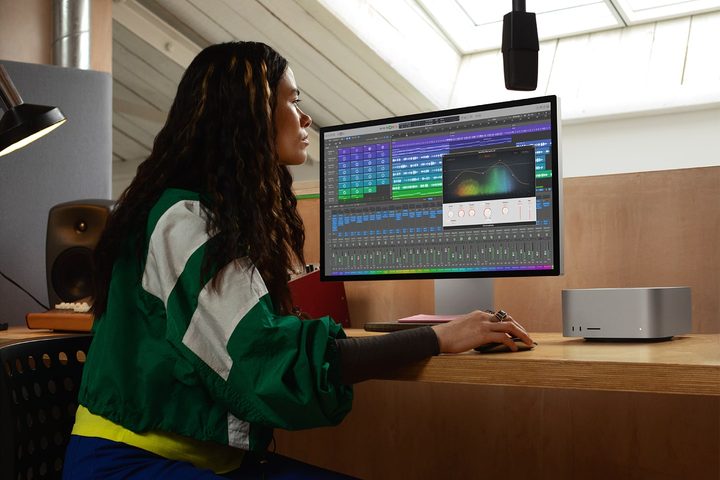
Right now, the consensus seems to be that Hidra is an “Ultra” tier chip — that is, the M4 Ultra. If that’s the case, it’ll come to the Mac Studio and the Mac Pro, but don’t expect to see it anywhere else.
In previous years, these incredibly powerful Macs were the only ones to get Ultra chips — devices like the MacBook Pro and Mac mini simply don’t need that much power (and probably wouldn’t be able to cool it anyway). Given that trend, that’s almost certainly going to be the case again with the M4 Ultra.
Price and release date

All rumors seem to point to a launch date in 2025 for the Hidra chip. The exact date, though, depends on which Mac we’re talking about.
The Mac Studio, for instance, is expected to come first. Bloomberg reporter Mark Gurman has variously claimed that the new Mac Studio will launch between March and June 2025, in the first half of 2025, and “around the middle of the year.” Either way, it looks like it’ll be the next Mac to launch after the MacBook Air, which is coming in the spring, Gurman says.
The Mac Pro, on the other hand, should come in the second half of the year. Gurman believes that it’s “on track to be ready before the MacBook Pro, though the timing isn’t yet clear.” The MacBook Pro is often updated in the fall, so expect the Mac Pro before that.
Another possible release date for the Hidra chip is Apple’s Worldwide Developers Conference (WWDC) in June 2025. After all, Apple updated both the Mac Studio and the Mac Pro at WWDC in 2023, so it’s happened before. What’s more, WWDC is a developer event, so a big segment of both computers’ target audiences will be in attendance. Apple could perhaps tease the Hidra chip at WWDC and launch it in Macs later in the year.
Performance and features

Apple didn’t release an M3 Ultra chip, so when the M4 Ultra launches, it could be a major step up over the M2 Ultra that came before it. And although it’s still some way off, there are a few things we expect to see in terms of specs and performance.
According to Mark Gurman, the M4 Ultra will probably have up to a 32-core CPU and up to an 80-core GPU. For comparison, the current M2 Ultra has a 24-core CPU and can be configured to have up to a 76-core GPU.
Gurman adds that “Apple is considering allowing its highest-end Mac desktops to support as much as a half-terabyte of memory.” Outfitting the Mac Studio and Mac Pro with around 512GB of RAM would be a significant improvement over the current limit, which stands at 192GB. Yet it’s still far below the 1.5TB you could equip the Intel-based Mac Pro with.
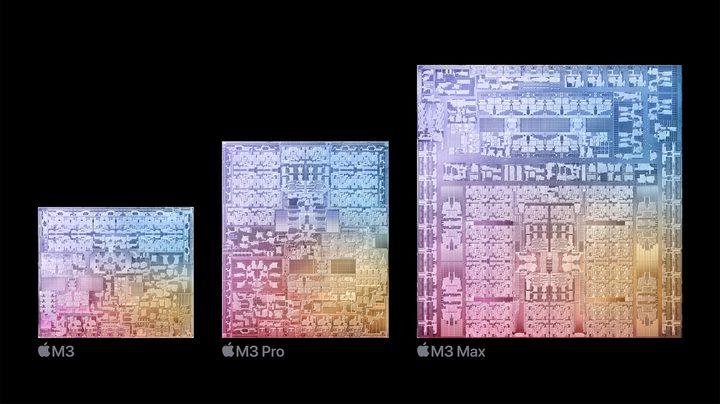
While we can’t know for sure what sort of performance those specs will translate into, news outlet AppleInsider has extrapolated some predicted M4 Ultra results based on Apple’s previous chips.
AppleInsider noted that the M1 Ultra and M2 Ultra offered roughly 45% better performance in Geekbench’s single-core tests compared to the M1 Max and M2 Max, respectively. If that was to repeat in the M4 generation, the M4 Ultra could score around 37,315 in Geekbench’s single-core benchmark, up from the M4 Max’s 25,735 score.
Similarly, Metal scores have increased by roughly 53% when comparing the top-spec Max and Ultra chips in past generations, leading AppleInsider to predict the M4 Ultra may score around 287,096 in Metal benchmarks. That’s up from the M4 Max’s 187,645 score.
Given that these are merely extrapolations, we should take them with a pinch of salt. But they don’t sound unreasonable based on previous results, and we know that Apple will want to show off significant performance increases to spur sales of its Mac Studio and Mac Pro computers.
What about the M4 Extreme?

There’s another thing to clear up: Apple’s much-rumored ‘Extreme’ chip. This has been talked about for a few years now, with whispers previously emerging that Apple could launch an M2 Extreme chip that would take its place as the ultimate Mac chip in terms of performance — and price.
That never came to pass, and we’ve heard a lot since then. Both Mark Gurman and news site The Information have claimed to have heard from sources inside Apple that the company has ceased work on the Extreme chip. Gurman explained that the chip was too complicated and expensive to manufacture, with the resulting Mac Pro likely to cost at least $10,000 (without any upgrades), making it far too niche to be worth Apple’s time.
Writing in April 2024, Gurman said that Apple has at least three M4 chip tiers on the go: the entry-level “Donan,” which is the M4; the mid-range “Brava,” which we know is the M4 Pro since Gurman said it would be in the Mac mini, which came to pass; and the high-end “Hidra,” which must be the M4 Ultra rather than the M4 Max because Gurman said it would be in the Mac Pro, which the Max chips are not.
If there was going to be an M4 Extreme, you would imagine that Gurman’s list would cover five different tiers to account for the M4, M4 Pro, M4 Max, M4 Ultra, and M4 Extreme. Considering how significant the Extreme chip would be were it to launch as part of the M4 generation, its absence from Gurman’s account is telling.
There’s another reason to be skeptical that the Hidra chip equates to the M4 Extreme, and it’s all about the timing. We’re only a couple months away from the Mac Studio being updated, yet there’s a complete dearth of rumors claiming that it will come with the M4 Extreme. The Mac Pro is a little further out, but the case remains the same there. Usually, big news like this leaks out well in advance, so the lack of convincing rumors suggests that the M4 Extreme isn’t arriving any time soon.
Typically, Apple takes its time with big new features and wants to make sure it’s the best rather than the first, so it’s usually a good idea to expect things later rather than sooner. That’s why we still haven’t seen an OLED MacBook Pro, for example, despite OLED tech having been in many of the best laptops for years. That doesn’t mean that Apple will never launch an Extreme chip, but it feels unlikely this year. We will almost certainly see the Hidra chip, however, in the form of the M4 Ultra.


