  1. Home
  2. Computing
  3. News

Apple pulled the most un-Apple move with a price drop on the Studio Display XDR

Add as a preferred source on Google
The Apple Pro Display XDR monitor on a desk.
Apple

Just weeks after launch, Apple has quietly done something it rarely does this quickly: it’s cut the price of its brand-new Studio Display XDR. And not by a token amount either. We’re looking at a solid $400 drop, depending on how you configure it. It was done subtly on the website that many users probably wouldn’t notice unless they were already eyeing the display. Classic Apple, but also… surprisingly self-aware.

This sits much better with the wallet gods (only for some)

At launch, the Studio Display XDR raised a few eyebrows for its pricing structure. Whether you picked the VESA mount adapter or the standard stand, you were paying the same $3,299. That didn’t sit well with many people, and it wasn’t hard to see why, either. The VESA mount is essentially a flat plate that lets you attach the display to a monitor arm or wall mount. Meanwhile, the alternative stand offers height and tilt adjustments, making it far more versatile for everyday use. Now, Apple seems to have acknowledged that mismatch. The VESA-mounted Studio Display XDR now starts at $2,899, down from $3,299. If you opt for the nano-texture version, the price drops from $3,599 to $3,199. 
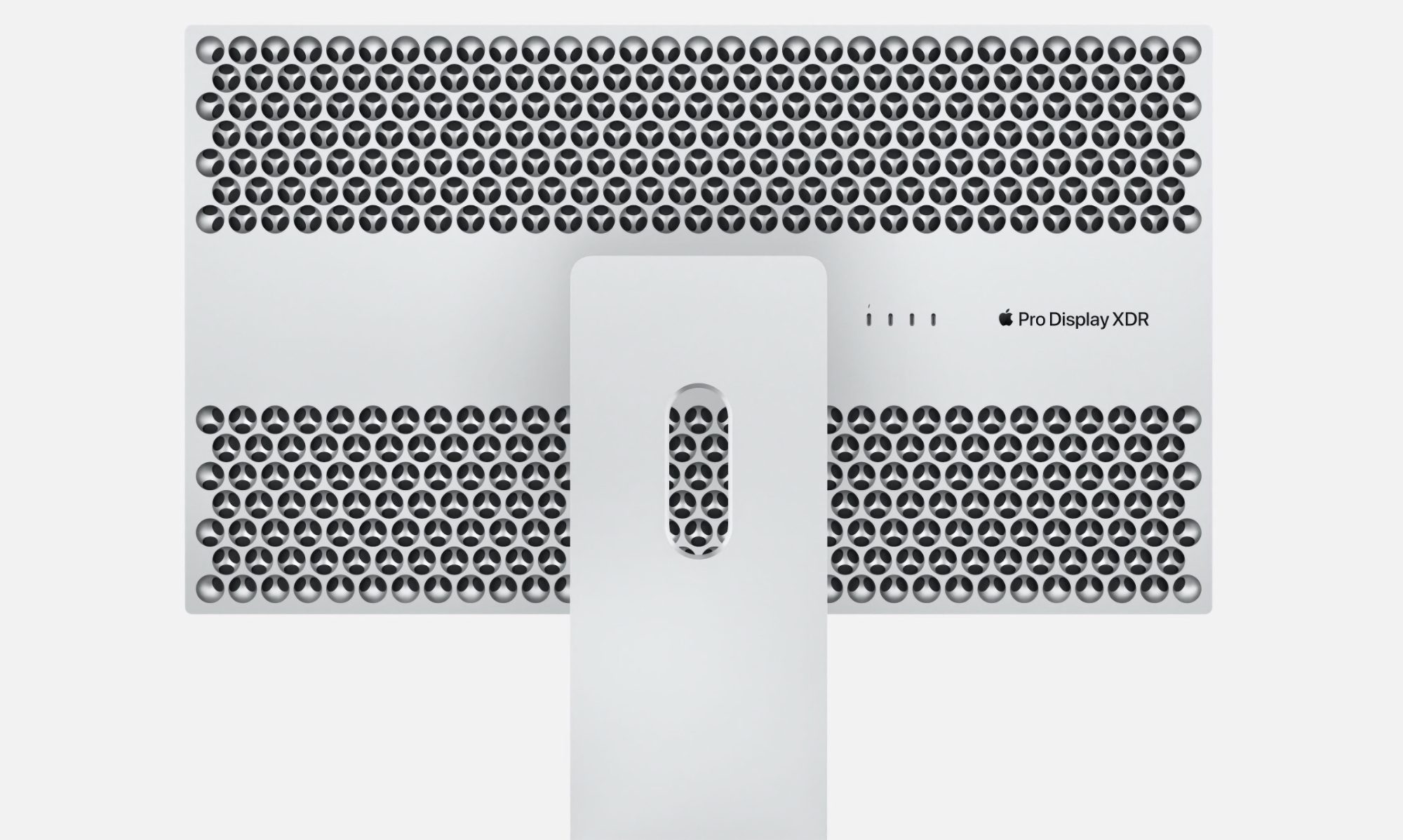
Alongside the price cut, Apple has also tweaked how you configure the display on its website. Instead of starting with the glass option, the process now begins with the stand choice. It subtly nudges buyers to think about how they’ll actually use the display first, before getting lost in finishes and upgrades. And perhaps more importantly, it avoids the confusion that came with identical pricing for very different hardware setups.

A rare moment of listening?

Apple doesn’t often course-correct this quickly, especially on pricing. So this move feels… different. The original pricing felt oddly inconsistent. And for a company that prides itself on precision and clarity, that disconnect stood out more than it should have.

This adjustment brings the Studio Display XDR closer in line with industry norms, where VESA mount options are typically cheaper than fully adjustable stands. Even Apple’s own Pro Display XDR followed that logic from day one. So while Apple hasn’t said a word publicly, the message is clear enough: they heard the criticism. For a company like Apple, where every detail is scrutinized, even a quiet $400 price drop can say a lot.

Shimul Sood
Shimul is a contributor at Digital Trends, with over five years of experience in the tech space.
Open-source GIMP reskin gives it a familiar Photoshop look without the hefty fee
This open-source Photoshop lookalike starts with good old GIMP
PhotoGIMP announced to make GIMP feel like Photoshop

Switching from Photoshop to GIMP might feel like a big move. Everything is suddenly in the wrong place, and the UI could feel alien. This is exactly where PhotoGIMP comes in. PhotoGIMP is a free, community-driven patch for GIMP 3.0 and newer that reshapes the open-source image editor into something much more familiar for Photoshop users.

It doesn’t turn GIMP into Adobe Photoshop. The patch just shakes up the layout, shortcuts, and app identity to match Photoshop, so that new users don't feel lost on day one.

Read more
Google I/O 2026: What to expect from Gemini, Android 17, and more
Google is about to put AI into everything again
Google I/O 2026

Google is preparing to kick off its annual developer conference, Google I/O 2026, and this year’s event is shaping up to be heavily focused on artificial intelligence, Android 17, and the future of Google’s ecosystem. The conference begins on May 19 at the Shoreline Amphitheatre in Mountain View, California, with CEO Sundar Pichai expected to lead the keynote presentation. The event will be livestreamed globally through Google’s official I/O website and YouTube channels.

While Google I/O has traditionally focused on developers, this year’s announcements are expected to directly affect everyday users across Android phones, Search, Chrome, Workspace, and smart devices.

Read more
Microsoft is retiring the Together Mode in Teams in favor of something cleaner and simpler
Teams is retiring Together Mode for layouts people may actually use
Computer, Electronics, Laptop

Microsoft Teams is retiring one of its more recognizable meeting features, and it might be for the best. The company announced that Together Mode is going away in Teams as Microsoft is shooting towards a simpler set of meeting layouts.

To recall, Together Mode was introduced during the pandemic-era video call boom, placing participants inside shared virtual environments such as auditoriums or classrooms. It was a cute idea at the time, but it never became the everyday meeting view for most people.

Read more