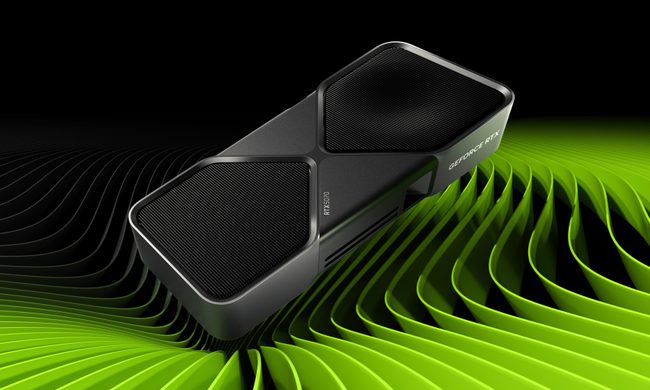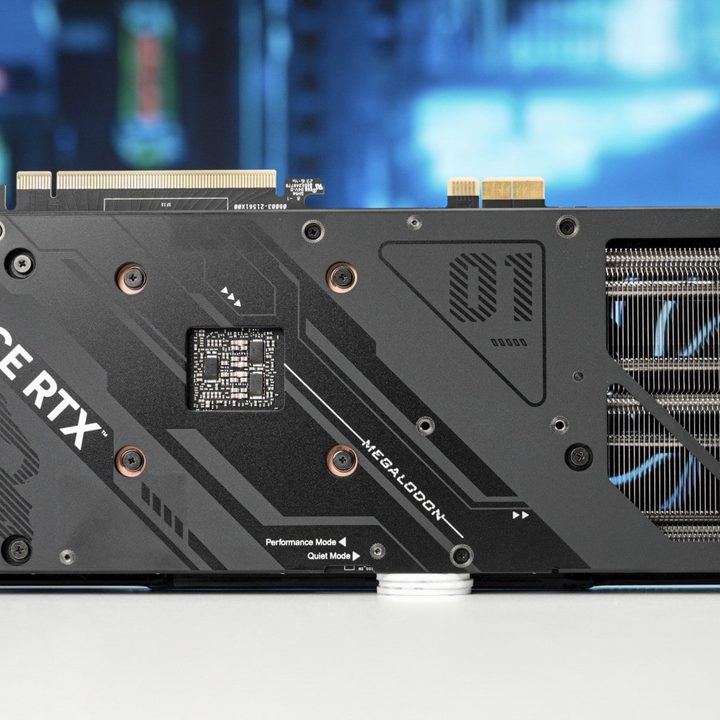
Asus gave us a glimpse into the future at Computex 2023 with its concept graphics card that is essentially cable-free. Instead of having any traditional 8-pin or 16-pin power connectors, the company showcased an RTX 4070 with a proprietary interface that draws power directly from the motherboard.
Reports now suggest that the company is pretty serious about the concept and is set to introduce products with the new interface later this year. According to WCCFTech, Asus has confirmed that it is working on mass-producing the “cable-free” GPU at Bilibili World 2023 exhibition in Shanghai.
Basically, the additional PCIe-like interface slots right into a compatible motherboard and has the power connectors at the rear. So while there are power cables involved, they do not feed directly into the GPU. What this means is that you still have to deal with the cable mess (since it is now at the back), but at least you don’t have to fret about melting 12VHPWR connectors.
One of the biggest things to consider here is that the cable-free GPU also needs a motherboard that supports this method of power delivery. Asus had also demoed a compatible Z790 TUF Gaming motherboard featuring all power connectors at the back. Notably, the proprietary connector on the motherboard for the GPU power delivery was labeled as “GC_HPWR”. While that name is temporary, it is crucial that Asus brings at least a handful of such motherboards if it is hoping to gain any success. It is also expected that these new GPUs and motherboards will be priced slightly higher compared to the existing ones.
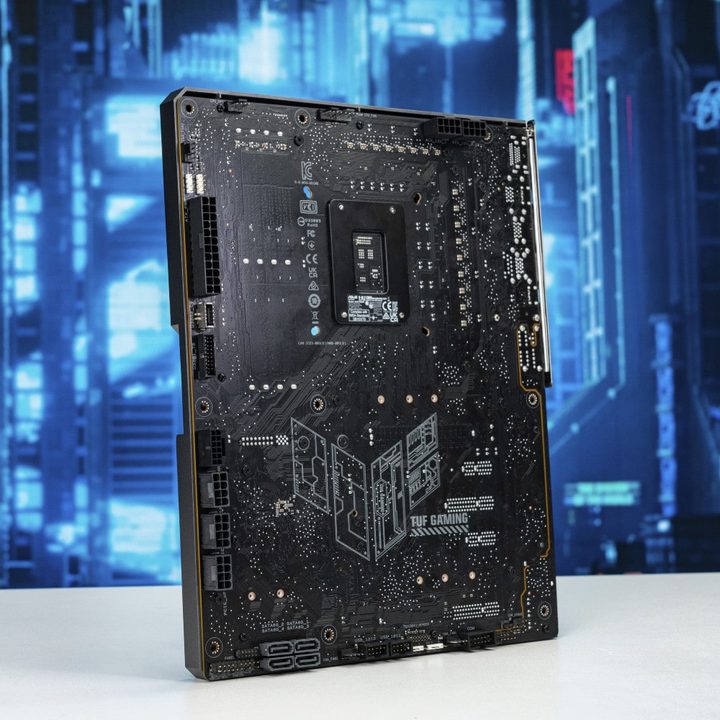
Having power connectors at the rear of the motherboard is not a new concept. If you remember, Gigabyte announced a refresh of Project Stealth in January that’s aimed at streamlining the process of cable management and improving airflow inside a PC case. The kit included a Z690 motherboard with connectors on the back, as well as an Nvidia RTX 3070 graphics card and a cabinet with the front panel featuring a mesh design. It is an ingenious way to keep (most) cables hidden away from sight, thus creating a system that is much cleaner and way more optimized for efficient airflow.
All of this sounds pretty interesting, and while I am all-in for clutter-free cable management, I already have certain scenarios in my head that can be potential issues. When it comes to Asus’ concept, not only are the power connectors for the GPU being moved to the back, but they are also supplying up to 600 watts of power through the motherboard via the new interface. That doesn’t sound very pleasant, at least to me. One could easily fry their entire motherboard due to a loose connection or a faulty PSU.
This takes me to the next problem at hand. Not all PC cases have the provision to accommodate motherboards with power connectors at the back, and I am not even talking about the m-ATX and mini-ITX categories. Even if your existing case does somehow offer the space, one has to be extra careful as you could bend or break these connectors with all the extra cabling that is usually stuffed at the back.
It is too early to say whether these concepts will be foolproof or not, but they are definitely intriguing and could be the next step of evolution in PC building.