
I had rock-bottom expectations for Atomic Heart. I was confident I’d enjoy the game, but I’ve been burned by too many half-baked, stuttering, buggy PC ports over the past several years to put too much faith in an ambitious AAA title with next-gen tech from a first-time developer. It sounds like a recipe for disaster.
But Atomic Heart not only defied my expectations, it blew them away. It’s not a perfect game, but it’s nearly a perfect tech demo. It comes packed with some of the best visuals you can find in a PC game right now, and despite that, it runs well on a variety of hardware.
Ditching RTX
Atomic Heart has been the centerpiece of Nvidia’s ray tracing showcases since the first RTX generation was introduced in 2018. That might surprise you considering Atomic Heart doesn’t support ray tracing on PC (or consoles, for that matter) at launch.
Developer Mundfish says ray tracing is coming after launch in a patch, but Atomic Heart is better off without it. It’s no secret that ray tracing tanks your performance, and with games like Portal RTX introducing features like RTX Direct Illumination, it can make even high-end systems look downright puny.
I’m sure Nvidia would like another showcase of ray tracing to sit alongside Cyberpunk 2077 and Warhammer 40,000 Darktide, but Atomic Heart doesn’t need ray tracing. It would, as ray tracing normally does, add additional depth to lighting and shadows, but the traditional rasterized techniques employed by the game already look fantastic and save a lot in the performance department.
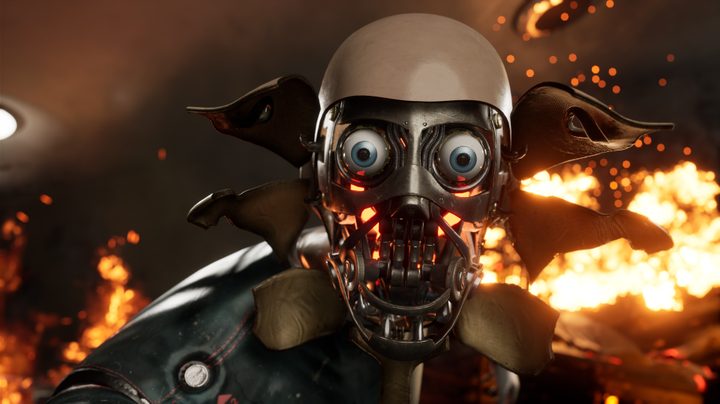
Although Atomic Heart ditched ray tracing, it didn’t ditch RTX altogether. Nvidia’s Deep Learning Super Sampling (DLSS) is available, including Frame Generation for RTX 40-series GPUs. Frame Generation works well in a game like Atomic Heart, too. It’s not nearly as fast as Marvel’s Spider-Man Miles Morales, so artifacts are few and far between, and they’re tough to spot.
It’s not just for Nvidia users, either. AMD’s FidelityFX Super Resolution (FSR) 2 is available in the game, so you can boost your performance regardless of if you have an RTX GPU or not.
There’s an elephant in the room here — Atomic Heart promised ray tracing for years through Nvidia showcases and pulled the plug just hours before the game went on sale. I think it was the right decision given how well the game runs and looks without ray tracing, but it’s still a bait-and-switch situation.
Stutter-free
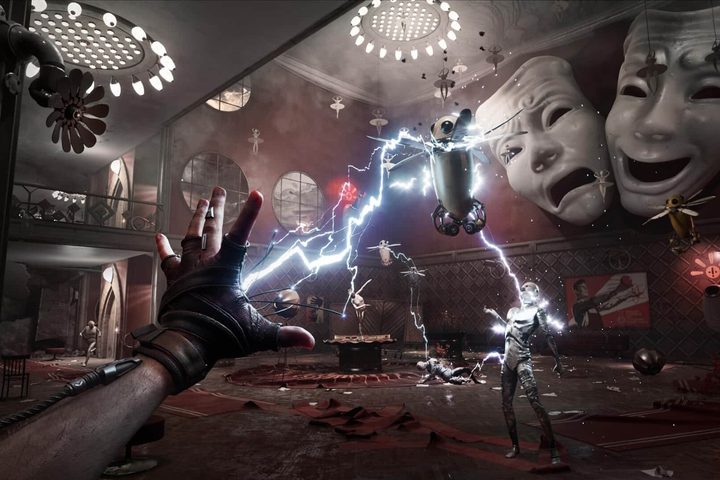
The most shocking part of Atomic Heart is that it doesn’t stutter on PC. I’ve grown accustomed to any new PC release showing some amount of hitching, but I’ve had zero problems with Atomic Heart. Even Returnal, which I would consider one of the more stable PC releases I’ve seen in the past few years, would occasionally hang for a couple seconds and straight-up crashed on me four times during testing. The bar is pretty low.
In 15 hours of Atomic Heart, I had one snag as I loaded into a new area, no crashes, and no steep frame rate drops. Even more impressive is that Atomic Heart uses Unreal Engine, which is a game engine notorious for stuttering in games like Gotham Knights.
A big reason why Atomic Heart is so smooth is that it compiles shaders on your graphics card prior to starting the game. Shader compilation is the main culprit of stuttering in games like Elden Ring, and Atomic Heart took a page out of Uncharted Legacy of Thieves’ book by loading the shaders onto your GPU so there aren’t any hang-ups while the game is running.
Because the game is so well-optimized, features like DLSS and FSR feel less like a crutch and more like the free performance boost they were intended as. You also have a lot more room to experiment with settings. Atomic Heart includes your standard suite of anti-aliasing and quality options, but it also has sliders for animation quality to take some load off of other components in your system.
Between precompiled shaders, dense graphics settings, and plentiful upscaling options, Atomic Heart runs better than any AAA PC games I’ve played in the last three years — and probably longer than that.
With the RTX 4090, I was between 120 frames per second (fps) and 165 fps where my Alienware 34 QD-OLED tops out with the highest Atomic preset. That was without DLSS as well. With it, I was locked at 165 fps. Similarly, I was above 100 fps with an RTX 3070 at 1440p and DLSS set to Balanced.
Great on Steam Deck

Atomic Heart hasn’t joined the list of Steam Deck Verified games, but it currently has a Playable status. I imagine it’ll get a green checkmark soon. The game runs excellently on Valve’s handheld.
At native resolution with the Low graphics preset, I was locked at 60 fps in linear areas, and between 50 and 60 fps in the semi-open sections. You can turn on FSR, either through the game or through the Steam Deck itself, but I never needed to. Plus, there’s a steep drop-off in image quality given how little resolution AMD’s upscaling algorithm has to play with.
Once again, precompiling the shaders is a big win here. It takes a bit longer on the Steam Deck than it does on a PC — about five minutes — but I highly recommend leaving your device to compile the shaders before running.
PC releases have been abysmal for several years, with the expectation being that you’ll need to endure at least minor stuttering and performance drops regardless of your hardware. Atomic Heart is refreshing because it just works — even without ray tracing available at launch.


