  1. Home
  2. Computing
  3. Mobile
  4. Legacy Archives

Dell’s sub-$100 Project Ophelia USB-sized PC ships this summer

Add as a preferred source on Google
Project_Ophelia_Dell
Image used with permission by copyright holder

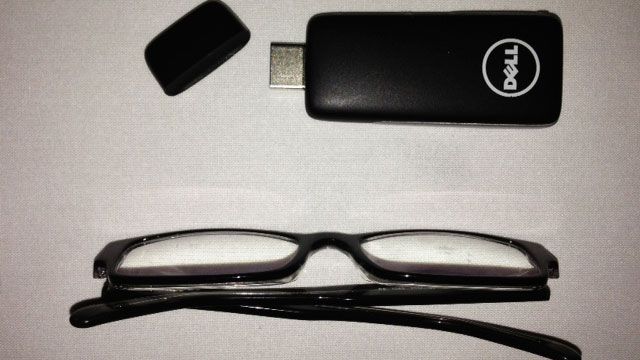
After making appearances at both CES and Mobile World Congress earlier this year, Dell’s ambitious mini-PC Project Ophelia will finally be ready for consumers later this summer.

Project Ophelia is a computer, about the size of a USB drive, that can plug into anything with a HDMI socket – a high-definition television, monitor, or projector – to turn it into a full-fledged computer. But don’t let its diminutive size fool you: it’s got as much computing power as a smartphone. After all, it’s powered by a 1.6GHz dual-core Cortex A9 processor, has 8GB of internal storage, Wi-Fi, Bluetooth, and a microSD card slot so you can easily sideload or transfer content.

Recommended Videos

Since this mini-PC runs Android Jelly Bean (build 4.1.2), you can access all the apps you’re used to through the Google Play store. Want to watch a movie in your hotel room but don’t have your laptop or tablet? Just plug Ophelia into the HDTV in your room, download the Netflix app, and start streaming The Avengers. Need to edit a Powerpoint presentation to send to a colleague while on vacation? All you have to do is plug Ophelia into a screen with an HDMI input, then hop onto the wireless network to access your files stored on Google Drive or Wyse’s PocketCloud. 

Although this sub-$100 USB-sized PC doesn’t come with a dedicated input device, you can pair it with any third-party Bluetooth keyboard and mouse thanks to its built-in Bluetooth. Dell is aware that it needs to offer users a decent navigation experience if it wants to market Project Ophelia as a viable PC alternative. That’s why the company is already working on a “keyboard-like technology for users to type when Ophelia is docked to a screen,” as Dell’s Jeff McNaught told PCWorld. 

Android developers who are interested in making apps for Ophelia will be getting their hands on the mini-computer in July, while cable and telecom companies who may bundle the device with their service will get Ophelia in August. Consumers who are eager to get this Android-based mini-PC should be able to order Project Ophelia direct from Dell’s website later this summer.

Gloria Sin
Former Contributor
Gloria’s tech journey really began when she was studying user centered design in university, and developed a love for…
AI is entering the Skynet debate moment in the social media hype circles
AI might end the world - but first, it’ll trend on social media
Representative Image

A growing wave of online voices warning about the dangers of artificial intelligence—often dubbed “AI doom influencers” - is reshaping how the public and policymakers view the technology. According to a report by The Washington Post, these influencers, including researchers, tech leaders, and content creators, are increasingly highlighting worst-case scenarios, from mass job loss to existential risks posed by advanced AI systems.

While critics argue that some of this messaging borders on alarmism, the conversation is no longer confined to speculation. Real-world developments in AI are beginning to mirror some of the concerns being raised, blurring the line between hype and legitimate risk.

Read more
You won’t believe it, but Motorola actually makes a terrific head-turner of a laptop
Motorola’s Moto Book 60 Pro is surprisingly stylish, and the pricing makes it even better
Moto Book 60 Pro in PANTONE Bronze Green

Motorola is not the name I expect to see on a genuinely good laptop. A stylish phone? Sure. A foldable with some personality? Absolutely. But a thin-and-light notebook that actually feels well judged on both design and value was a genuine surprise. And yet, the Moto Book 60 Pro is one of the more quietly impressive laptops in its segment.

With the broader laptop market being in a mess, Motorola's laptops feel refreshing. It is capable, attractive, and still approachable at a time when pricing elsewhere has become increasingly rough.

Read more
Zoom will now check if you are a human or an AI imposter during video meetings
Biometric badges, iris scans, and AI bouncers: welcome to the future of your Monday morning standup.
Zoom face scan technology.

Zoom video calls just got a new kind of awkward small feature. The platform will now ask you whether you’re human. It has partnered with World, Sam Altman’s iris-scanning identity company (previously known as Worldcoin), to add real-time human verification inside meetings. 

The feature, launched on April 17, 2026, is a part of World’s ID 4.0 rollout. It lets hosts confirm that every face on the call belongs to a real person, not an AI-generated imposter. 

Read more