  1. Home
  2. Computing
  3. News

Economy class method proposed by scientists could make moon travel a tad less expensive

The Moon just got a little cheaper to reach, and scientists are pretty excited about it.

Add as a preferred source on Google
earth photo taken from lunar orbit
Nasa

It’s no secret that getting to the moon is expensive, and the fuel cost is one of the primary reasons. That’s why reducing it has been one of the primary objectives. Now it seems that scientists have found a way to reduce fuel costs by using a more economical route. 

A new study published in the journal Astrodynamics has mapped out a new route from Earth’s orbit to the Moon’s, one that could meaningfully reduce mission costs. The trick is a cosmic pit stop at a gravitational balance point sitting between the two bodies, called the L1 Lagrange point.

Recommended Videos

The new route saves at least 58.80 m/s of fuel compared to the most efficient paths previously described. That number might not sound dramatic, but as lead researcher Allan Kardec de Almeida Júnior puts it, “every meter per second equates to a massive amount of fuel consumption” in space travel.

How did they find this route?

The team used a mathematical framework called the Theory of Functional Connections, which dramatically reduces the computing power needed to simulate spacecraft trajectories. 

That efficiency allowed them to run 30 million different route simulations, compared to the 280,000 in a previous benchmark study. More simulations meant a better chance of finding a more fuel-efficient route, and that’s exactly what happened.

The most cost-effective route turned out to use the branch of the gravitational corridor that passes near the Moon first, which is counterintuitive since the spacecraft is traveling from Earth, not toward it. 

The reason it works is that passing close to the Moon allows the spacecraft to take advantage of a gravity assist, reducing the fuel needed to enter the intermediate orbit.

What’s the advantage of L1 Lagrange point pit stop?

Once a spacecraft enters the L1 Lagrange point, it can hold its position indefinitely using a control system, waiting until the mission is ready to proceed to lunar orbit. Unlike a direct trajectory, this intermediate orbit keeps the spacecraft in continuous communication with both Earth and the Moon, which is a massive advantage.

The researchers also said that adding the Sun’s gravitational influence to their simulations could unlock even greater fuel savings, though that would require planning for a specific launch date. 

With hundreds of space missions expected in near future, a more fuel-efficient route means more payload, lower costs, and ultimately more missions that can greatly increase our rate of success.

Rachit Agarwal
Rachit is a seasoned tech journalist with over seven years of experience covering the consumer technology landscape.
Experts are worried that smarter AI gets, the dumber we might become
Experts say chatbots can help research, but leaning on them too hard risks outsourcing the work that builds intelligence
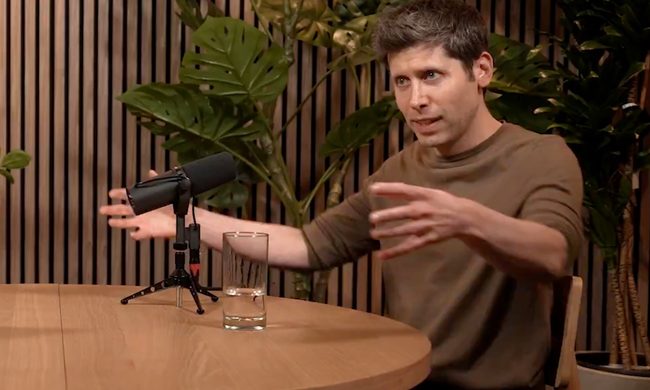
OpenAI CEO Sam Altman during the Uncapped podcast in June 2025.

AI can now answer questions so quickly that the search itself can feel optional. That convenience worries the Royal Observatory Greenwich, which has warned that instant AI answers can weaken the curiosity, scrutiny, and source-checking behind real knowledge.

The risk hides inside the usefulness. Chatbots can help people test ideas, move faster, and find new angles, but a finished response can also cut users off from the messy trail that makes learning stick. When that happens, information arrives without the struggle that turns it into judgment.

Read more
Miss the old PC days? This website lets you experience Wikipedia like it’s Windows XP
This XP-style Wikipedia explorer turns online research into a nostalgia trip, while showing how much browsing changes when search takes a back seat
File, Webpage, Person

Wikipedia has an unofficial new front door, and it looks like a desktop from a very specific era of family PCs, school labs, and chunky blue title bars.

Developer Sami Smith has built a browser-based Windows XP Wikipedia explorer that turns categories into folders and articles into documents. It’s playful, slightly inefficient, and more interesting than another AI search box bolted onto the web.

Read more
Maybe, ditch Gemini and ChatGPT for your AI images. Try an alternative that I jut came across
For posters, thumbnails, banners, and social graphics, Ideogram’s mix of text accuracy and style control stands out
ChatGPT Images 2.0 Artwork

Gemini and ChatGPT dominate the AI image generator conversation, but Ideogram has a cleaner argument for attention. It focuses on visual work people need to ship, from creator assets to layouts that have to fit a platform on the first try.

Its clearest advantage is typography. Ideogram is built for posters, banners, social posts, newsletter illustrations, and video thumbnails, with a particular strength in generating readable copy inside designs. One garbled word can wreck an otherwise usable graphic.

Read more