1. Home
  2. Computing
  3. News

Enthusiast blog unearths China’s bizarre ‘street offset’ system

Add as a preferred source on Google

In recent years, digital mapping software has become rather ubiquitous. Google Earth was something of a novelty when it launched back in 2001, but these days it’s completely normal to open up your preferred map app on a smartphone to chart your course in the car or on foot.

However, there’s an element of unease associated with our easy access to such maps. You can, after all, use a free piece of software to snoop on any location in the world, often zooming in to a street view for an even more detailed vantage point. And as it turns out, not everyone is too thrilled by that idea.

Recommended Videos

Enthusiast site the Google Earth Blog recently launched an investigation into last week’s explosions in Tianjin, China. In doing so, an unusual alignment error was discovered in Google’s street maps of China. While things don’t quite line up on the Chinese side of the border, the streets of Hong Kong are mapped as normal.

The reason behind this discrepancy seems to be a longstanding piece of Chinese legislation. In an effort to stop prying eyes, maps created in China must use the GCJ-02 coordinate system, as opposed to the WGS-84 system that is used in the rest of the world.

Countries are able to control information like street maps that comes from within their borders, but they find it harder to enforce legislation related to satellite imagery. That’s what makes it difficult for Google to combine the two — although a partnership with AutoNavi allows the company to offer their services in China without complications.

As the Internet invades more areas of everyday life, we’re only going to see situations like this arise more often. It’s a global tool in a world that still enforces the law on a country-by-country basis, so there’s bound to be more questions over which party takes precedence in years to come.

Brad Jones
Brad is an English-born writer currently splitting his time between Edinburgh and Pennsylvania. You can find him on Twitter…
Asus puts the outrageous dual-screen ROG Zephyrus Duo on the shelf at an eye-watering price
The ROG Zephyrus Duo isn't just a gaming laptop with two screens, it's the company’s most serious attempt yet to add more ambition to a "portable workstation" that’s capable of gaming.
Asus dual-screen laptop America.

Asus has decided that one screen isn’t simply enough on a laptop. The ROG Zephyrus Duo has returned to the market with two screens, with pre-orders now live for what the company is calling the world’s first 16-inch dual-screen gaming laptop.

Starting at $4,499.99 and going up to $5,499.99 for the top configuration, this is undoubtedly a machine that is built for people measuring their laptops with ambition, either for innovation or the desire to game on a dual-screen laptop. 

Read more
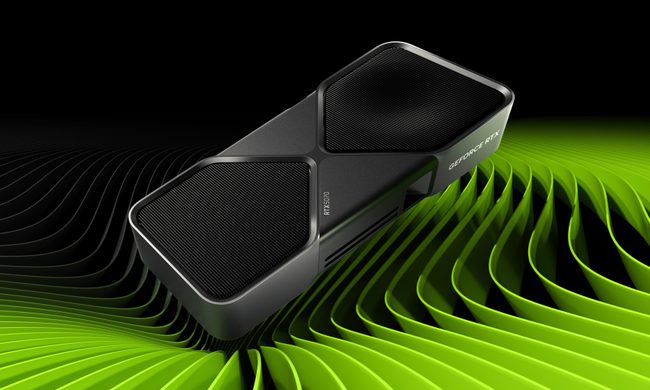
Nvidia quietly released a new version of GeForce RTX 5070 GPU inside a driver blog post
And more VRAM doesn't always mean more performance, and the pricing could make the RTX 5070 Ti a better value depending on final configurations.
The RTX 5070 in a graphic.

Nvidia just announced a new GPU variant in the weirdest way possible: buried it in a game driver update blog post. 

Alongside the release of its Game Ready 596.36 WHQL driver, the company also confirmed the launch of a 12GB GDDR7 configuration of the GeForce RTX 5070 laptop GPU. 

Read more
Dell 34 Plus USB-C monitor review: An ultrawide beauty with surprises you’ll love
Dell's curved monitor blends practical minimalism with a few neat perks of its own.
Dell 34 Plus USB-C Monitor - S3425DW

Quick Take

I’ve grown deeply suspicious of any monitor that calls itself a “productivity display.” They're not bad, per se. The real reason is that most of them are boring, and sluggish at adopting modern standards. Chunky black bezels, boring grey-on-grey corporate look that screams “I belong in a 2014 cubicle,” and a dull desk presence. I’ve never wanted any of them sitting on my workstation. So when I unboxed the Dell 34 Plus USB-C monitor (SKU is S3425DW), I was bracing for the usual disappointment. It was in for a surprise.

Read more