  1. Home
  2. Computing
  3. News

Gen Z uses AI all the time, so why are they starting to hate it?

Gen Z was supposed to be AI's biggest fan. The numbers tell a very different story.

Add as a preferred source on Google
Electronics, Mobile Phone, Phone
Rachit Agarwal / Digital Trends

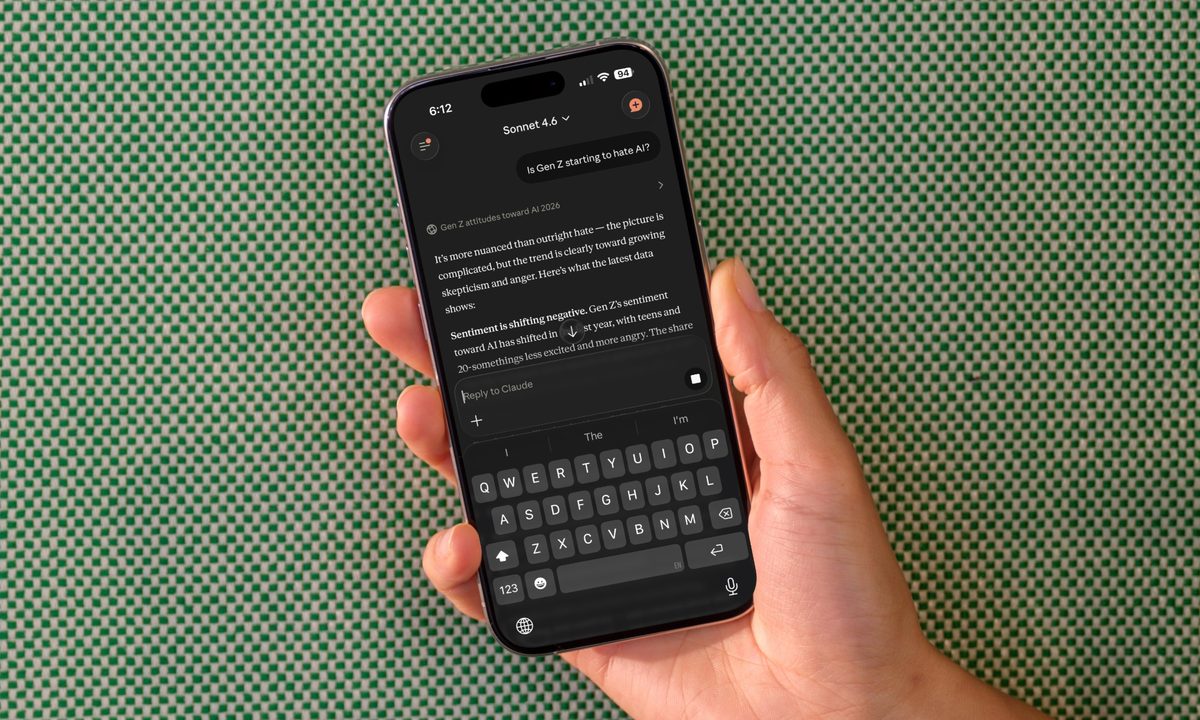
More than half of Gen Zers in the US use generative AI regularly. So you’d think they’d be its biggest cheerleaders. As it turns out, not so much. 
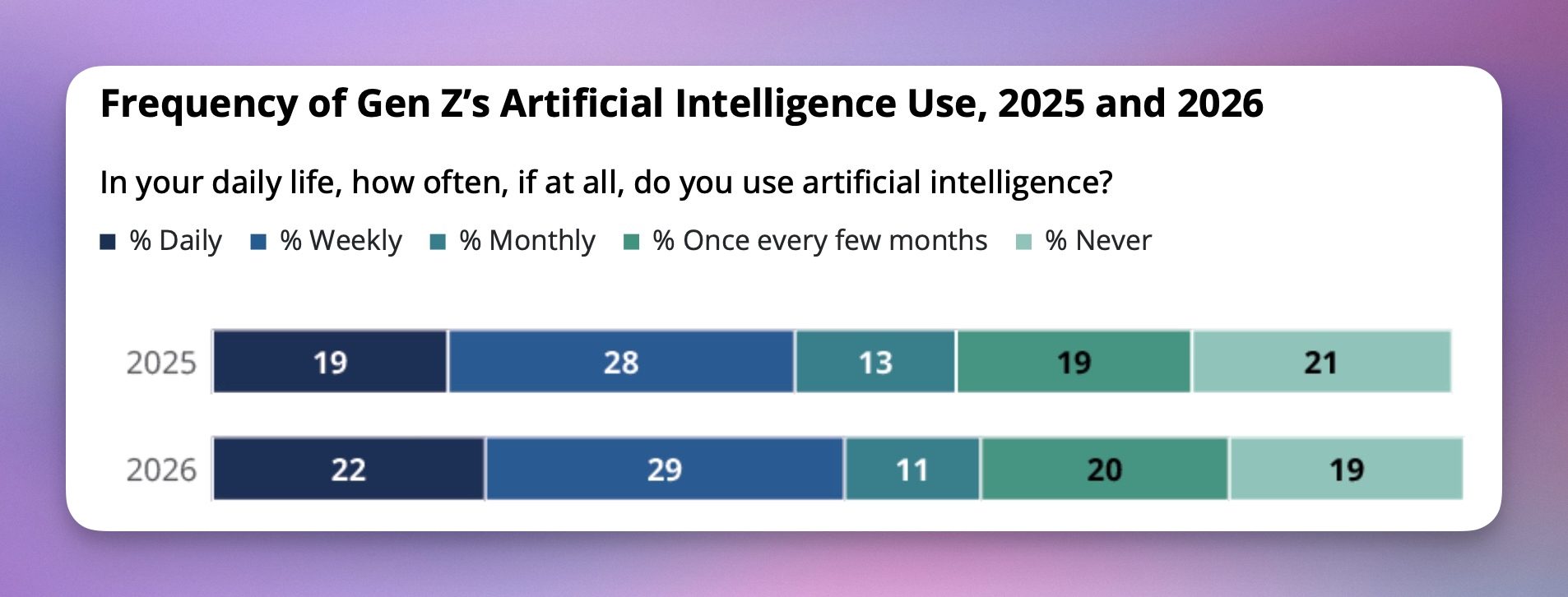
According to a New York Times report, a new survey by Gallup, the Walton Family Foundation, and GSV Ventures surveyed more than 1,500 people aged 14 to 29 and found that Gen Z is growing increasingly skeptical of the technology they use every day.

Is the excitement wearing off?

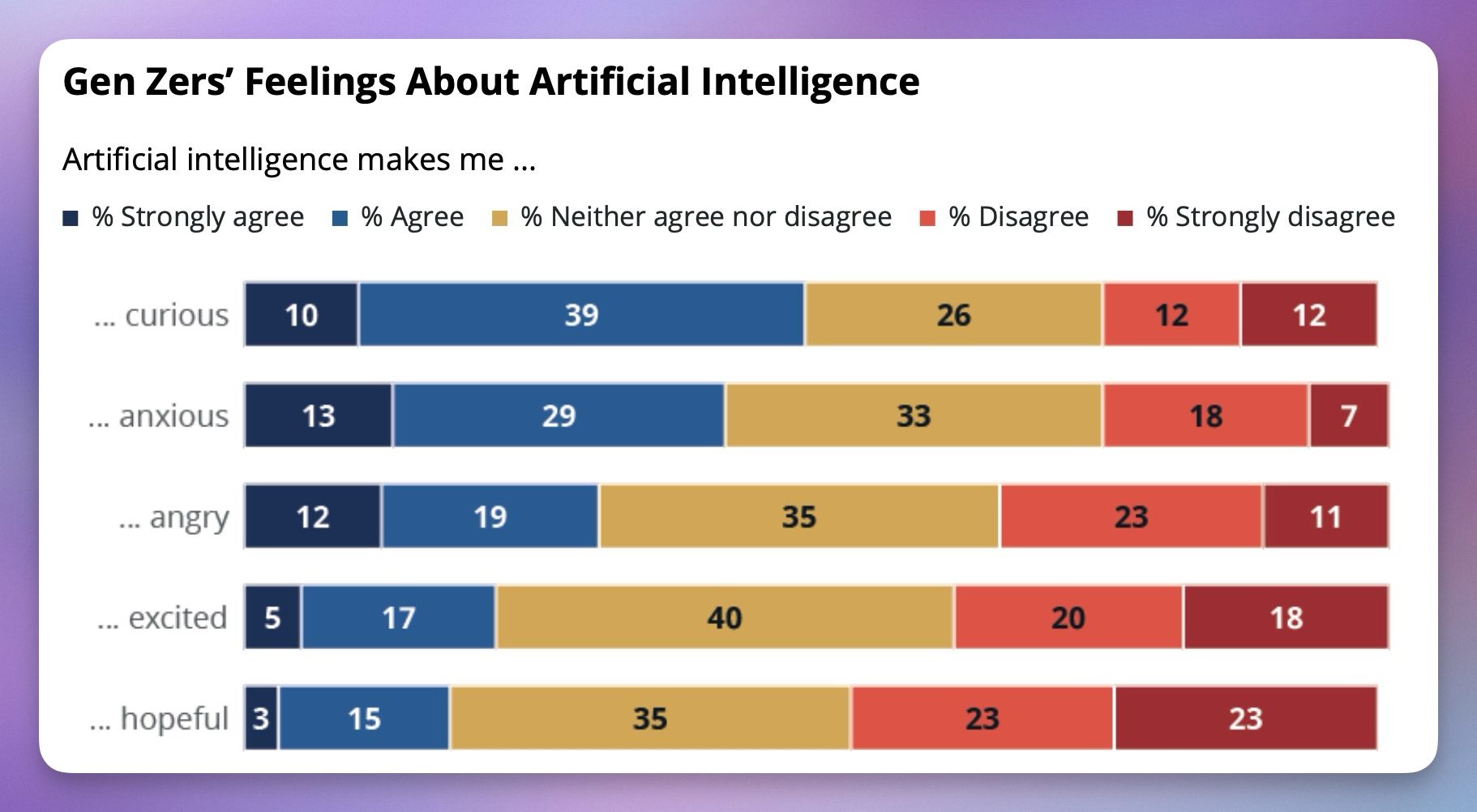
The numbers are pretty telling. Excitement for AI dropped 14 percentage points since last year, hopefulness fell nine points, while anger rose by nine points. Only 18% of Gen Zers say AI makes them feel hopeful, and just 22% say it excites them. Meanwhile, 42% report feeling anxious about it, and 31% feel outright angry.
What’s interesting is that even daily users, who are generally more positive about AI, are becoming less optimistic. Among those who use AI every day, excitement and hopefulness dropped 18 points and 11 points, respectively, compared to last year. More access clearly isn’t translating into more confidence.

What’s driving the frustration?

A big part of it comes down to what Gen Z thinks AI is doing to their brains. A whopping 8 in 10 respondents said it is likely that using AI tools will make it harder for them to learn in the future. They are also skeptical about its impact on creativity and critical thinking, with 38% and 42% respectively saying AI will do more harm than good in those areas.

The workplace isn’t looking much rosier. Among employed Gen Zers, 48% say the risks of AI outweigh the benefits, compared to just 15% who see it as a net positive. Trust in AI-assisted work is also low, with 69% saying they trust work done without AI more.

Recommended Videos

That said, Gen Z isn’t giving up. Close to half of high schoolers believe AI skills will be necessary for their future careers. They’re not ignoring it, they’re just going in with their eyes wide open.

Rachit Agarwal
Rachit is a seasoned tech journalist with over seven years of experience covering the consumer technology landscape.
HP’s new RTX 5070 laptop feels like the sweet spot between thin and bulky
The new HyperX Omen 15 combines AMD and Intel and targets portability without fully sacrificing performance.
HP HyperX OMEN 15 Gaming Laptop

Modern gaming laptops have largely drifted toward two extremes lately: massive 16-inch and 18-inch desktop replacements, or ultra-compact 14-inch machines that still feel slightly cramped for serious gaming sessions. That’s exactly why HP’s new HyperX Omen 15 feels refreshing, because it brings back the familiar 15-inch gaming laptop formula with a chassis that still feels portable without sacrificing proper gaming hardware underneath.

HP’s compact HyperX Omen 15 packs RTX 5070 graphics with AMD and Intel options

Read more
Corsair is putting Chinese RAM in mainstream market. It won’t quite end the crisis though
A cheaper DDR5 supplier could shake up the market, but it is not a magic fix
Samsung DDR4 RAM in hand

After months of painfully expensive RAM and SSD prices, the memory market may finally be showing signs of pressure from an unexpected direction: China. New reports suggest that Chinese memory manufacturers are rapidly expanding production of DRAM and NAND chips, and that major hardware brands are starting to take notice. The most notable example so far is Corsair, which has reportedly tested DDR5 memory modules using chips from Chinese DRAM giant ChangXin Memory Technologies, better known as CXMT.

This feels inevitable. Memory prices have remained frustratingly high across PCs, laptops, and storage devices for months. So when Chinese suppliers began offering RAM at nearly half the cost of some global competitors, manufacturers were always going to at least explore the option. According to market reports, some CXMT DDR5 modules are reportedly being sold near the $150 range, while equivalent products from larger global suppliers can hover between $300 and $400.

Read more
Orbot Robotics’ space robot has four arms, but its Goro physique has a purpose
This four-armed robot could make routine space-station work easier for astronauts
Robot with four arms

Helios is a new four-armed robot from Zurich-based Orbit Robotics, and at first glance, it reminded me of Goro from Mortal Kombat. But unlike the prince from Outworld, Helios is not built for combat. It is designed to help astronauts on space stations with the repetitive, time-consuming work that keeps life in space running.

Orbit Robotics says that in microgravity, legs are not much help. Instead of walking or standing, Helios needs to move through tight station interiors, hold itself steady, and handle cargo, tools, or equipment. Its four-arm design turns extra limbs into both mobility aids and working hands.

Read more