
PDFs are an essential tool for businesses, schools, or anyone who wants a digital copy of any document. With a plethora of PDF programs out there now, it’s also incredibly easy to make changes to those files. However, the quickest and easiest way to edit a PDF on a Mac is with Preview.
Here are some tips on how to edit a PDF on your Mac, and some of the most common things you will want to change.
Add or remove pages
Adding or removing pages is pretty simple in Preview. To add a page, just follow these instructions:
Step 1: Open the PDF you want to edit, then hit Edit in the menu bar.
Step 2: Scroll down to Insert, and then select either Blank Page or Page from File.
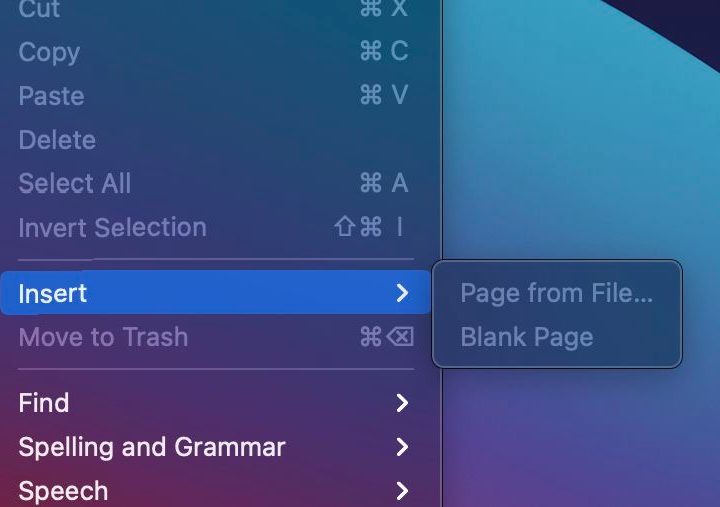
Step 3: Selecting Blank Page will do exactly what it says. It inserts a blank page after the current page you are on, so make sure you place it correctly. If you select Page from File, the Finder window will pop up. Then, just select the file you want to add, and it will insert it as the page after the one you are currently on.
Removing pages is a bit more complicated but still relatively simple. To remove a page, simply:
Step 1: Open the PDF you want to edit, and click View in the menu bar (right next to the Edit button).
Step 2: Go to View > Thumbnails or View > Contact Sheet, and click.
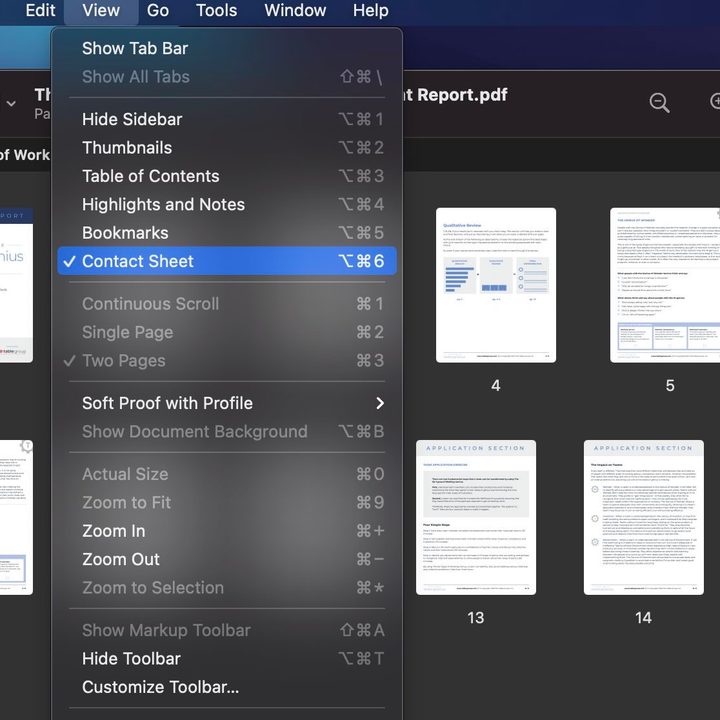
Step 3: View > Thumbnails will pull up a thumbnail view of every page on the right of the preview. View > Contact Sheet will hide the preview to show a thumbnail of all the pages. Either way, select the page you want to remove, and press Delete on your keyboard. You can also click Edit > Delete in the menu bar.
You can also use these views to rearrange PDF pages. Just click and hold over a page in the thumbnail view and drag it to the location you want it to be.
Add your own writing
Adding your own writing is crucial for signing documents and making quick notes within a PDF. Luckily, this is pretty simple to do in Preview. To add your own writing:
Step 1: Click Tools in the menu bar, and scroll down to Annotate.
Step 2: A submenu will appear. Head down to the very bottom, and select Signature.
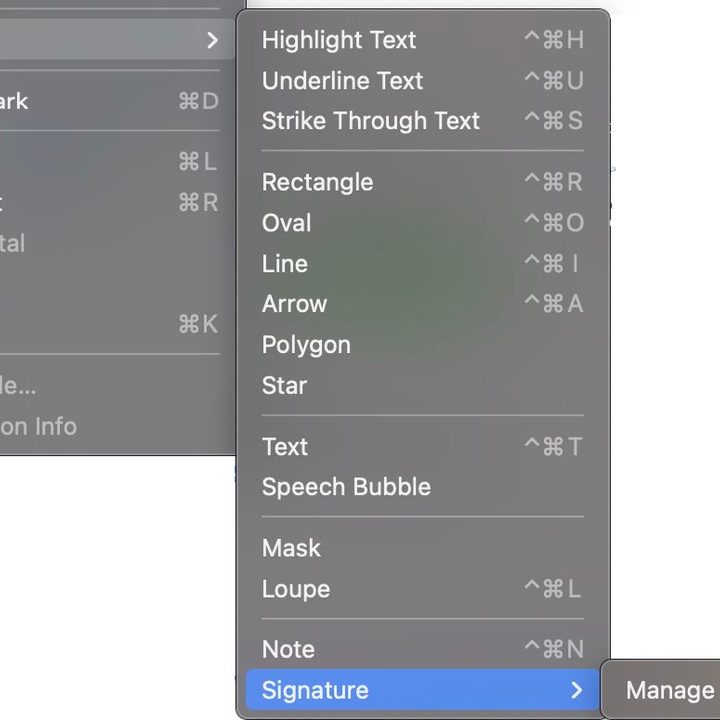
Step 3: If you have a signature saved already, it will appear here. If not, click Manage Signatures to create a new one. You can create a signature by scrawling one on your trackpad, taking a picture of your signature on a white piece of paper with your webcam, or writing the signature on your iPhone.
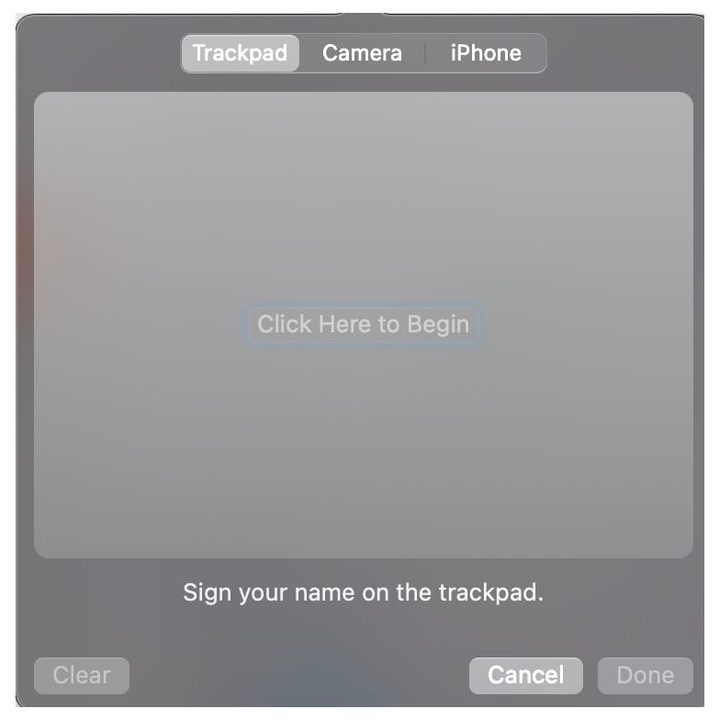
Step 4: Once you select or create the signature, it should appear on the PDF, and you can drag and drop it wherever it needs to go.
Annotate
You can also make annotations directly on the PDF. You can do that by following the steps above and choosing the specific actions you want to take. For instance, instead of clicking Signature, you can choose Highlight Text at the top of the submenu.
A more straightforward way is right on the Preview window itself.
Step 1: Look in the top-right corner of the Preview window, and find the Pencil icon (with a line beneath it).
Step 2: Click on the Pencil to activate annotations. Click on the Down Arrow to the right to select highlight colors as well as whether or not you want strikethrough or underlined text.
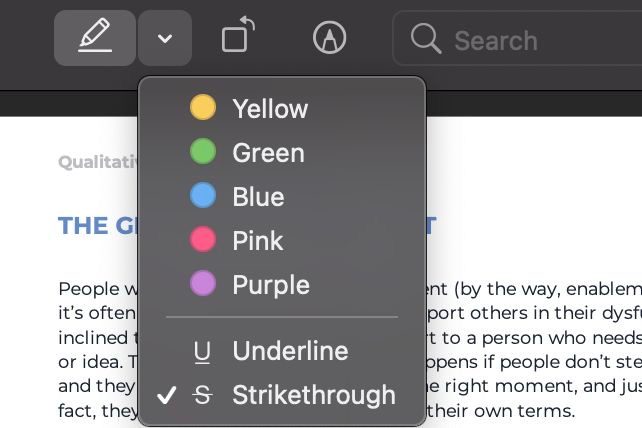
Step 3: Hover your mouse over the text you want to annotate, then click and drag. Preview will apply the changes instantly.
Step 4: To turn off Annotations, just click the Pencil icon again.
If you are looking for more on how to edit a PDF in Windows or another program, we have an article on that. For more advice on the Mac, check out the best MacOS apps you can get right now.


