
AMD kicked off Computex 2022 with its annual keynote, where the company announced more details about its upcoming Ryzen 7000 desktop CPUs. As usual, AMD hosted a digital event, so we rounded up how to watch AMD’s Computex 2022 keynote and what they announced in it.
How to watch AMD’s Computex 2022 keynote
AMD CEO Lisa Su will deliver the company’s Computex 2022 keynote at 2 p.m. (GMT +8) on Monday, May 23. Because Computex takes place in Taipei, that means U.S. watchers will have to stay up late to catch the keynote live. It goes live at 11 p.m. PT on Sunday, May 22 (have to love those time zones).
- What: AMD Computex 2022 keynote
- When: Sunday, May 22 at 11 p.m. PT / Monday, May 23 at 2 p.m. (GMT +8)
- Where: AMD’s YouTube channel
The keynote is titled “Advancing the High-Performance Computing Experience.” Lisa Su was joined by other AMD executives to talk about Ryzen 6000, AMD Advantage laptops, Ryzen 7000, and the new AM5 socket and platform.
Everything AMD announced at its Computex 2022 keynote
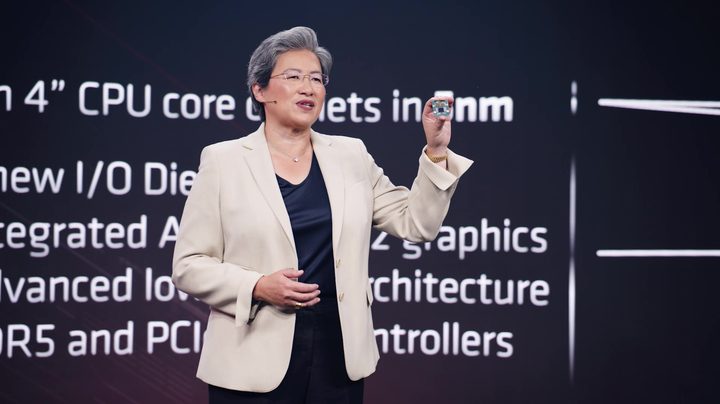
Only AMD and Nvidia delivered keynotes at Computex this year, as Intel opted to make announcements at its own Vision event earlier this month. Although AMD is planning to launch both Ryzen 7000 CPUs and RX 7000 GPUs this year, out of the two only Ryzen 7000 got any mention, so the presentation wasn’t quite as exciting as we were hoping.
Unfortunately, AMD didn’t announce any specific Ryzen 7000 CPUs, but we did get some core details: The launch window, specs, and performance. Ryzen 7000 is slated to launch during the fall, which means it’s somewhere between four and six months away.
When it comes to specs, AMD says Ryzen 7000 CPUs will only have up to 16 cores, just like the last two generations of Ryzen desktop CPUs. AMD claims Ryzen 7000 is about 15% faster than Ryzen 5000 in single-threaded tasks due to combined clock speed and IPC gains.
This 15% performance uplift is more or less what AMD showed us in its Blender benchmark, which pitted a 16-core Ryzen 7000 CPU against Intel’s Core i9-12900K. AMD also showed the chip running in Ghostwire Tokyo while boosting to around 5.5GHz.
Alongside Ryzen 7000, AMD is launching the brand new AM5 socket and new chipsets: X670E, X670, and B650. As usual, these chipsets denote quality, feature, and performance differences between motherboards, particularly PCIe support. B650 boards will only have PCIe 5.0 for NVMe SSDs, with the x16 slot for graphics running at PCIe 4.0 speeds. X670 has optional support for PCIe 5.0 graphics, meaning it depends on the motherboard. X670E motherboards are the only ones guaranteed to have PCIe 5.0 for storage, graphics, and other devices.

AMD also revealed a new range of mobile CPUs in its Ryzen 6000 range. Targeting laptops and Chromebooks between $400 and $700, the new chips come with up to four cores. They’re based on the older Zen 2 architecture, however, despite using a 6nm manufacturing process.
Although AMD didn’t have any other Ryzen 6000 announcements, the company revealed Corsair’s first gaming laptop: Voyager. It’s launching exclusively with AMD hardware and is due out this summer, but AMD didn’t share specifics on pricing or configurations.


