


“Why you can trust Digital Trends – We have a 20-year history of testing, reviewing, and rating products, services and apps to help you make a sound buying decision. Find out more about how we test and score products.“
Setting up sensors in your living room to use VR isn’t fun. It takes time, requires a lot of space, and is a hassle to transport. In the era of inside-out tracking on headsets like the Vive Cosmos and Oculus Quest, external tracking feels like a technology ready to be phased out.
HTC has announced a new external tracking option with the Vive Cosmos Elite. It’s a faceplate attachment that brings external tracking to the Cosmos. The $899 bundle includes SteamVR base stations and two controllers, and is priced as a successor to the Vive Pro.
Is this the second coming for external tracking?
The Vive Cosmos Elite is a faceplate, not a headset
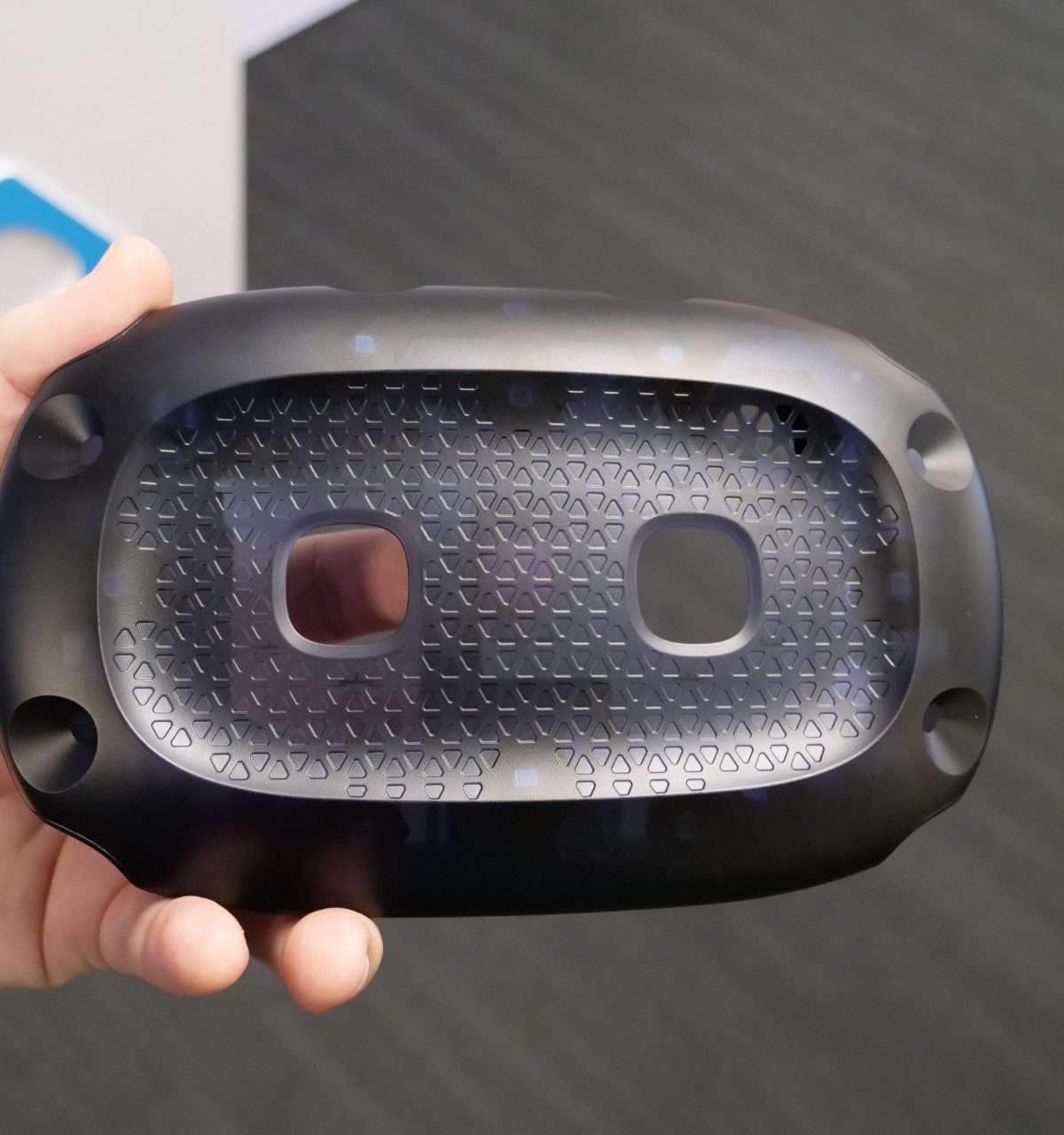
Let’s be clear. The Cosmos Elite is not a new VR headset. It’s what HTC calls a “faceplate” — an attachment or modification for the Vive Cosmos.
With the squeeze of a button inside the headset and a tug on the front, the faceplate can be removed and swapped out. In the case of the Cosmos Elite, you can replace the newer inside-out tracking with older external tracking using base stations. The extra cameras on the Cosmos are replaced with more discrete IR sensors hidden along the edges.
The Cosmos was built to be modular from the start, but this is HTC’s first real use of that feature. I was impressed by how easy I could swap out once faceplate for another. It only takes a few seconds to transition from the Cosmos to the Cosmos Elite, although it does require restarting Steam (or whatever software you’re using) so the system can recognize the new hardware.
External tracking still supplies the best overall VR experience.
The base stations and tracking features haven’t changed for the Elite. If you happen to have some base stations sitting around from the old Vive days, they’ll still work. The same goes for Vive’s Wand controllers.
External tracking remains superior
Why add an external tracking option to the Cosmos in 2020? Simple. Because it’s better.
External tracking still supplies the best overall VR experience you can get in your living room. So long as you have a powerful PC, and the room to set up the trackers, the Cosmos Elite provides super-smooth and immersive gameplay.
I tried out Pistol Whip on both the standard Cosmos and the Cosmos Elite. I had fun with the Cosmos, but the Elite felt just a hair better. Motion tracking had lower latency and felt more accurate. There’s nothing terrible about the Cosmos’ experience, but the Elite is undeniably superior.

The difference is subtle, though. I likely wouldn’t have noticed if I hadn’t played the same game back-to-back on them. Granted, Pistol Whip isn’t a game that requires much movement behind your back, or around your head. Games like QuiVr don’t work as well on the standard Cosmos as on the Cosmos Elite. Games that benefit from a large play area will be better with the Elite, too.
The same Cosmos, a new price
The Cosmos is as impressive as ever from a specification standpoint — swapping faceplates doesn’t change that. It offers 1,440 x 1,700 pixels per eye resolution at a 90Hz refresh rate. It’s superior to the Oculus Rift S in this department, though the Rift still features a slightly wider 115-degree field of view compared to the Cosmos’ 110 degrees.
The Vive Pro has a slightly larger AMOLED screen that beats the Cosmos Elite, and will continue to confuse potential buyers. The Vive Pro is currently $599, while the Cosmos Elite is $899. You can also pick up the Vive Pro “starter kit” for $899, which includes the same two base stations and controllers as the Cosmos Elite.

To me, the Cosmos Elite feels like a better buy than the Vive Pro. The flip-up screen is convenient and the fit is a bit more comfortable, especially if you wear glasses.
The Cosmos’ modular design is excellent, and it provides an upgrade path without needing to buy an entirely new headset. HTC is offering a base-level option (that hasn’t yet been priced) with four inside-out tracking cameras to compete with the $400 Oculus Rift S. HTC even announced a faceplate with transparent cameras, called the Cosmos XR, for developers.
The Cosmos Elite is precise, but not necessarily an upgrade
HTC’s Cosmos Elite offers faster, more fluid motion tracking than the standard Cosmos. But it’s a trade-off. What you gain in accuracy you lose in convenience. Despite its name, not everyone will see the Cosmos Elite as the better option.
It’d be different if the Cosmos Elite could handle both inside-out and external tracking. However, because they use different tracking systems (and controllers), you’ll need to buy both faceplates and swap them to switch. HTC says they’ll be selling the faceplates separately, so that’s an option for VR enthusiasts.
However, that’s a hassle most people won’t bother with. I think VR fans will pick either the Cosmos or Cosmos Elite, and stick with it.
The Cosmos Elite bundle will be available in the first quarter of 2020 for $899. The Cosmos Elite Faceplate will be available on its own for $199 in the second quarter of 2020.


