

I wasn’t a fan of the Covert Protocol demo that Nvidia showed me on a video call late last week. The short mystery demo features a handful of NPCs that are directed entirely by AI. There’s a door greeter, an executive waiting for a room, and a receptionist — and all three featured what were, on the surface, bland dialogue trees generated with AI.
At GDC 2024, trying out the demo myself, I was converted.
My experience was slightly different than what I experienced through a hands-off demo last week. After it was done, the developer of the demo walked over and explained everything I missed, and the multitude of different ways I could accomplish my goal. I thought of Hitman, and everything clicked.
A sandbox of conversation
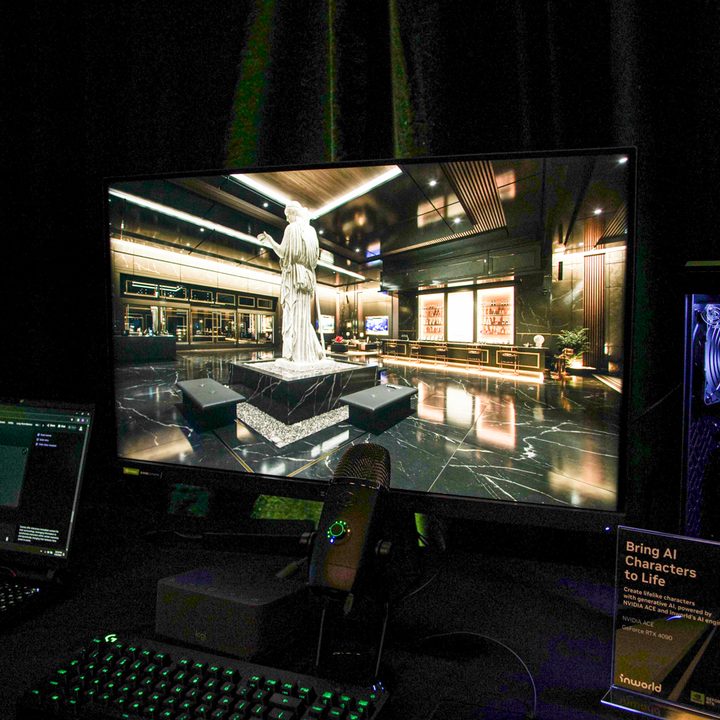
In Covert Protocol, you need to figure out the room of a Martin Laine, a doctor and executive who’s giving a keynote speech at a high-end hotel. As a private detective, your goal is to figure out where Laine is without giving away why you’re looking for him. My path through the short demo went about as expected.
I chatted up the door greeter a bit, who wasn’t very helpful, and then I moved into the hotel and spoke with another executive waiting for their room. He wasn’t very helpful, either. I walked around a bit and found a badge for the conference the executive was attending laying around. After throwing it on and talking to him again, he walked over to the front desk to check on his room and his colleague Martin Laine. And just like that, the receptionist revealed the room number. It’s a small, simple objective that certainly doesn’t require AI.
I wasn’t impressed, but then I heard about the other possibilities. You could stick solely with the receptionist and try to smooth-talk your way to an answer. You could learn about the door keeper’s dream to become a bartender, persuade him to make a drink, and snag a key fob off of him to slip into the private areas of the hotel. You could pick up on how tired the door keeper is — something he brings up multiple times before you enter the hotel — and sneak behind him as he goes back to take a break.
It’s Hitman. There’s a seemingly simple goal, but you have this sandbox of different tools that will help you reach your goal in different ways. The AI is an element, but it’s not the focus. There’s a small cast of characters, each built with their own backstory, and your interactions with them inform the gameplay design.
I thought AI would mean endless dialogue trees — countless worthless NPCs that could talk forever but have nothing to say. After actually playing this short demo, I see the possibilities. For a certain type of game, AI could really work.
Awkward AI
I was impressed by Nvidia’s demo after everything clicked in place, but I’m not naive. There’s a common fear of AI in video games, and it’s the same one we’ve seen spread across industries. It will replace real humans that are currently doing the work. It’s an especially potent worry in the world of video games — an industry that has seen sweeping layoffs over the past year.
Unsurprisingly, Nvidia doesn’t see it that way. It says that AI actually requires more writing. Instead of spinning up a couple of throwaway dialogue lines, NPCs now need detailed, rich backstories to inform their behavior in the game. It requires, according to Nvidia, much more writing to get these AI characters working.
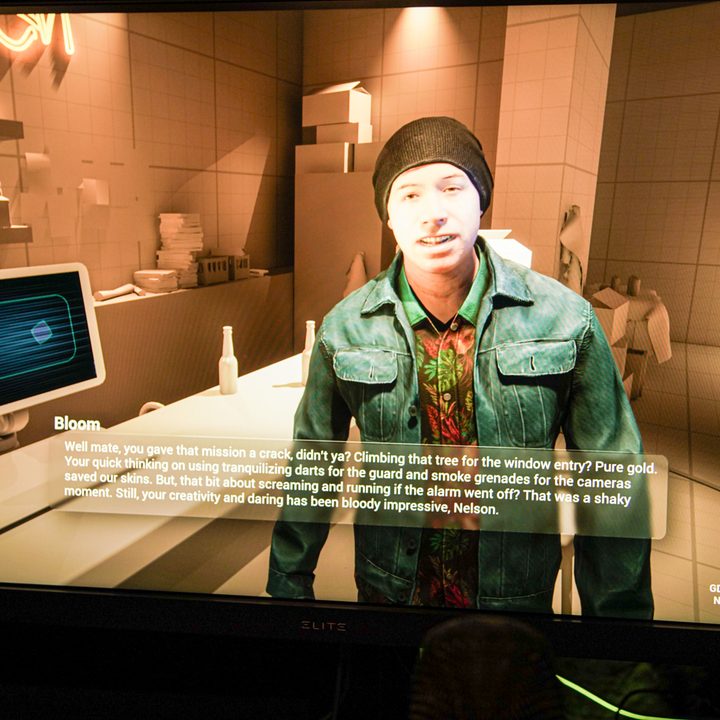
Outside of AI replacing jobs, there’s also the fact that AI is just awkward right now. Across from Covert Protocol, I ran through a demo of Ubisoft’s AI game characters. It was using the same tech, and it worked in a similar way, but there were a handful of moments where I cringed. At one point, a character settled into saying “mate,” despite the fact that he never had previously, and the audio model struggled to figure out if it should switch to a British accent or not. At the end of the demo, the character blurted out “buddy!” in a shriek after it had finished its line.
This isn’t a finished product, which is something Nvidia fully recognizes. In speaking with the company, this sounded like tech that was years, not months, away from showing up in a shipping product. There’s rapid development now, but the AI we’ll see in games eventually will be a far cry from what we have today.
Although there are plenty of ethical concerns about AI in games, the trend isn’t stopping. AI will come to some aspects of games — and likely many other forms of media — eventually. My hope is that it’s a tool leveraged to create deeper, more expansive experiences, rather than one aimed at churning out slop that would have been far better-suited to a human touch.


