
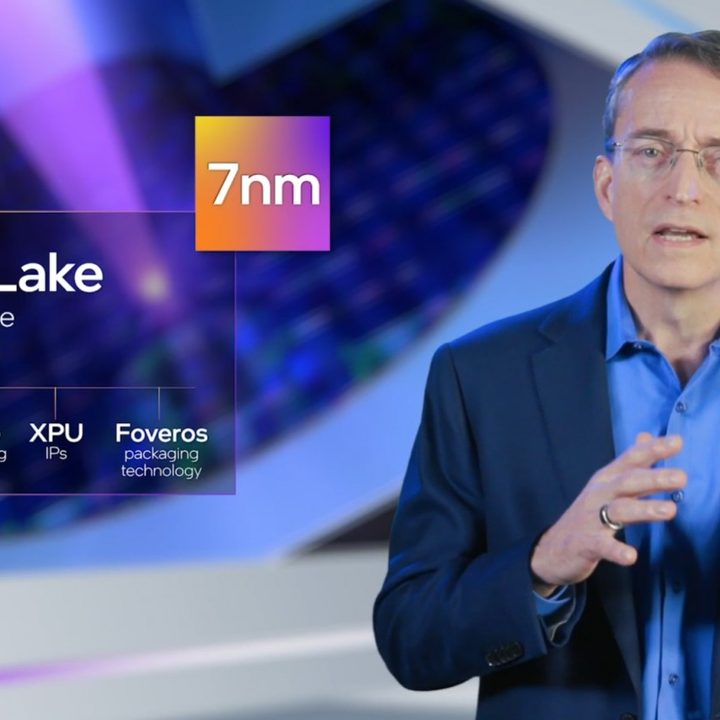
Intel CEO Pat Gelsinger confirmed that the company is on track with its 7nm plans, and the first chips to use the new, smaller node will debut in 2023 on desktop PCs. Known by its codename as Meteor Lake, Intel’s new processor will be manufactured using the company’s 7nm process along with ultraviolet lithography, or EUV, in a rearchitected, simplified process flow, the company claimed.
“Intel expects to tape in the compute tile for its first 7nm client CPU (code-named “Meteor Lake”) in the second quarter of this year,” the company stated in a prepared statement outlining Intel’s new manufacturing plans, which the company referred to as its integrated device manufacturing model, or IDM 2.0. “In addition to process innovation, Intel’s leadership in packaging technology is an important differentiator that enables the combination of multiple IPs or ’tiles’ to deliver uniquely tailored products that meet diverse customer requirements in a world of pervasive computing.”
Intel’s initial struggle to get to the smaller, more efficient 10nm and 7nm manufacturing process had been heavily publicized before, but the company said that it is leaning on EUV to help it simplify the process flow. Moving forward, Intel predicted that a big portion of its product line will be based on the 7nm process in 2023. AMD has been already basing all of its recent products on TSMC’s 7nm node, while Nvidia has most recently been using Samsung’s 8nm node.
The first Intel processor to utilize the 7nm process won’t technically be Meteor Lake. This process will debut initially on Ponte Vecchio, which is made for high-performance computing, such as the Aurora supercomputer. Following Ponte Vecchio’s launch, Intel is expected to launch Meteor Lake with the 7nm node in 2023 following a design IP verification in the second quarter of this year. According to Anandtech, Meteor Lake will also leverage Intel’s Foveros Packaging Technology.
Like Alder Lake, which will be arriving later this year in desktop and mobile, Meteor Lake is expected to utilize Intel’s heterogeneous chip design, combining high-performance cores with energy-efficient cores to maximize processing power and power efficiency. Intel is expected to combine Ocean Cove and Gracemont cores for Meteor Lake using a 3D stack with technology from its Foveros acquisition.
More recently, it’s rumored that Intel will rely on a new Redwood Cove architecture that will turn Meteor Lake into a more agnostic node, which means that cores can be manufactured in different labs and then stacked together. The use of 3D stacking will allow Intel to mix its own cores with those made by other fabs, like TSMC or Samsung, according to Wccftech. Using multiple fabs could help Intel avoid shortages and manufacturing problems that the company experienced in the past for Meteor Lake. Gelsinger highlighted the company’s use of third-party labs in his presentation, so those fabs will likely continue to play an important role in Intel’s product plans. Additionally, Intel is making a $20 billion investment in a new fab as part of IDM 2.0 to expand its fabrication capabilities.
Meteor Lake is expected to support the LGA 1700 socket that will debut with Alder Lake, which means we can expect DDR5 and PCIe Gen 5 support with the new platform.
For data centers, 7nm Granite Rapid chips will also debut in 2023. Granite Rapids was originally panned for a launch in 2022, but a 2023 launch date matches Intel’s revised timeline.


