

It feels cliche at this point, but it’s true. Intel can’t catch a break. The new Arrow Lake-H chips feel like a tide shift for Team Blue, though, leveraging the highly efficient architectures the company debuted with Lunar Lake to deliver performance and battery life worthy of the best laptops on the market.
By the numbers
We’ve already seen what Intel’s Lunar Lake processors are capable of — read our Asus Zenbook S 14 review for more on that — but these new Arrow Lake-H offerings are a bit different. Under the hood, Intel is still using its Lion Cove and Skymont core architectures, which Arrow Lake-H shares with Lunar Lake. However, these chips get a larger core count, higher power budget, and beefier integrated graphics based on Intel’s Battlemage architecture.
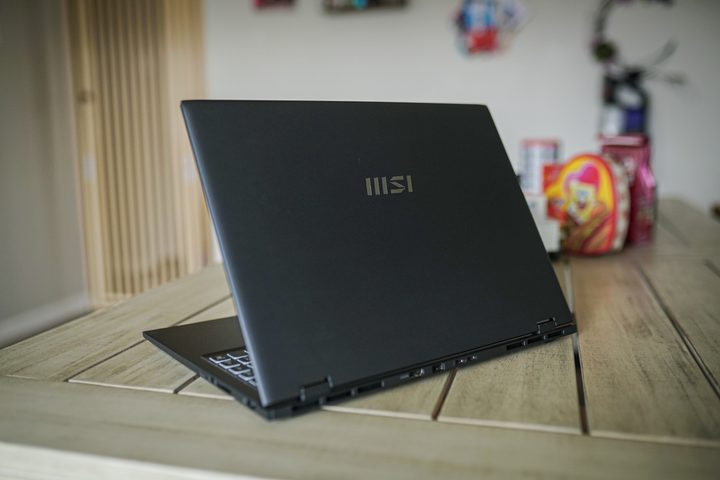
The power budget is really important here. The base power is 45W, but Intel allows the chip to boost up to 115W for short periods of time. The core split is interesting, too. You get 16 total cores, but they’re split between six performance cores, eight efficient cores, and two low-power efficient cores. If you remember, the efficient cores are actually the main performance driver in this architecture, so the extra two low-power ones are simply there for a little extra multi-core grunt.
I’ve brought in a few comparisons from AMD here. First is an identical laptop packing the Ryzen AI 9 365 — which Intel compares the Core Ultra 9 285H to — and second is an Asus Zenbook S 16 with a beefier Ryzen AI 9 HX 370. These are 10-core and 12-core CPUs, respectively, but they use simultaneous multi-threading. The Core Ultra 9 285H doesn’t, so while Intel has a core advantage, AMD actually has a thread advantage.
| MSI Prestige 16 (Core Ultra 9 285H) | MSI Prestige 16 (Ryzen 9 AI 365) | Asus Zenbook S 16 (Ryzen AI 9 HX 370) | |
| Cinebench R24 (single/multi) | 128 / 918 | 111 / 819 | 110 / 871 |
| Geekbench 6 (single/multi) | 2,776 / 15,773 | 2,832 / 14,059 | N/A |
| PCMark 10 | 7,508 | 7,352 | 7,229 |
| PugetBench for Photoshop | 7,717 | 7,656 | 7,248 |
| PugetBench for Premiere Pro | 3,520 | 3,107 | 2,971 |
| 3DMark Time Spy | 4,018 | 3,565 | 3,207 |
| 3DMark Steel Nomad Light | 3,494 | 3,088 | 3,219 |
Intel’s approach clearly works, as you can see in both Cinebench and Geekbench. These apps typically favor a thread advantage, but Intel is still coming out on top. That’s probably due to a solid lead in single-core speed, which you can see in Cinebench.
PCMark 10 is a bit different, with all three laptops more or less falling in the same range. That’s not too surprising. These are high-end CPUs in some of the best laptops money can buy, so of course they can handle basic office and productivity tasks with ease.
The difference makers are Photoshop and Premiere. Intel is providing a slight edge in Photoshop, but there’s a massive boost in Premiere. The Battlemage GPU is certainly helping there, along with QuickSync. Gaming sees a huge boost, as well — frankly, AMD isn’t even close with its integrated graphics, at least until we see the Ryzen AI MAX chips later this year.
Intel is no stranger to performance, and frankly, it’s not impressive that Intel can outclass the competition (especially considering the larger power budget). What is impressive is that Intel is able to deliver this level of performance while keeping its battery life in check.
Insane efficiency
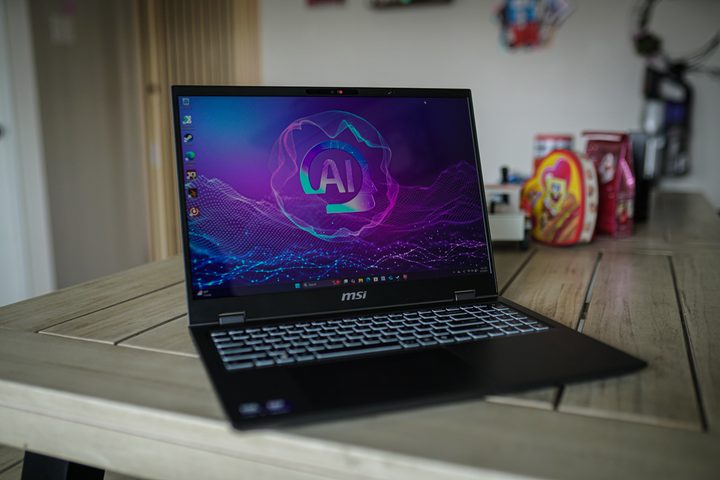
It was very strange queuing up a video to loop on the Core Ultra 9 285H when I left work, only to find it still looping the next morning, and with around half the battery to spare. That’s the kind of efficiency Intel is offering here and without any of the typical tricks in Windows that kick in when the battery gets low enough.
In local video playback, I got nearly 21 hours of battery life out of the MSI Prestige 16 — 20 hours and 46 minutes, to be exact. For context, the Acer Swift 14 AI with the Ryzen AI 9 365 managed 18 hours and 36 minutes, the MacBook Air M3 lasted 19 hours and 29 minutes, and the HP Omnibook X with the Snapdragon X Elite stayed on for 22 hours and 4 minutes. The Snapdragon chip comes out on top, but Intel is damn close considering this is a 16-core flagship chip.
I expected decent battery life given that Intel is using the same core architectures as its Lunar Lake offerings, but with more cores and a higher budget, I didn’t expect this Arrow Lake-H chip to be as close as it is to Intel’s Lunar Lake offerings. Not only is Intel’s performance fantastic here — its battery life holds up equally as well.
Intel needed a win
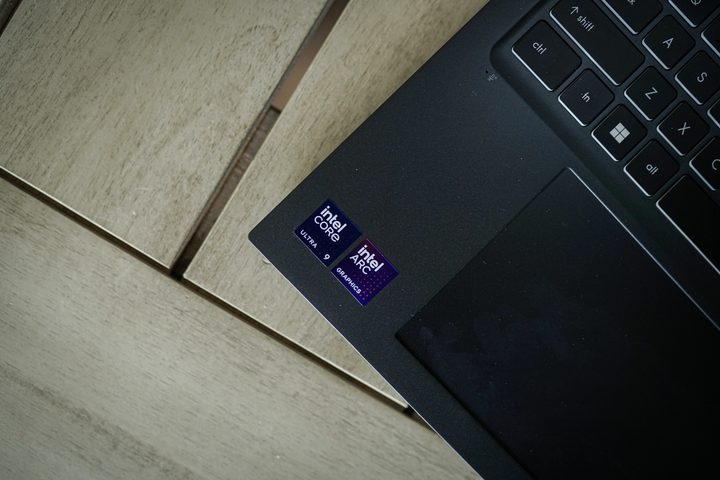
Something struck me when testing Intel’s new Arrow Lake-H chip. It just worked. Intel has really struggled to catch a break, and although its Lunar Lake laptop chips were a small highlight, they weren’t enough to reverse the narrative established by the desktop Arrow Lake range. Arrow Lake-H makes a lot of sense, though, and it proves Intel was onto something when it decided to focus on efficiency. Now, finally, we can see how Intel is able to scale its design to deliver great performance and battery life in a single package.
It’s a great change of pace for Intel, who up to this point struggled to provide a clean ramp between performance and efficiency in laptops, rather splitting the ranges in half with two completely different approaches to architecture. Arrow Lake-H feels like everything coming together, and for a company that’s been promising that everything will come together soon for years, that’s a big win.


