  1. Home
  2. Computing
  3. Emerging Tech
  4. Mobile
  5. Legacy Archives

Kindle books now outselling paperbacks

Add as a preferred source on Google
Amazon Kindle
Image used with permission by copyright holder

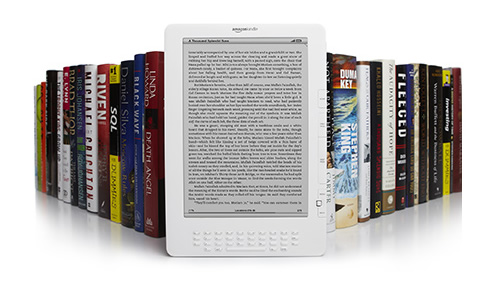
Online retailing giant Amazon.com has released its financial results for its fourth quarter of 2010, which ended back on December 31. The company is still keeping a tight lip about how many Kindle devices it has sold (using only the term “millions”), but it has divulged another interesting Kindle-related item: sales of Kindle books have now overtaken sales of paperback books on Amazon.com, making the Kindle book the top book format the company sells. Amazon also saw a net 36 percent increase in sales to a whopping $12.95 billing for the fourth quarter, with operating income of $474 million. The overall numbers show Amazon’s business is strong, but the relatively low margin generally failed to impress investors.

The quarter also saw Amazon founder Jeff Bezos reduce his stake in the company from 21.2 percent to 19.5 percent.

Recommended Videos

“We had our first $10 billion quarter, and after selling millions of third-generation Kindles with the new Pearl e-ink display during the quarter, Kindle books have now overtaken paperback books as the most popular format on Amazon.com,” said Amazon CEO Jeff Bezos, in a statement.

Amazon had previously forecast that Kindle titles might overtake paperback sales in the second quarter of 2011. As surprising as sales of Kindle books surpassing paperback sales more quickly than Amazon estimates is news that Amazon is still seeing growth in paperback sales—apparently, there are circles where reading is still socially acceptable. Since the beginning of 2010, Amazon says it sold 115 Kindle editions for every 100 paperbacks it sold.

Part of the drag on Amazon’s short-term margin are the company’s ongoing activity to bring over a dozen new distribution centers online; Amazon says it plans to launch more distribution centers as well. These costs, in addition to pricing pressures during an aggressive holiday buying season actually means that Amazon’s $474 million profit for the quarter is a slight drop compared to last year.

Geoff Duncan
Former Contributor
Geoff Duncan writes, programs, edits, plays music, and delights in making software misbehave. He's probably the only member…
Windows 11’s modern Media Player is somehow worse than the version from 17 years ago
The modern Media Player for Windows 11 is slower and heavier than the classic version
Windows 11 media player user interface

Microsoft has released a new Insider Preview update for the modern Windows 11 Media Player. However, the app is facing criticism after tests revealed it uses more memory and opens local video files more slowly than the classic 17-year-old Windows Media Player.

The update adds some useful fixes, including better captions, clearer codec errors, and improved file recognition. But the biggest complaints remain higher RAM usage and paid codec support for some common video formats. The update is not available to everyone yet. Media Player version 11.2605.14.0 has only arrived on Experimental Insider builds as part of Microsoft’s June 12 Insider Preview releases.

Read more
If you have a Mac, you should try this free and beautifully-designed disk space tool
Radix is a free open-source alternative to paid Mac disk analyzers
File, Electronics, Mobile Phone

Running out of storage on a Mac is common, but Apple’s built-in storage tools are not always great at showing what is actually taking up space. You usually get broad categories, but finding the exact folders, downloads, app files, or old projects causing the problem can still take some work.

Radix is a free, open-source Mac app that tries to make that process clearer. It is a disk space analyzer that scans a folder, drive, or volume and displays the results in an interactive sunburst chart. Rather than digging through folders manually, you get a visual overview of how storage is being used across your drive.

Read more
This free Mac app puts stunning glassy widgets on your lock screen
WidgetScreen brings weather, calendar, battery, and music widgets to your Mac lock screen
Aquatic, Water, Animal

The Mac lock screen has always felt a little underused. You see the time, your wallpaper, and not much else. macOS already supports desktop widgets, but once your Mac is locked, that extra information disappears.

WidgetScreen is trying to fix that in a pretty simple way. The free Mac app, made by UK computer science student Sam Cook, adds glassy widgets to the lock screen so you can quickly check things like the weather, clock, calendar, battery, music playback, countdowns, and system information.

Read more