
Days before CES 2021 officially gets underway, Lenovo has announced a new pair of AR glasses that may have a particularly useful feature for people working from home. The ThinkReality A3 are a new pair of smart glasses that use augmented reality to project up to five virtual desktops right in front of your eyes.
That’s a multi-monitor setup like no other. In a day when we’re all fighting for proper workspace at home, it could really come in handy.
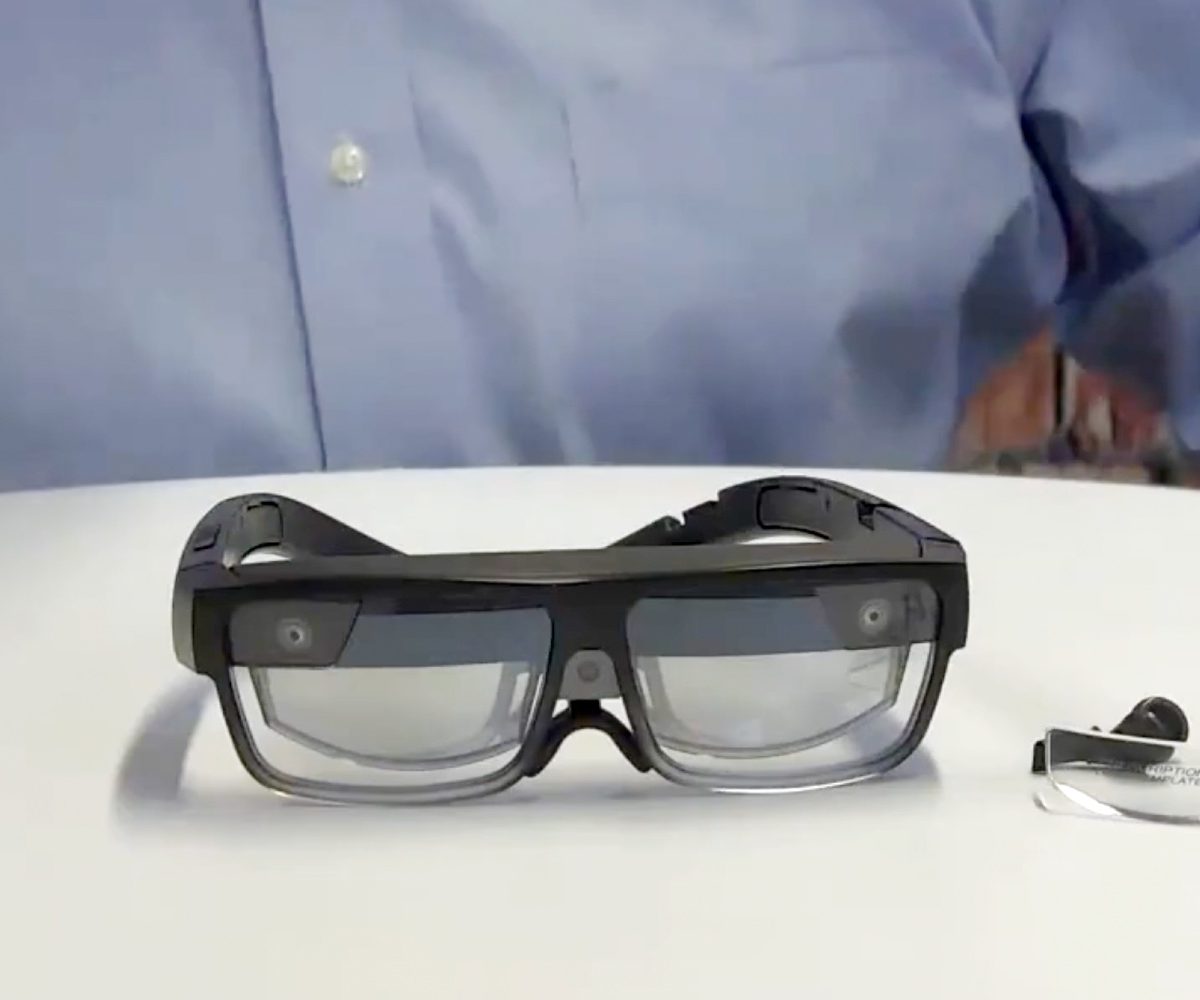
“The A3 is a next-generation augmented reality solution — light, powerful and versatile,” said Jon Pershke, Lenovo Vice President of Strategy and Emerging Business. “Whether working in virtual spaces or supporting remote assistance, the ThinkReality A3 enhances workers’ abilities to do more wherever they are.”
Lenovo has been working in the VR and AR space for years now, bouncing between the Windows Mixed Reality platform and its own. But the A3 is the first to be built on Qualcomm’s Snapdragon XR1 platform, which provides the “high-quality performance” needed to support the stereoscopic 1080p displays.
Lenovo didn’t show visuals for just what these AR displays would look like, but the idea is that they’d function just like a physical secondary monitor in Windows. Using Lenovo’s own ThinkReality software, you can position and resize these virtual monitors however you like. “Immersive but not isolating” is how Lenovo describes the experience of wearing them. So, whether it’s because you don’t have room for multiple monitors at home or because you no longer have a personal desk space in your office, the A3 glasses give you that option as long as you have a laptop with you.
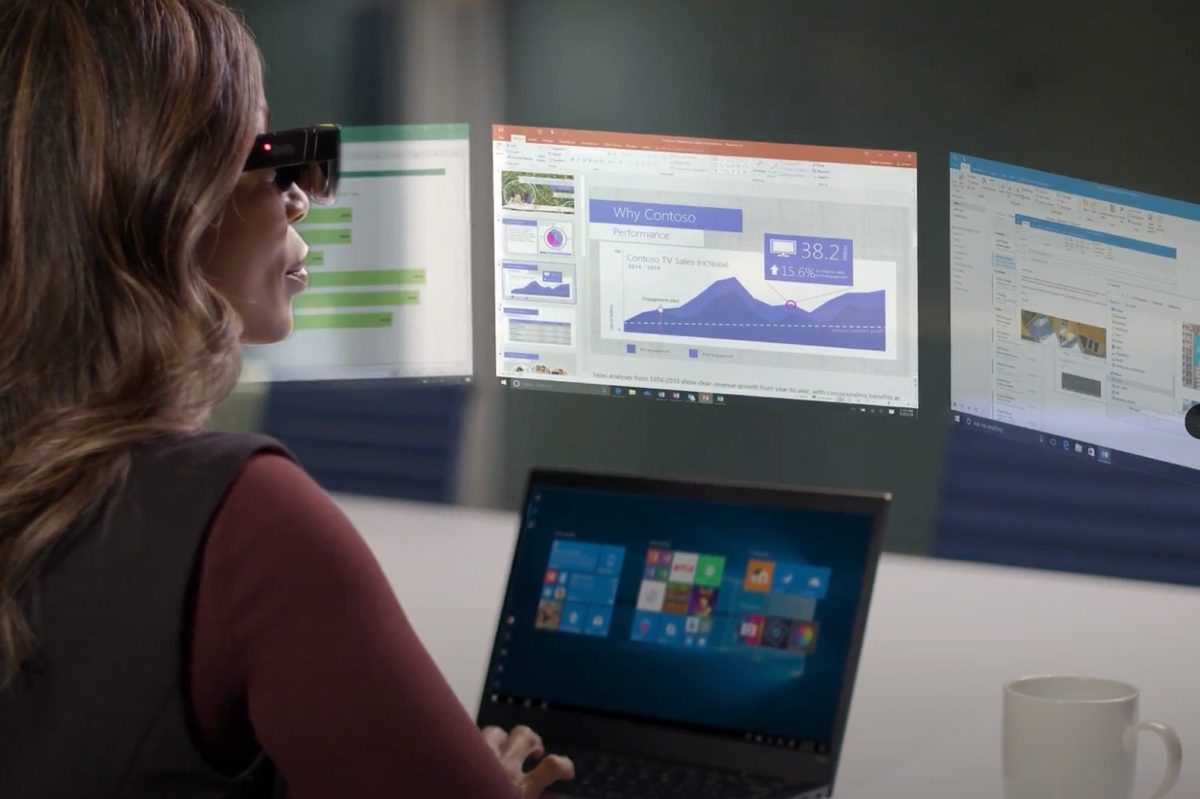
Who really needs five virtual screens? Well, Lenovo says it has been showing the A3 glasses to customers in very specific industries, such as finance, architecture, and engineering.
“Conceptually, you can think about what they mean,” Adam Howes, the Director of Global Product Management for ThinkPad, told Digital Trends. “But when our customers put them on, it sent their wheels spinning. They really unleash all these capabilities of possible scenarios.”
Howes zeroed in on the example of day trading, an occupation that requires access to streams of real-time data, usually in the form of many monitors. The A3 could, in theory, allow such a person to take their work on the go. The fact that this information is completely private to the wearer of the glasses is the icing on the cake.
Unfortunately, the A3 require that you be tethered to your PC via a USB-C cable. The glasses work with both Intel and AMD-powered laptops, as well as Motorola smartphones.
Lenovo says the A3 glasses “fit like sunglasses,” though the company didn’t provide specifics on weight. They do look less bulky than Microsoft’s HoloLens 2 glasses. Lenovo says they fit comfortably in front of prescription glasses, as well.
The A3 glasses also include a 1080p 8-megapixel camera, which Lenovo imagines you could use for “remote expert use cases.” Bundled in are dual fish-eye cameras for room-scale tracking.
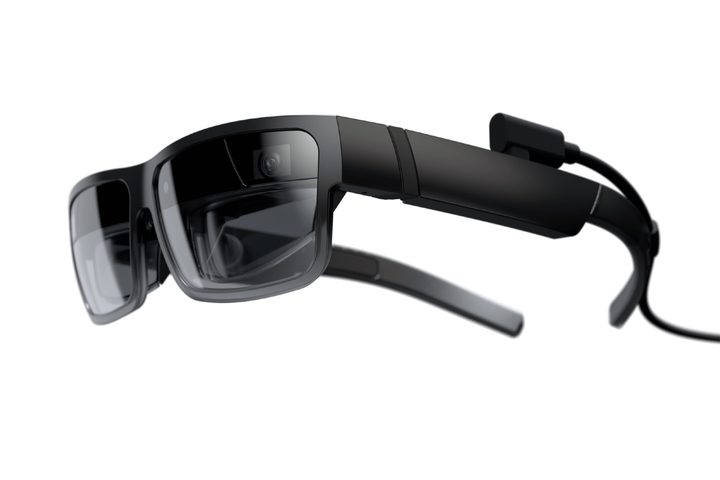
Lenovo also has an Industrial Edition of the ThinkReality A3 glasses, which only work with select Motorola phones. These are purely a commercial solution, for use in industrial scenarios such as factories or laboratories, as well as retail or hospitality spaces that require hands-free working.
Lenovo didn’t provide pricing details, but both versions of the ThinkReality A3 smart glasses will be available in mid-2021.


