  1. Home
  2. Computing
  3. News

LG’s new 480Hz gaming monitor just changed the game

Add as a preferred source on Google
God of War running on the LG UltraGear OLED 45.
Jacob Roach / Digital Trends
CES 2026
Read and watch our complete CES coverage here

LG isn’t waiting for January to launch its next generation of OLED gaming monitors. The company revealed three new displays joining its lineup, as well as updates to the OLED gaming monitors it already offers. One of them, in particular, stands out due to a dual refresh rate feature that can reach up to 480Hz.

The UltraGear 32GS95UE is the star of the show. It’s a 4K OLED monitor with a 240Hz refresh rate, but LG says you can switch to a 1080p resolution with a 480Hz refresh rate with a single click. You can map the function either to a hotkey or a directional switch on the joystick, allowing you to quickly swap between high-resolution cinematic gaming or competitive settings.

Recommended Videos

We’ve heard about some 4K OLED gaming monitors previously, and we expect to see several models at CES 2024. LG’s take stands out with its dual refresh rate feature, however. It pulls double duty as a cinematic 4K display and a highly competitive screen, putting a monitor like Alienware’s 500Hz gaming display to shame.
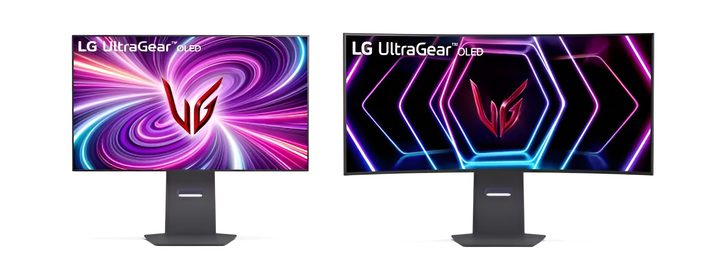
LG's 2024 lineup of UltraGear OLED gaming monitors.
LG

The refresh rate is one thing, but this monitor also has the fantastic response times of OLED. Like previous displays, LG is claiming a response time of 0.03 milliseconds. We’ve seen with displays like the LG UltraGear OLED 27 that real response times are generally higher, but OLED is still much faster than LCD displays.

Outside of the UltraGear 32GS95UE, LG has the 39GS95QE and 34GS95QE. Both of these displays feature a 21:9 ultrawide aspect ratio, as well as a resolution of 3,440 x 1,440 with a 240Hz refresh rate. We’ve seen plenty of ultrawide OLED gaming monitors like the Alienware 34 QD-OLED, but this is LG’s first attempt, and it’s the first time we’re seeing the form factor with a 240Hz refresh rate.

It’s also the first time we’re seeing an OLED monitor at 39 inches. For as great as a 34-inch ultrawide is, it’s exciting to see a slightly larger screen deliver the same OLED image quality and high refresh rate. Both of these displays come with an aggressive 800R curve, and all three displays are certified with G-Sync Compatible, FreeSync Premium Pro, and DisplayHDR True Black 400.
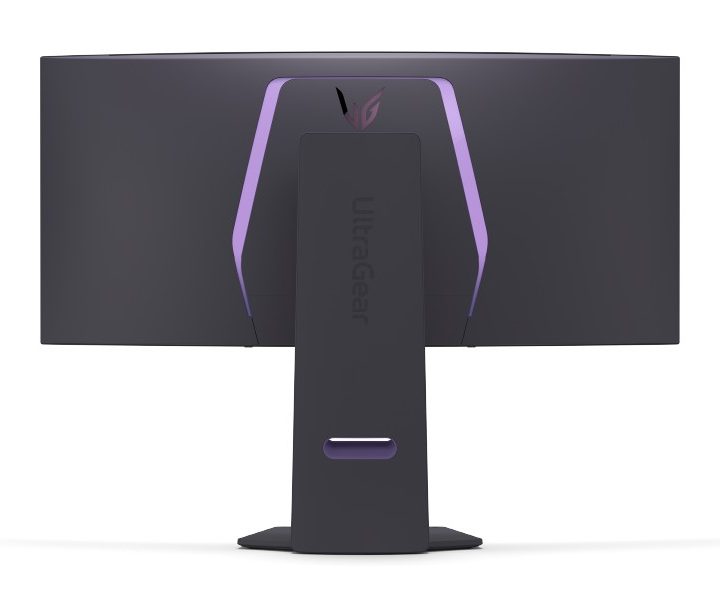
A product rendering of the back of the LG OLED gaming monitor on a white background.
LG

LG isn’t stopping there. We also have updates to the UltraGear OLED 27 and the UltraGear OLED 45. The OLED 45 is the big deal. LG is offering two versions of the monitor now, both with a 240Hz refresh rate and a resolution of 3,440 x 1,440. The 45GS96QB model, however, includes speakers and USB-C connectivity with up to 65 watts of power delivery.

It’s not clear what else these new models bring. LG says they’re “upgraded versions” of previous displays, but we’ll have to wait until we’ve seen the monitors to tell what upgrades they bring.

Jacob Roach
Former Lead Reporter, PC Hardware
Jacob Roach is the lead reporter for PC hardware at Digital Trends. In addition to covering the latest PC components, from…
Your Windows 11 PC can now natively run AI workloads, even if it lacks the Copilot+ badge
Windows 11 laptop on a table

For the better part of a year, Microsoft has been telling us that the future of AI on Windows belongs to Copilot+ PCs. If you wanted Microsoft’s most advanced local AI features, you needed a machine with a dedicated Neural Processing Unit (NPU). That was the deal. Now, Microsoft appears to be rewriting the rules.

According to updated documentation, Windows 11’s local Language Model APIs can now run on non-Copilot+ PCs, provided they have an Nvidia GeForce RTX 30-series GPU (or newer) with at least 6GB of VRAM. On the surface, this sounds like a developer-focused update. In reality, it could be one of the most significant shifts in Microsoft’s AI PC strategy since Copilot+ PCs launched last year. More importantly, it raises a question that has been lingering ever since the AI PC era began: Did we really need NPUs for all of this in the first place?

Read more
The Windows 11 June update makes your Start menu and Search feel much more snappier
Low Latency Profile is the first targeted fix Microsoft has shipped for shell responsiveness, and the June update brings it to every eligible PC rather than just Insider preview testers.
Windows 11 Laptop

If you’ve ever clicked on the Start button and watched the menu appear after a second or two, you already understand the problem Microsoft is trying to solve with its June 2026 Windows 11 update. 

The update (KB5094126) rolled out on June 9, 2026, for WIndows 11 24H2 and 25H2, and targets the shell responsiveness issues that have quietly frustrated users since its launch in 2021. The headline change is the broad rollout of the Low Latency Profile.

Read more
OpenAI teams up with Visa to enable secure payments through AI agents
ChatGPT could soon buy things on your behalf thanks to OpenAI's new Visa partnership
openai-chatgpt-visa-payment

Imagine telling ChatGPT to reorder your paper towels or find the best wireless headphones in your budget, and it just handles the purchase without you lifting a finger. That is exactly what OpenAI and Visa are now building toward.

The two companies announced a strategic partnership at the Visa Payments Forum, with plans to bring Visa's global payment infrastructure directly into OpenAI's AI agent experiences, including ChatGPT and the Atlas browser.

Read more