
“Why you can trust Digital Trends – We have a 20-year history of testing, reviewing, and rating products, services and apps to help you make a sound buying decision. Find out more about how we test and score products.“

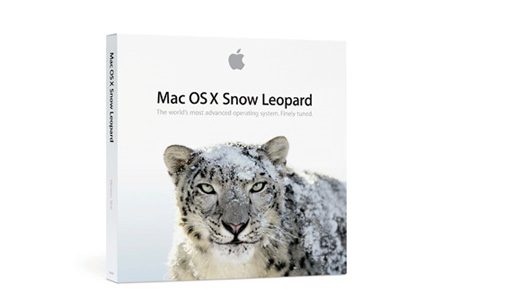
The Macintosh faithful are all abuzz with the debut of Mac OS X 10.6 Snow Leopard, Apple’s latest and greatest operating system for Macintosh computers. However, unlike its “big cat” predecessors (like Leopard, Tiger, and Panther) Snow Leopard isn’t awash in splashy new features or new ideological paradigms meant to advance the computing experience – and knock Redmond back on its heels. Instead, Apple took a breath with Snow Leopard and focused on refining its Mac OS X operating system, taking the time to get lots of details right, improve performance, and make a bunch of under-the-hood changes that will benefit Macintosh users in the long run. Improvements to the OS are highly visible in a few places, show up in a lot of little areas, and amount to an upgrade greater than the sum of its parts. The enhancements in Snow Leopard become starkly apparent when one goes back to Leopard or Tiger. After using Snow Leopard, they seem clunky and slipshod, where Snow Leopard hums along and does things right.
System Requirements and Availability
Snow Leopard’s pricing reflects the lack of glitzy new toys: Mac OS X 10.5 Leopard users can upgrade to Snow Leopard for just $29.99, which is a significantly lower price point than the $129 Apple normally charges for a new operating system. A five-license family packs runs for $49.99, and Apple is also offering a Mac Box Set with Snow Leopard, iLife ’09, and iWork ’09 for $169, with some resellers already offering discounts. Officially, the Mac Box Set is the only upgrade path for users of Intel Macs running Mac OS X 10.4 Tiger, but the regular Snow Leopard installation disc seems to work just fine. New Macs are already shipping with Snow Leopard; folks who purchased a new Mac on or after June 8, 2009, can get Snow Leopard for $9.95.
Snow Leopard will run on any Macintosh with an Intel processor and 1GB of RAM. While this covers Macs released in the last three years, it leaves owners of older systems based on PowerPC G4 and G5 CPUs out in the cold, just as Apple abandoned support for older Mac OS 9 applications in Leopard.
Installation
One area where Apple has clearly made progress is the Snow Leopard installer, omitting the perplexing “Archive & Install” options from earlier releases for a simplified click-and-be-done approach.

Mac OS X 10.6 Snow Leopard install screen: It doesn’t get much simpler than this.
The installer will automatically disable some software known to be incompatible with Snow Leopard, and if the installation fails halfway through (perhaps due to a power outage) the underlying Mac OS X operating system remains untouched – just relaunch the Snow Leopard installer and start again. Apple does offer custom installation options:

Snow Leopard installation options: note the PowerPC emulator Rosetta is not installed by default.
Notice what is not enabled by default: Rosetta, Apple’s low-level emulator that lets programs written for earlier PowerPC processors run on Intel-based Macs. Although many applications are available as universal binaries that support both Intel and PowerPC CPUs natively, some very notable apps – like Adobe’s CS3 and CS4 suites – require Rosetta to run at all on Snow Leopard. Snow Leopard will not install Rosetta by default. Instead, users will be prompted to download and install Rosetta via Software Update the first time they run a PowerPC application. Depending on system configuration, that might happen as soon as Snow Leopard starts up. The installation CD also includes an optional installer for Apple’s Xcode development tools.

Something like this will greet many Snow Leopard users when they try to run PowerPC programs.
New Features
Snow Leopard may lack over-the-top new features, but it’s not lacking in new capabilities. First and foremost, the Mac OS X Finder may look much the same, but it doesn’t feel the same. Apple has rewritten it from the ground up using 64-bit Cocoa calls, which deliver a noticeable performance boost. The Finder now supports icons up to 512 by 512 pixels, with a slider on the lower right of Finder windows controlling the size. Huge icons might seem pointless, until you realize they integrate with the Finder’s preview functions, enabling users to see PDF and Word documents, images, and other files without opening other applications. You can even play movies right in an icon.

Movies can be played right within their icons, which can stretch up to 512by 512 pixels.
Apple’s Exposé window management feature has also been integrated into the Mac OS X Dock: Click and hold on an application in the Dock (including the Finder) to see an Exposé grid of its windows. Hover over a window and press the spacebar to zoom in on it, or release the mouse to exit Exposé and bring the window forward. Pressing Command-1 re-arranges the grid by name.

Click and hold an application icon in the Dock to see an Exposé grid of its open windows.
The Dock’s contextual menus have also been given a new look to distinguish them from other programs, with little-used clutter moved off to a sub-menu. Stacks, a feature that enables users to drill down into folders in the Dock, are now scrollable, making the feature practical for folders with more items.

The Dock’s contextual menus have been cleaned up, and they’re now visually distinct from other applications’ contextual menus.
Another unsung but significant change: Snow Leopard includes rudimentary malware protection that can detect viruses, trojans, and other software that can damage a Mac. Macs have never experienced malware problems to anywhere near the degree Windows has (Apple’s current malware definitions list includes only two items), but as the Mac gets more popular it’s a question of when, not if, major malware will hit the Mac. Snow Leopard’s protection feature is built into File Quarantine technology Apple introduced with Tiger: Snow Leopard will prevent known malware from running (and tell users to delete it), but there’s no way to trigger a scan or automatically remove malware.
Other Snow Leopard improvements: iChat can now push VGA-resolution video chat through connections with less bandwidth, and the Airport menu now shows signal strengths of nearby Wi-Fi networks (press Option for geeky details!). Snow Leopard will automatically check to see whether your printer drivers are up to date, and Services (a holdover going all the way back to Nextstep) are finally first-class citizens in Snow Leopard, accessible via contextual menus. Hopefully developers will jump on the opportunity and make Services useful, rather than confusing. And windows are finally spring-loaded, so users can easily drag and drop items between windows without having to shuffle everything around.

The Airport menu now shows the relative signal strength of all nearby networks.
Exchange Support
One of Snow Leopard’s most-touted features is out-of-the-box support for Microsoft Exchange. While Microsoft aficionados won’t mistake Snow Leopard’s capabilities for a full version of Outlook, its core applications including Mail, Address Book, and iCal now sync up with Exchange with almost frightening simplicity: Just enter your Exchange username and password, and Snow Leopard can use Exchange’s auto-discovery feature (your IT people do have that enabled, right?) to set up your other applications. If you’re a little more of a hands-on person, you can also do manual setup and connect via VPNs.

Assuming your IT department has Exchange autodiscovery enabled, getting Snow Leopard to work with Exchange is as easy as entering your email address and password. Everything else sets up automatically.
Snow Leopard can tap into Active Directory and Print Services, create and acting on meeting invitations, and display colleagues’ real-time availability. In our relatively limited testing, Apple’s support for Exchange features worked well: Mail from Exchange accounts lived happily beside regular POP and IMAP accounts, names and email addresses autocompleted from Exchange’s global address list, and iCal easily managed multiple Exchange-based calendars.
QuickTime X
One of Snow Leopard’s more-visible changes is QuickTime X, the latest edition of Apple’s media playback engine. QuickTime X features a vastly streamlined player—movies just appear in an unadorned window with controls that fade in and out when they’re needed. Apple says QuickTime X offers significantly improved performance by directly tapping into available graphics hardware and performing GPU-assisted H.264 decoding. It also supports HTTP live streaming, which works more reliably through firewalls and routers, since it uses the same protocol as Web browsers.

QuickTime X’s streamlined player: Controls are only visible when needed, and users can easily capture video, trim it, and save it for sharing.
The QuickTime X Player also has some features formerly reserved for QuickTime Pro. Users can trim videos, save as iPod or iPhone-ready movies, publish to MobileMe or YouTube, and instantly capture video and audio using a Mac’s built-in camera and mic. Users who previous paid for QuickTime Pro’s features will find the QuickTime 7 Player neatly tucked away in the Utilities folder, with all its features intact.
Under the Hood
Snow Leopard continues Apple’s transition towards a fully 64-bit platform. Major Apple programs like the Finder, iChat, Mail, Safari, iCal, and QuickTime are now fully 64-bit, supporting far more memory and improving performance. Snow Leopard also includes Grand Central Dispatch, a new task allocator designed to leverage multiple CPU cores available in most Intel-based Macs. Although developers will have to retool their programs to take advantage of Grand Central Dispatch, early reports from programmers are very positive. Apple has also introduced support for OpenCL, which lets programmers tap high-speed graphics processors – like those found in Nvidia and ATI GPUs – for general computing.
Yes, that’s all pretty esoteric, but Apple has also made more obvious tune ups. Snow Leopard significantly improves sleep and wake times, which is handy for notebook users, and here’s something you almost never see in an operating system update: Snow Leopard uses only about half the disk space of Mac OS X 10.5.
Conclusion
Is Snow Leopard an upgrade that will make your jaw drop as soon as it appears on screen? No. Is it a worthwhile upgrade that significantly improves the Mac? Absolutely. For some users, the integrated Microsoft Exchange support alone is enough to justify the upgrade. (After all, it’s going to be more than a year before Microsoft ships its promised Mac version of Outlook.) For others, improved performance will give older Intel-based Macs a new lease on life, and numerous interface and functionality improvements will make living with Snow Leopard more pleasant than its predecessors. Snow Leopard also cuts most ties to legacy Apple hardware: the Rosetta emulator (not even installed by default!) is Apple’s only link to its pre-Intel days. From Snow Leopard forward, expect Apple to focus on leveraging the power and capabilities of that hardware, rather than bending over backwards to support abandoned technology.
Score: 8
Pros
- Numerous interface improvements
- More 64-bit applications
- Effortless Exchange support
- Quicktime X more refined
- Requires less disk space
Cons
- Rosetta not installed by default
- Not an essential upgrade
- Moving away from legacy support
- Grand Central Dispatch and OpenCL require developers to catch up


