
Magic Leap has, after years of teases and promises, unveiled its augmented reality headset to the world and it looks much more like the “goggles” moniker so commonly used to refer to other head-mounted displays. Featuring inside-out tracking, and wireless operation and processing, its claimed abilities could make it the most advanced AR device ever created.
Alongside Microsoft’s Hololens headset, the Magic Leap has been a device that’s been talked about for years. While Microsoft’s device did eventually make it into the hands of developers some time ago, though, it’s only now we’re getting our first look at the Magic Leap headset. We still don’t have a hard release date or pricing information, but its feature set will have AR fans salivating at its potential.
The purpose behind the Magic Leap is to blend the real and virtual worlds more than ever before. While other augmented reality headsets have lacked resolution and real-life presence, the Magic Leap headset is said to be capable of creating “lifelike digital objects” that coexist in the real world. As well as detecting your physical location and rotation, the headset can pick up surfaces, planes, and objects, allowing for a digital remodeling of them, thereby having digital objects actually interact with the physical world.
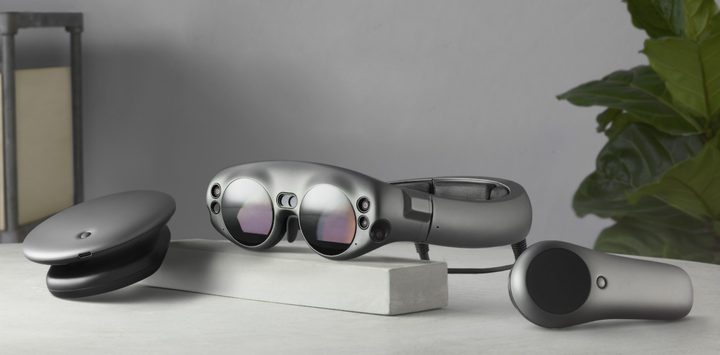
That augmented view will be customizable, letting you create and mount your own virtual displays wherever you want and have digital objects continue to interact with the world even when you’re not looking at them. The headset is said to leverage technology to allow for natural object processing by the wearer’s brain, making the headset comfortable to wear for long periods of time. As for audio, the Magic Leap is said to mimic the real world to provide distance and intensity mapping so that sounds feel as real as the visuals.
All of the augmented features can be interacted with using a broad range of input options, including voice, gestures, and the wireless remote controller.
Although we don’t know specifics on the internal hardware, we’re told that it’s as powerful as a “laptop computer.” That may mean we’re not talking the kind of visuals you would expect on a high-end desktop, but it’s certainly powerful enough to recreate some singular items that look pretty and somewhat realistic. If you’re wondering why there’s so little information available about the new device, it’s very much on purpose: Magic Leap requires that developers literally lock their developer units away in safes as part of generally strict security policies, Bloomberg reports.
All of this is just the beginning. As the official Magic Leap site states, this is just “day one.” The headset itself will launch at some point in 2018, with a “Creator Portal” debuting earlier in the year. That will allow early-access developers working with the bare-bones “Creator Editon” to create the software to make Magic Leap applications that really open up its potential.
Updated on April 2: Added information regarding Magic Leap’s high security.


