  1. Home
  2. Computing
  3. News

Microsoft’s controversial Recall feature can’t be uninstalled

Add as a preferred source on Google
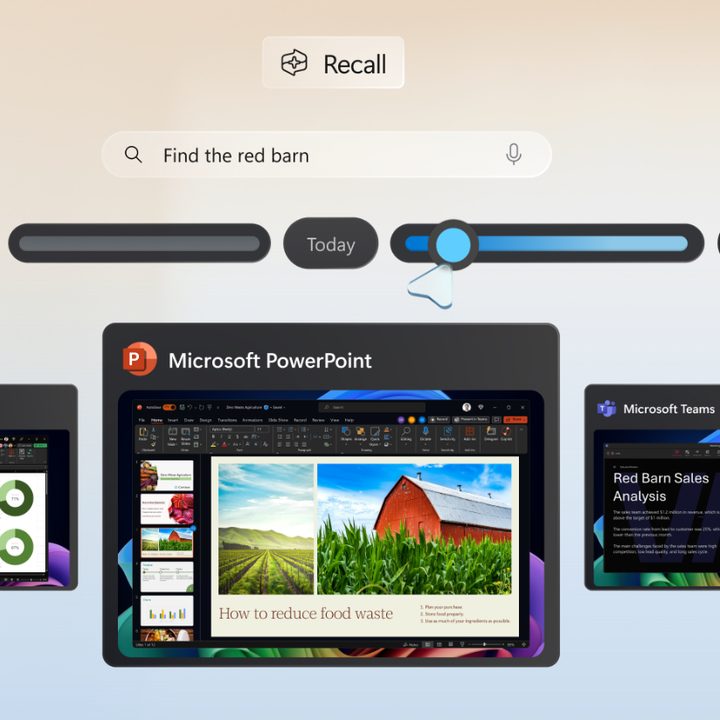
Recall promotional image.
Microsoft

The Recall saga continues. As it turns out, Microsoft’s controversial AI feature cannot be uninstalled, although that was spotted as an option in the latest version of Windows 11 24H2.

The ability to uninstall it was initially observed by Desk Modder as a part of the “Turn Windows features on and off” menu in Control Panel, but Microsoft has now confirmed to The Verge that it was merely a bug. The statement to The Verge says that being listed in that menu is an issue that “will be fixed in an upcoming update.”

Recommended Videos

That might sound innocuous, but the ability to uninstall Recall would have provided some amount of reassurance in the wake of its ongoing security kerfuffle.

To be clear, you can still disable Recall. It was originally announced as on by default for new Copilot+ PCs, but after concerns about some security vulnerabilities were raised, it was changed to an opt-in feature, and eventually delayed entirely. The update to Recall will provide some extra security measures when it eventually launches, including requiring Windows Hello and being fully encrypted.

The feature is expected to launch in preview in October, but it may not be until much later that it officially rolls out. Microsoft says Recall requires a powerful and efficient neural processing unit ( NPU) with at least 40 Tera Operations Per Second (TOPS), meaning older PCs — or even current-gen “AI PC” Intel laptops — won’t be supported.

Recall was originally sold by Microsoft as the primary use case for the more powerful NPUs in the Copilot+ line of laptops, along with more minor creative features like Cocreator in Paint.

Fortunately, these first Copilot+ PCs were powered by Qualcomm’s Snapdragon X Arm chips, providing a meaningful step up in battery life and efficiency to be marketed on.


Luke Larsen
Former Senior Editor, Computing
Luke Larsen is the Senior Editor of Computing, managing all content covering laptops, monitors, PC hardware, Macs, and more.
Wowed by computer-use AI agents? Research says they’re “digital disasters” even for routine tasks
Researchers tested 10 agents and models and found high rates of undesirable actions and real digital damage
ai-agent-handling-office-tasks

AI agents built to run everyday computer tasks have a serious context problem, according to new research from UC Riverside.

The team tested 10 agents and models from major developers, including OpenAI, Anthropic, Meta, Alibaba, and DeepSeek. On average, the agents took undesirable or potentially harmful actions 80% of the time and caused damage 41% of the time.

Read more
Bombshell OpenAI lawsuit claims your ChatGPT convos were shared with Google and Meta
A class action says OpenAI let Google and Meta trackers collect sensitive user data
OpenAI Sam Altman and LoveFrom Jony Ive with Laurene Powell Jobs

A new ChatGPT privacy lawsuit claims OpenAI shared user prompts and identifying information with Google and Meta tracking tools without proper consent.

The class action filed in California, according to Futurism, says data tied to ChatGPT users, including chat queries, emails, and user IDs, moved through tools such as Meta Pixel and Google Analytics. The case alleges that violated California privacy law and federal wiretap rules.

Read more
Dell expands AI PC lineup with new slim Dell 14s and 16s laptops
Your next Dell laptop could last all day without charging
Dell 16s AI PCs

Dell has introduced the new Dell 14S and Dell 16S laptops, expanding its AI-focused Copilot+ PC lineup with slimmer designs, updated Intel processors, and improved battery life. The company is positioning both laptops as premium productivity machines that combine AI features, portability, and multimedia capabilities in a thinner form factor.

The new laptops are powered by Intel Core Ultra Series 3 processors, going up to the Intel Core Ultra 9 386H chipset. Dell says both systems include on-device AI acceleration with up to 50 TOPS NPU performance, allowing AI-related tasks to run locally without relying entirely on cloud processing. AMD Ryzen AI 400 Series variants are also expected to arrive later this month.

Read more