  1. Home
  2. Computing
  3. News

Microsoft finally fixes the Windows 11 Widgets and makes them far less distracting

Four years after launch, Microsoft is finally making Widgets less of a nuisance by default.

Add as a preferred source on Google
Electronics, Screen, Computer
Microsoft

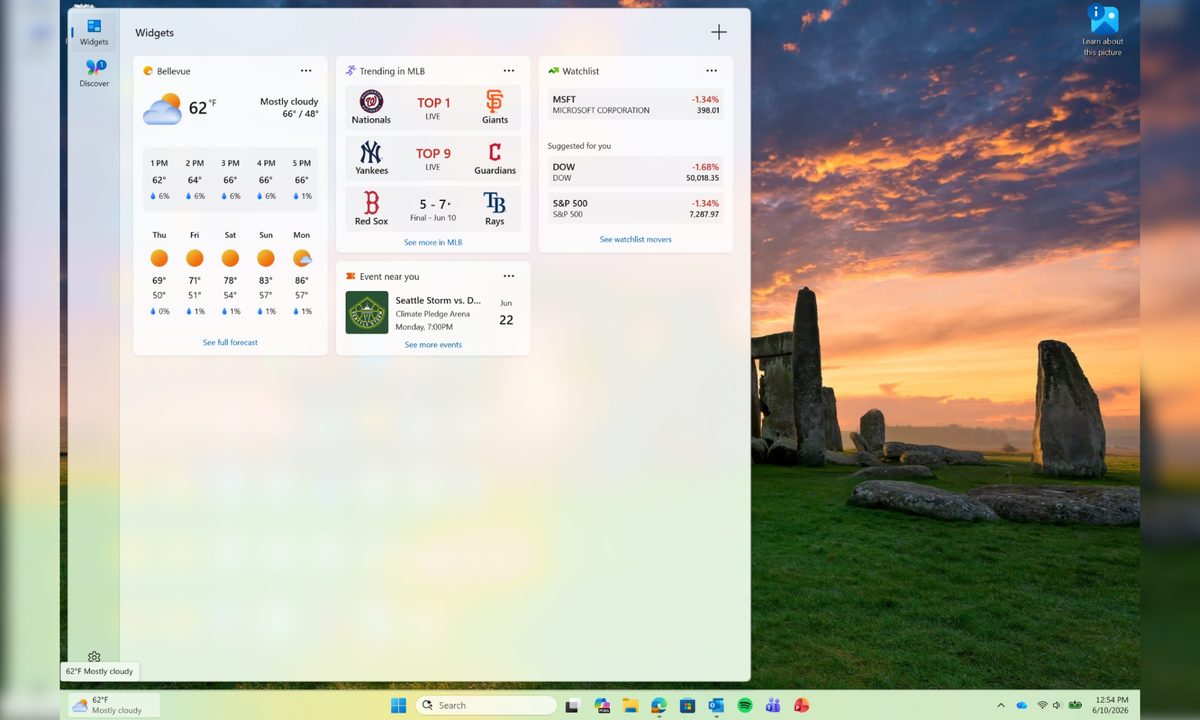
If Windows Widgets have been stressing you out with too much information to handle, all those red badges, random pop-ups, and a panel that opens every time your cursor drifts close to the taskbar, Microsoft has finally heard you. 

A new Beta build is rolling out a full “quiet by default” overhaul to Widgets. What’s interesting is that the list of things being turned off is longer than the list of things being kept as is.
So what exactly is Microsoft turning off?

Quite a lot of things. Microsoft is disabling Open on Hover and Taskbar badging. It is also restricting the number of daily taskbar alerts. The alerts won’t show up unless you choose to open them, which comes as quite a relief to Windows users. 

Recommended Videos

The lock screen only shows the weather widget by default, instead of a whole dashboard of information tiles fighting for your attention and ending up getting none. 

For those who still want badges, they match your Windows accent color instead of always showing up red (and creating an unnecessary sense of urgency). The build is part of Windows 11 Beta Preview Build 26220.8680. 
This is just Microsoft walking a few things back

Microsoft even baked in engagement-based quieting now, meaning the less you use Widgets, the more aggressively the system dials back the noise on your behalf. To me, this sounds more like an admission than an announcement. Either way, the taskbar is about to get a lot cleaner and calmer. 

Widgets were introduced in Windows 11 in 2021 as a major new feature. They provided a panel with personalized content such as news, weather, sports scores, stocks, and calendar information accessible from the taskbar.

The reality, however, is that most users found it more irritating, as it presented too much information to process, with badges nagging them and the panel hijacking the screen at the worst moments. 

Shikhar Mehrotra
For more than five years, Shikhar has consistently simplified developments in the field of consumer tech and presented them…
Microsoft Surface Laptop 8 claims 20-hour battery life, improved GPU performance, and a steep $1,599 ask
A 20-hour battery, a new chip, and a price tag that's harder to ignore than ever.
Computer, Electronics, Laptop

Microsoft just launched the Surface Laptop 8. It now runs on the Snapdragon X2 chip (replacing the X Elite on the previous generation), but that’s not the most interesting bit. 

The lineup consists of two variants, wherein the 13.8-inch model claims to provide up to 20 hours of battery life on a single charge.

Read more
Intel’s wild NVIDIA RTX chip could blow up the laptop GPU war
A reported 2028 roadmap puts RTX graphics inside future Intel x86 processors, setting up a major shift in PC silicon.
Nvidia logo

Intel's rumored NVIDIA RTX chip could make the PC graphics fight a lot more complicated.

Erdi Ozuag, a former editor at Turkish tech site DonanimHaber who now reports on tech through YouTube, says that Intel's current roadmap lists its first x86 client processors with NVIDIA RTX graphics for the first quarter of 2028. That timing lines up with a possible CES 2028 announcement, but Intel hasn't confirmed a product name, specs, configuration, or launch date.

Read more
Intel’s rumored Serpent Lake SoCs with Nvidia graphics may arrive in 2028
Intel and Nvidia could team up on a processor unlike anything seen before
Intel Core Ultra Desktop CPU

Intel’s rumored Serpent Lake processors may have a launch window. According to hardware tipster FX57, Intel is targeting the first quarter of 2028 for processors featuring Nvidia graphics technology. If the schedule remains unchanged, the chips could debut at CES 2028.

The leak does not mention Serpent Lake directly, but previous roadmap reports have linked the codename to a future Intel SoC that pairs Intel CPU cores with an Nvidia RTX graphics tile instead of the company’s own Arc graphics technology.

Read more