  1. Home
  2. Computing
  3. Legacy Archives

Microsoft looking to buy Adobe?

Add as a preferred source on Google
Image used with permission by copyright holder

News that Microsoft CEO Steve Ballmer and staff had a quiet meeting with Adobe CEO Shantanu Narayen at Adobe’s headquarters have sparked rumors that Microsoft is mulling and acquisition of Adobe…although many industry watchers think such a deal is highly improbable. According to The New York Times, the meeting lasted roughly an hour and covered a variety of topics, including how the companies could work together to be more competitive with Apple in the mobile marketplace.

News of the meeting sent Adobe stock up more than 11 percent, based on the notion a “partnership” might include Microsoft purchasing Adobe.

Recommended Videos

Most industry watchers seem to think it far more likely that a brief meeting between CEOs was more about Ballmer rallying support for his company’s forthcoming Windows Phone 7 platform—and getting Adobe Flash up and running on Windows Phone 7 would definitely give it a competitive checkpoint against Apple’s iOS. Apple’s mobile platform doesn’t support Flash, and Apple CEO Steve Jobs has minced few words about how he feels Flash is an inappropriate technology for mobile, touch-based devices. However, Apple recently relented on permitting Flash developers to deploy applications for Apple’s iOS.

Adobe certainly has assets Microsoft might be interested in owning, including a large suite of content creation applications (the juggernaut that is Photoshop), along with Flash and Adobe’s recently-acquired Omniture Web analytics business. Microsoft’s positions in the Windows desktop application market and online advertising would certainly raise antitrust scrutiny, although Microsoft has notably failed to compete with Adobe’s Creative Suite applications. However, Microsoft is unlikely to abandon it own Silverlight technology in favor of Flash, or want to shoulder the burden of maintaining two separate rich media development platforms.

Geoff Duncan
Former Contributor
Geoff Duncan writes, programs, edits, plays music, and delights in making software misbehave. He's probably the only member…
The best trick AI can pull is disappear into my gadgets instead of turning into a product
AI may finally become useful when it stops announcing itself and starts quietly fixing the annoying parts of everyday tech
Appliance, Blow Dryer, Device

My wife recently woke up from a nightmare where AI had taken over human bodies. The likely culprit was less dramatic: Google Photos kept nudging her to “AI” herself when she only wanted to look at pictures of our cats.

That’s where a lot of people are with AI right now. Curious, tired, mildly creeped out, and increasingly annoyed when normal apps start acting like every action needs a software demo attached.

Read more
Why RAM Is So Expensive in 2026 — And What PC Buyers Should Do
RAM memory chips

If you’ve been planning a PC build or even browsing pre-built systems, you’ve likely run into the same issue: RAM prices are unusually high. In some cases, costs have increased by as much as 500%, pushing up overall system prices and making builds harder to justify.

This isn’t a short-term fluctuation. It’s the result of multiple shifts happening at the same time, most of which are tied to how quickly demand for memory has changed.

Read more
DeepSeeek V4 is out, touting some disruptive wins over Gemini, ChatGPT, and Claude
An open-source model that beats GPT-5.4 on Codeforces and costs a fraction of Claude isn't just a news story; it's a pricing ultimatum to the entire AI industry.
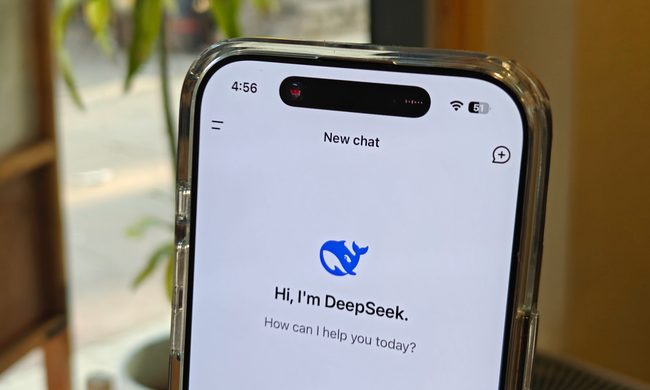
DeepSeek AI chatbot running on an iPhone.

China’s DeepSeek has a habit of showing up, uninvited, to Silicon Valley’s AI party, and this time, it has done so with the long-awaited V4 preview. The Hangzhou-based company has released its latest AI model, which beats popular American models in certain areas. 

DeepSeek has launched two new models: V4-Pro (Expert mode) and V4-Flash (Instant mode). While the former is a massive 1.6 trillion parameter model, the latter is at a more manageable 284 billion parameters. However, both of them have a one-million-token context window. 

Read more