
Even as gamers are still waiting to get their hands on Nvidia’s latest RTX graphics cards following the recent launch of the RTX 3000 series powered by the Ampere architecture, it appears that the company may already be working on a next-generation GPU that — if leaks are to be believed — may be significantly more powerful. Though we don’t know what the next GeForce card will be called (it will likely be part of the RTX 4000 series) the architecture is believed to be code-named Ada Lovelace.
Ada Lovelace is described to be capable of a whopping 64 TFLOPs of power, which would give Nvidia the performance lead. That’s nearly twice the performance of the current RTX 3080 flagship, which comes in at 34 TFLOPs, and more than five times the performance of Microsoft’s Xbox Series X.
What is Nvidia Ada Lovelace?

The Ada Lovelace architecture is named after computer enthusiast Augustus Ada King, the Countess of Lovelace and daughter of English poet Lord Byron, who was an English mathematician known for her work on Charles Babbage’s Analytical Engine computer and is regarded as the first computer programmer. It is said to have a model number of AD102. For reference, Ampere’s architecture was listed by the GA100 series. And even though the Ada Lovelace code name hasn’t been officially confirmed by Nvidia, the name was showcased in the company’s GTC 2018 keynote, along with other prominent scientists.
For Ada Lovelace, Nvidia is said to have made several key changes to the architecture to give it a performance boost compared to Ampere. The biggest and most notable change is going with a smaller process node, which would then allow the company to squeeze in more transistors to extract added performance or drive better energy efficiency.
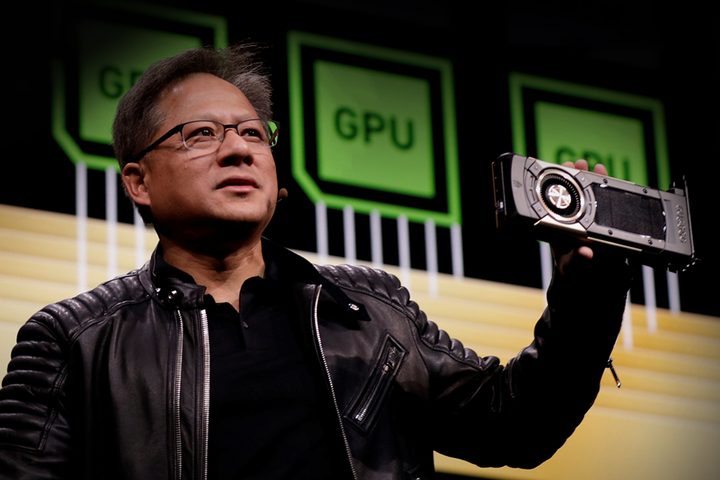
Nvidia will reportedly be moving to a 5nm node, down from the company’s 8nm node on Ampere. It’s unclear at this time if Nvidia will continue to rely on Samsung for manufacturing, or if it will transition the production of Ada Lovelace to TSMC. Nvidia had switched to Samsung for Ampere.
Given recent rumors about an Nvidia 6N process, it’s also unclear if Nvidia will skip the 6nm node and go with 5nm for Ada. Rival AMD uses a 7nm process for its latest GPUs.
Details about Ada, the successor to today’s Ampere, was leaked by Twitter user @kopite7kimi, who was responsible for the accurate leak of Ampere before Nvidia launched the RTX 3000 series, according to Wccftech.
More cores
With the move to a smaller node, Nvidia is also said to be packing up to 18,432 CUDA cores into Ada. For comparison, the RTX 3080 has 8,704 CUDA cores while the more powerful enthusiast-class RTX 3090 has 10,496 CUDA cores. This means that Ada would have more than double the core count compared to the the flagship RTX 3080. According to Tom’s Hardware, Lovelace is capable of up to a 71% theoretical performance uplift over Ampere.
The publication noted that Lovelace could be a single-die design, compared to the rumored Nvidia Hopper with its multi-die design. The single-die design would make Lovelace more suited for gaming, as it could help to reduce latency, whereas Hopper may be positioned for data center use.
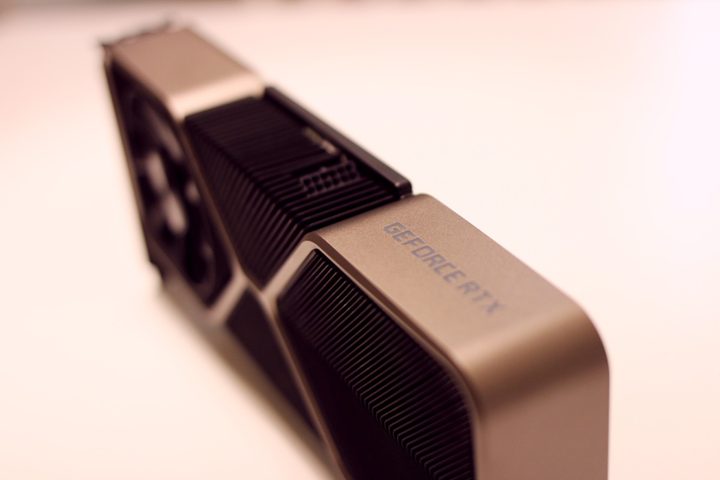
It’s unclear how many RT or tensor cores will be present on Ada. If Nvidia is able to add more RT cores, it could further boost real-time ray tracing performance at higher resolutions (possibly 4K and above) in games. The RTX 3080 has 68 RT cores and 272 tensor cores that aid in DLSS.
Ada is also said to have a 12 x 6 structure, and based on information provided by @kopite7kimi, 3DCenter extrapolated that the graphics card will have 12 graphics processing clusters, up from 7 on Ampere. The chipset will have 144 streaming multiprocessors as well, an increase from 84 SMs on Ampere. The GPU is believed to have a clock speed of 1.75GHz.
More cache
Another major change with Lovelace is that it will have a bigger memory cache. Whereas Ampere and Turing both had 6MB of L2 cache, Lovelace may come with even more L2 cache. This suggests a big architectural redesign, rather than just simply moving to a smaller node. For reference, rival AMD also worked on memory and cache improvements for its Radeon RX 6000 series GPUs to drive performance on its latest graphics card despite using the same 7nm process as the prior generation.
With Ampere, Nvidia also moved to a new GDDR6X memory format for faster memory access and more bandwidth on its premium cards. The GDDR6X standard will likely stick around, though it’s unclear if the format will continue to be an Nvidia exclusive.
Launching in 2022?
Though an exact release date has not been given, insiders anticipate that Lovelace won’t debut until 2022. Given that Ampere was just only recently launched — and Nvidia has been struggling to keep up with demand — the company may be in no rush to introduce a successor to the well-received RTX 3000 series.
And even though rival AMD’s recently launched Radeon RX 6000 processors compete well against Nvidia’s GeForce offerings in key areas, Nvidia still commands an advantage in ray tracing performance. Nvidia also still needs to launch its latest RTX 3000 series on mobile before we can expect a next-gen desktop GPU to debut.


