

Today, Nvidia announced the highly-anticipated refresh of the GeForce RTX line of GPUs, called the RTX GeForce Super. The new series, which includes the RTX 2060 Super, RTX 2070 Super, and RTX 2080 Super, enjoys enhanced performance over their non-super counterparts, but at an identical price (apart from the RTX 2060 Super).
How super is RTX Super?
Although you’ll need to check out our review coverage to have a firm idea of how well these cards perform, the specification table for these new cards tells most of the story.
| RTX 2080 Ti | RTX 2080 Super | RTX 2080 | RTX 2070 Super | RTX 2070 | RTX 2060 Super | RTX 2060 | |
| GPU | TU102 | TU104 | TU104 | TU104 | TU106 | TU106 | TU106 |
| CUDA cores | 4,352 | 3,072 | 2,944 | 2.560 | 2,304 | 2,176 | 1,920 |
| Tensor cores | 544 | 384 | 368 | 320 | 288 | 272 | 240 |
| RT Cores | 68 | 48 | 46 | 40 | 36 | 34 | 30 |
| Base clock | 1,350MHz | 1,650MHz | 1,515MHz | 1,605MHz | 1,410MHz | 1,470MHz | 1,365Mhz |
| Boost clock | 1,545MHz | 1,815MHz | 1,710Mhz | 1,770MHz | 1,620MHz | 1,650MHz | 1,680MHz |
| Memory | 11GB GDDR6 | 8GB GDDR6 | 8GB GDDR6 | 8GB GDDR6 | 8GB GDDR6 | 8GB GDDR6 | 6GB GDDR6 |
| Memory speed | 14 Gbps | 15.5Gbps | 14Gbps | 14Gbps | 14Gbps | 14Gbps | 14Gbps |
| Bandwidth | 616 GBps | 496GBps | 448GBps | 448GBps | 448GBps | 448GBps | 336GBps |
| TDP | 250w | 250w | 215w | 215w | 185w | 175w | 160w |
Considering that the 2070 and 2080 models of the Super line are no more expensive than their non-Super equivalents, the spec comparisons show a clear advantage to the Super series in terms of general gaming capabilities and raw floating point performance. At the top of the heap is the impressive RTX 2080 Super, which closes the gap with the far more capable RTX 2080 Ti, although it remains a firm 2080 plus, rather than a 2080 Ti minus.
The RTX 2070 Super blows the RTX 2070 out of the water and could be the new killer card in the RTX lineup. The RTX Super 2070 improves on clock speed and CUDA cores over its standard 2070 counterpart, making it a very attractive proposition at the $500 point in the market.
The RTX 2060 Super arguably receives the biggest upgrade, with a sizable bump to its CUDA core count, and a huge increase in memory bandwidth, thanks to its increase to 8GB of GDDR6. That’s why its price has leapt $50 too, but it helps expand the line up, whereas the Super RTX 2070 and 2080 cards will replace their non-super counterparts in the coming months.
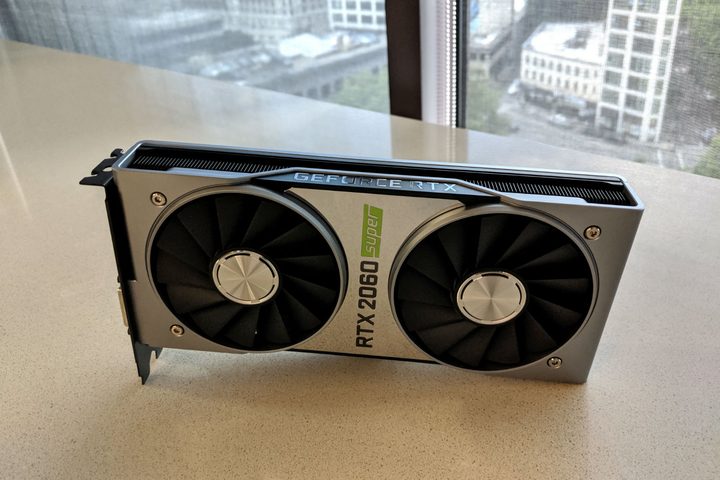
The RTX 2080 Super and RTX 2070 Super will both launch at the same price as their original predecessors, at $699 and $499, respectively. The RTX 2060 Super, on the other hand, will debut at a slight price hike, costing $399 compared with its precursor’s $349.
This may be justified in light of the fact that the RTX 2060 Super will feature 8GB of memory instead of the 6GB of memory of the original RTX 2060 (along with the previously mentioned memory bus increase). It’s a considerable boost in speed, particularly in the case of the RTX 2070 Super over the RTX 2070, without the increase in cost that rumors suggested. Gamers looking to make an upgrade will likely find the upper echelons of this new series quite appealing, especially compared to the fairly lackluster response to the RTX series launch in 2018.
In our limited time with these cards so far, we ran the hardware on our test system in 3DMark Time Spy. The 2060 Super landed 11% behind the 2070 Super, but the RTX 2080 was still 6% faster than the 2070 Super. The more interesting comparison was between the RTX 2060 Super and the AMD’s current fastest GPU, the Radeon VII. The results were neck and neck, which could spell trouble for AMD, though that depends on how its new crop of Navi cards perform. That’s only one benchmark, of course, and we’ll have more to report on performance as we continue testing.
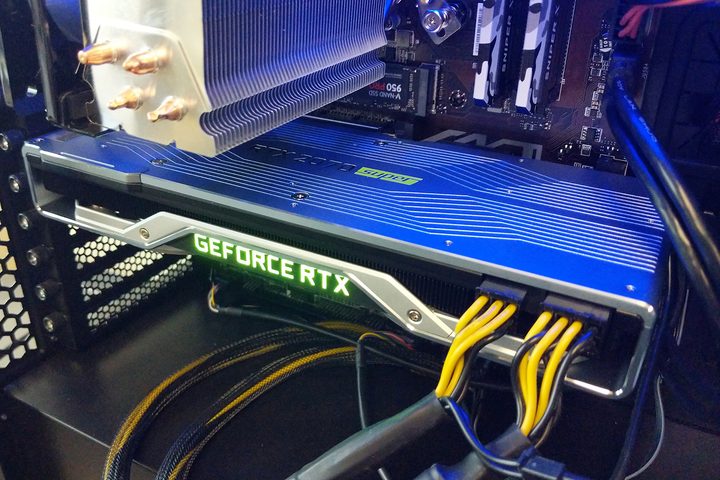
It’s still all about ray tracing
Besides the improved specs on display in the RTX Super series, Nvidia seems intent on heavily pushing ray tracing with this latest release. Ray tracing is a realistic graphics rendering technique which more faithfully reproduces the effects of light and shadows. In spite of its slick visuals, it has largely not caught on in the gaming community due to lack of available titles so far. This may explain why Nvidia waited until after E3 wrapped up to introduce the series instead of crashing the trade conference as some speculated that it would. By waiting for the the next wave of video games to be unveiled, Nvidia can now point to those and position itself as the best hardware option for delivering the full experience of those games. Indeed, Nvidia’s press materials open with shots of banners teasing E3’s splashiest new titles.
But Nvidia is not relying solely on hype to sell gamers on ray tracing. As part of the RTX Super launch, Nvidia is offering a bundle that includes a copy of ray tracing-ready games Control and Wolfenstein: Youngblood with every purchase of any graphics card or PC that includes an RTX 2060 Super, RTX 2070 Super, or RTX 2080 Super. This promotion may be just the incentive hesitant gamers need to get on board with ray tracing and drive adoption.
Interestingly, Nvidia did not announce a price cut for the current RTX 2060, 2070, and 2080. The Buy at Amazon still sits at the top of the pack in terms of power and price, while the others will naturally drop in price as they get phased out of production.
Both the RTX 2060 Super and 2070 Super will be available for purchase on July 9, while the RTX 2080 Super launches later this month on July 23. All cards announced are Founders Edition, with plans for launches from third-party manufacturers coming in the near future.


