
At the beginning of 2019, it seemed likely Nvidia would launch a GTX 1160 graphics card. That turned out to be the Turing-powered-GTX 1660 Ti, with rumors still suggesting a 1660 and 1650 could launch not long after it.
This means Nvidia’s midrange lineup is now more fleshed out, offering gamers an alternative to the RTX lineup and also greater competition for AMD’s aging Polaris RX 500 GPUs. They also make worthwhile replacements for Nvidia’s own last-generation GTX 1060 and other midrange cards.
Pricing and availability
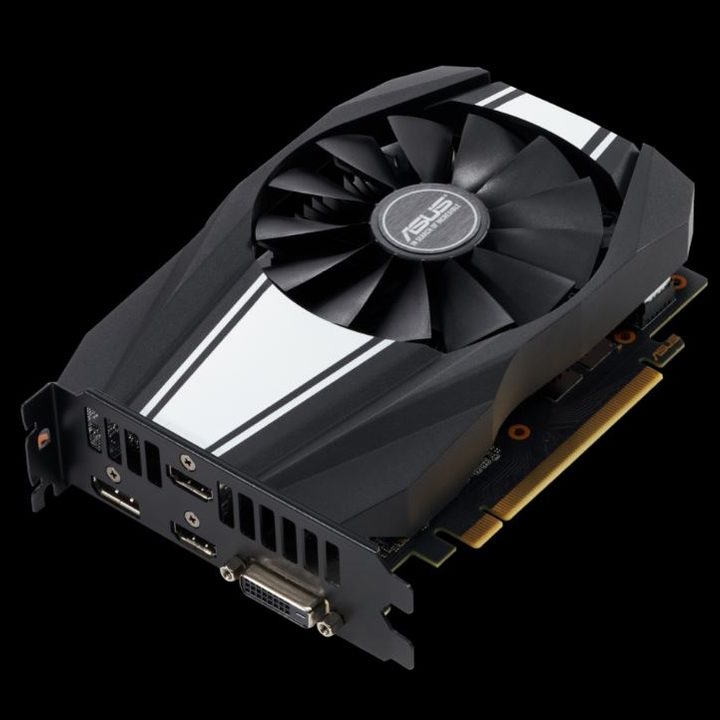
The GTX 1660 Ti is now available worldwide for $280. There is no reference design, but custom cards can be ordered from Asus, Colorful, EVGA, Gainward, Galaxy, Gigabyte, Innovision 3D, MSI, Palit, PNY, and Zotac. That puts the 1660 Ti well within the price range of the AMD RX 590 — the best mid-range card AMD currently offers. That also stops Nvidia from immediately invalidating its remaining overstock of GTX 1060s, caused by the so-called, “crypto-hangover” from 2017’s major shortages.
As for the 1660, rumors from HardOCP in late January 2019, had indicated it would launch in early March with a price of $229, followed up by a $179 GTX 1650 later that same month. DigiTimes released a similar rundown of its sources in late February. Its sources confirmed the HardOCP prices and that the 1660 would launch in mid-March. It claims that the 1650 won’t launch until the end of April, however.
Nvidia has an upcoming GTC conference in mid-March, so that could be a good chance to hear more about the two new 16-series graphics cards then. However, the conference is focused more on A.I. and deep learning, so don’t expect a lot of talk on gaming.
Performance
The most common aspect of Nvidia’s Turing-generation of graphics cards is that they tend to sit one market segment above their predecessors. With the new RTX 2060 overtaking the GTX 1070 Ti, the 1660 Ti is close in capabilities to a GTX 1070. It sports 1,536 CUDA cores, 6GB of GDDR6 memory at 12GBPs, and a boost clock of 1.8 GHz. It typically outperforms AMD’s RX 590 (its main cost competitor) and even rivals the AMD Vega 56 in some games at middling detail settings and resolutions.
The GTX 1660 is likely to come in a step below that, bridging the gap between the GTX 1060 and GTX 1070. PCGamer quotes a few sources suggesting that the non-Ti GTX 1660 would sport 6GB of memory, though whether it was GDDR6 or GDDR5 isn’t clear. It is expected to sport a weaker TU116 GPU as well, though whether that’s achieved through a reduction in clock speeds or CUDA cores is unknown at this time.
As for GTX 1650, a recent screenshot of a 3DMark entry provided by the prolific leaker TUM_APISAK on Twitter supports the existence of a laptop version of the graphics card. It shows the card with a 1,395Mhz base clock speed and a 1,560Mhz boost clock speed. There’s no word on the CUDA cores, but the virtual memory also comes in at 4GB and is clocked at operates at 2,000 Mhz, confirming previous rumors.
What about ray tracing and DLSS?

Earlier screenshots from a system profile suggested that the 1660 Ti might have Tensor cores on board, but it officially does not. That means that neither ray tracing or DLSS is possible with any GTX 16-series graphics cards.
Ray tracing is still hard. We’ve seen that even with optimizations, it needs some seriously powerful hardware to operate at even 1080p, let alone higher resolutions. It’s a feature that costs frame rates and for a series of graphics cards that targets good frame rates at 1080p and 1440p, ray tracing just isn’t possible on a 1660 Ti or lower without tanking performance. It remains restricted to RTX cards, which aids marketing.
Deep learning supersampling is arguably the more exciting feature of Nvidia’s Turing graphics cards, but it’s not on the GTX 1660 Ti and is therefore unlikely to feature on the 1660 or 1650 either.
Updated on March 1, 2019: Added an apparent leak for the GTX 1650.


