

Ray tracing and path tracing are two of the most exciting and demanding dynamic lighting techniques available to gamers and game developers in 2024. They both represent a massive leap in realism over more traditional “baked” lighting techniques and can even make older games look far more realistic than their blocky textures and geometry have any right to.
But if both ray tracing and path tracing generate more life-like lighting in games, which is better? And what is even the difference between them? Here’s how ray tracing and path tracing compare, and why you might see one more than the other in your favorite games in the years to come.
What is ray tracing?
Ray tracing is a realistic method of modelling lighting in a scene. Originally conceived in the late 1960s, it’s only recently been brought to real-time games because of how demanding it is to calculate.
Ray tracing works by casting a ray into a scene through the player’s viewpoint. Each time the ray interacts with an object, the effect of that object on the ray is calculated, including its color, transparency, and orientation. That ray continues to be tracked as it bounces around a scene until it intersects with a light source. That calculation is made for every pixel in a scene, making for an incredibly realistic-looking, but also incredibly demanding lighting technique.
Ray tracing has been used in movie CGI for years, with it often taking hours or even days to render individual frames. However, as computing power has improved, and following the launch of Nvidia’s RTX graphics cards and AMD’s RDNA GPUs, ray tracing accelerators have made real-time ray tracing possible in games. Although restricted to shadows and reflections in the first releases, it has since been extended to global illumination in some games.
What is path tracing?
Path tracing is a more modern method of modeling real-time dynamic lighting in a scene. Developed in the mid 1980s, it takes a different approach by sending out hundreds or even thousands of rays at a time from a light source, and then tracking them as they bounce randomly around a scene. This is a lot more complicated on the surface, but the end result is an easier render, since instead of tracking every single ray from pixel to source, it only tracks a sample of those rays based on the most likely path the light would take.
It’s a combination of ray tracing and Monte Carlo simulation that lets the game or application use a manageable number of paths to track to a light source. This allows for ray tracing-like lighting effects with less overhead, but arguably, just as importantly, it allows for a much-greater granularity based on the capabilities of the system and the settings chosen. A greater sample size means more demand on the GPU rendering the scene, but also greater detail. Smaller samples make path tracing more manageable, at the expense of visual quality.
Path tracing end results aren’t perfect, however. They’re combined with denoising algorithms to clean up the resulting image, and the results are impressive.
There are certain scenes and certain objects, like reflective and refractive objects — a glass of water, for example — for which the path tracing algorithm needs to be tweaked to avoid undue loss of information in smaller samples. It’s possible that with those objects, the algorithm will simply brute force ray trace it instead, to guarantee accuracy.
The end result in each case, though, is a rendered scene that looks as realistically lit as a ray traced one, if not more so, but with the potential for much lower overhead — especially at higher detail settings. Path tracing is also considered more effective for well-lit scenes, since it has more data to go off of, while ray tracing can be more effective at rendering scenes with lots of shadows, since it knows the real path the rays of light would take.

Does path tracing look better than ray tracing?
Ray tracing is an accurate technique for modeling real-time lighting, because it follows the natural path for how light can propagate around a scene. However, the sheer number of calculations that need to be made to utilize ray tracing effectively is incredible. Even modern hardware, with all of its hardware acceleration, can struggle in heavily ray traced games. That’s why many of the games that support “ray tracing,” actually only use ray tracing for some portion of a scene: Shadows or reflections, typically.
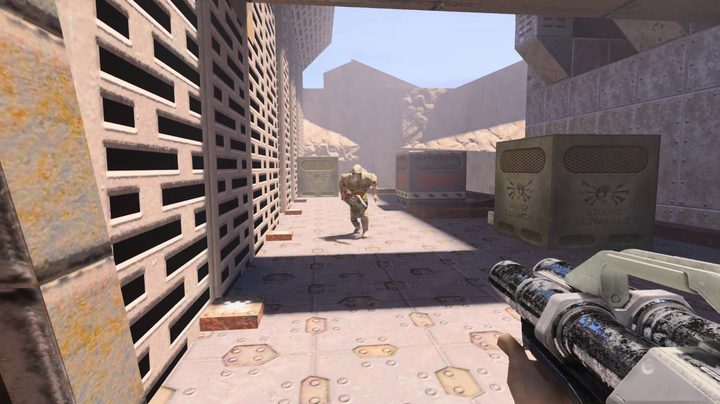
Path tracing, on the other hand, can produce equally strong, or even better-looking, visuals while putting less of a demand on the rendering hardware. It’s the model used in some of the most impressive “ray traced” games so far, like Quake II RTX, Portal RTX, and the Overdrive mode update for Cyberpunk 2077. It’s also being modded into older games, like Half-Life 2, with great effect.
Path tracing offers a better-looking, less intense form of dynamic lighting, and is overall, arguably the better solution. However, ray tracing still has its place where limited path-traced sample sizes would lead to problems with visual accuracy. There are also many modern examples of traditionally rasterized games where ray traced or path traced lighting adds very little to the experience, while completely tanking frame rates — like Hogwarts Legacy.
It’s likely that until graphics cards become powerful enough where ray tracing or path tracing are as easily rendered as rasterization, that we’ll see a combination of lighting effects in future games, since each technique has its place.


