  1. Home
  2. Computing
  3. News

Someone built a map of the stars from Project Hail Mary, and it’s shockingly good

A developer mapped 1.8 billion real stars to recreate the Project Hail Mary ship map, and it's gorgeous.

Add as a preferred source on Google
project hail mary star map
Val

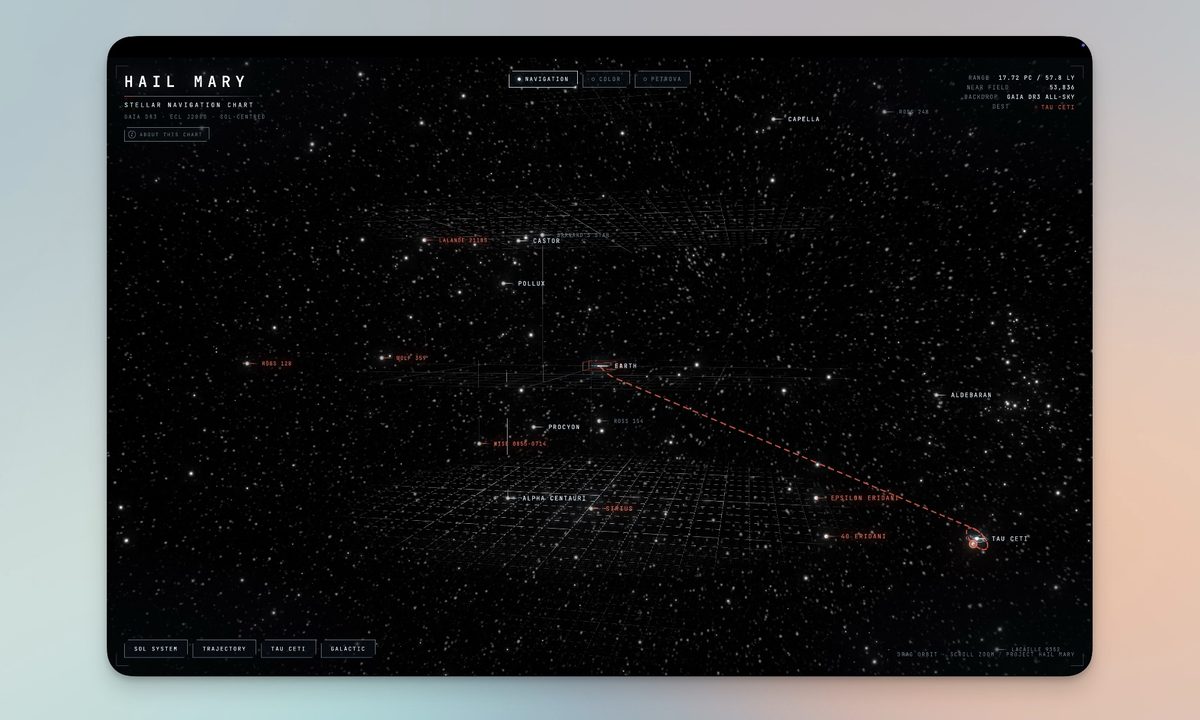
A developer has built an interactive star map inspired by the one featured in the book Project Hail Mary, and it uses real astronomical data to back it up. The book was recently developed into a movie of the same name, and it’s one of the best sci-fi movies of the year. 

The project was shared on Hacker News, where Val, who developed this project, explained that the map was built using ESA’s GAIA DR3 dataset, a star survey that mapped over 1.8 billion stars in our neighborhood of the Milky Way. The data includes star positions, colors, spectra, proper motion, and more, making this far more than a stylistic fan project.

How accurate is it?

I don’t know much about astrophysics, but by all accounts, the model seems to be pretty accurate. The developer wrote a Python script that renders all 1.8 billion stars into custom images, which are used to build the skybox. 
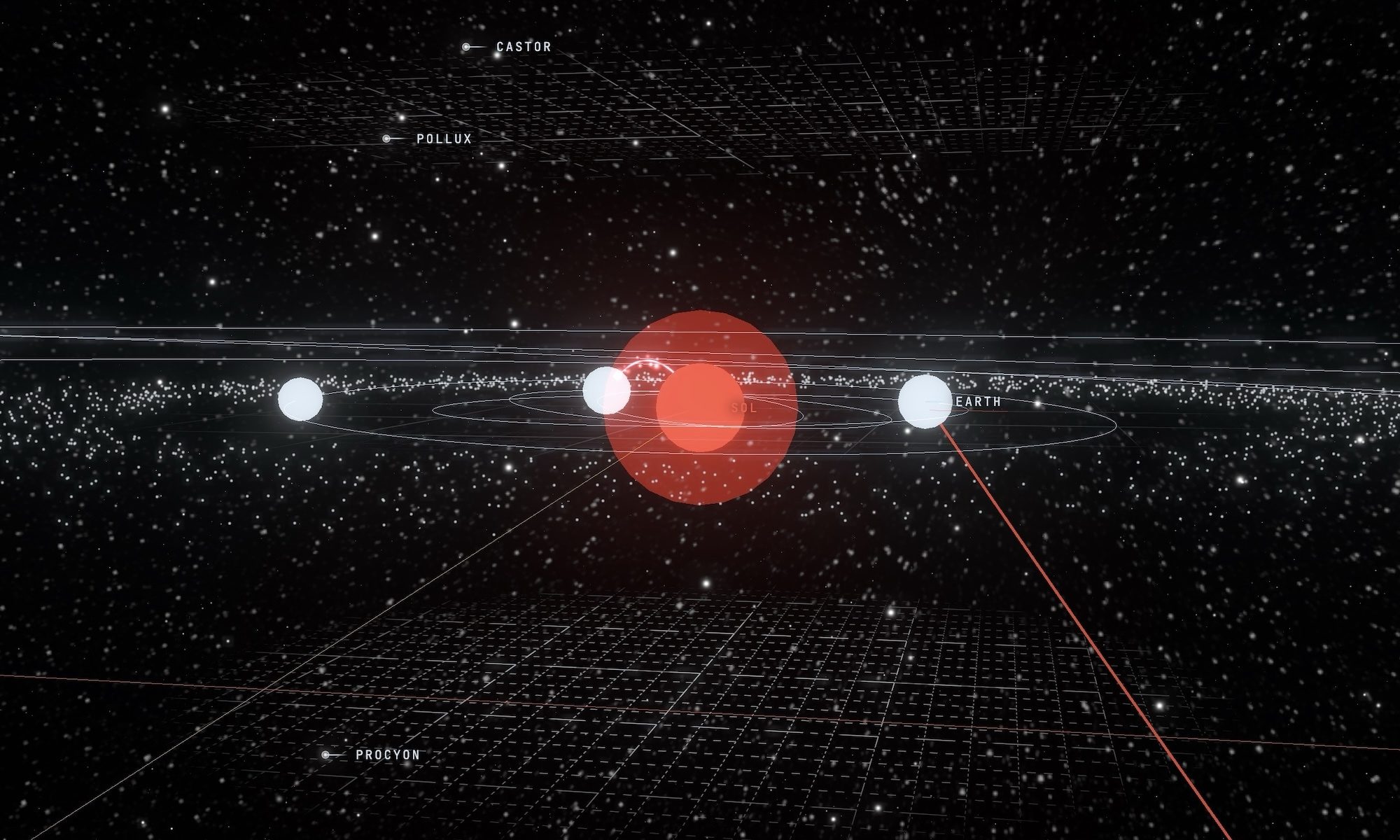
Star positions and colors are pulled directly from the GAIA data, with only a handful of bright stars that are not in the dataset being handled separately. The result is a mostly realistic map of our local star system.

Recommended Videos

Even if the model is not accurate, it’s incredible to see such projects come to life. If you loved the book or the movie, you are going to have a fun time on the website. 

What can you do with it?

The map includes a Color view and a Petrova view. The Color view shows accurate star colors based on the GAIA data, while the Petrova view shows the path stars were infected by Astrophage, straight from the story. If you have read the book or seen the movie, you will appreciate just how thoughtfully this has been put together.
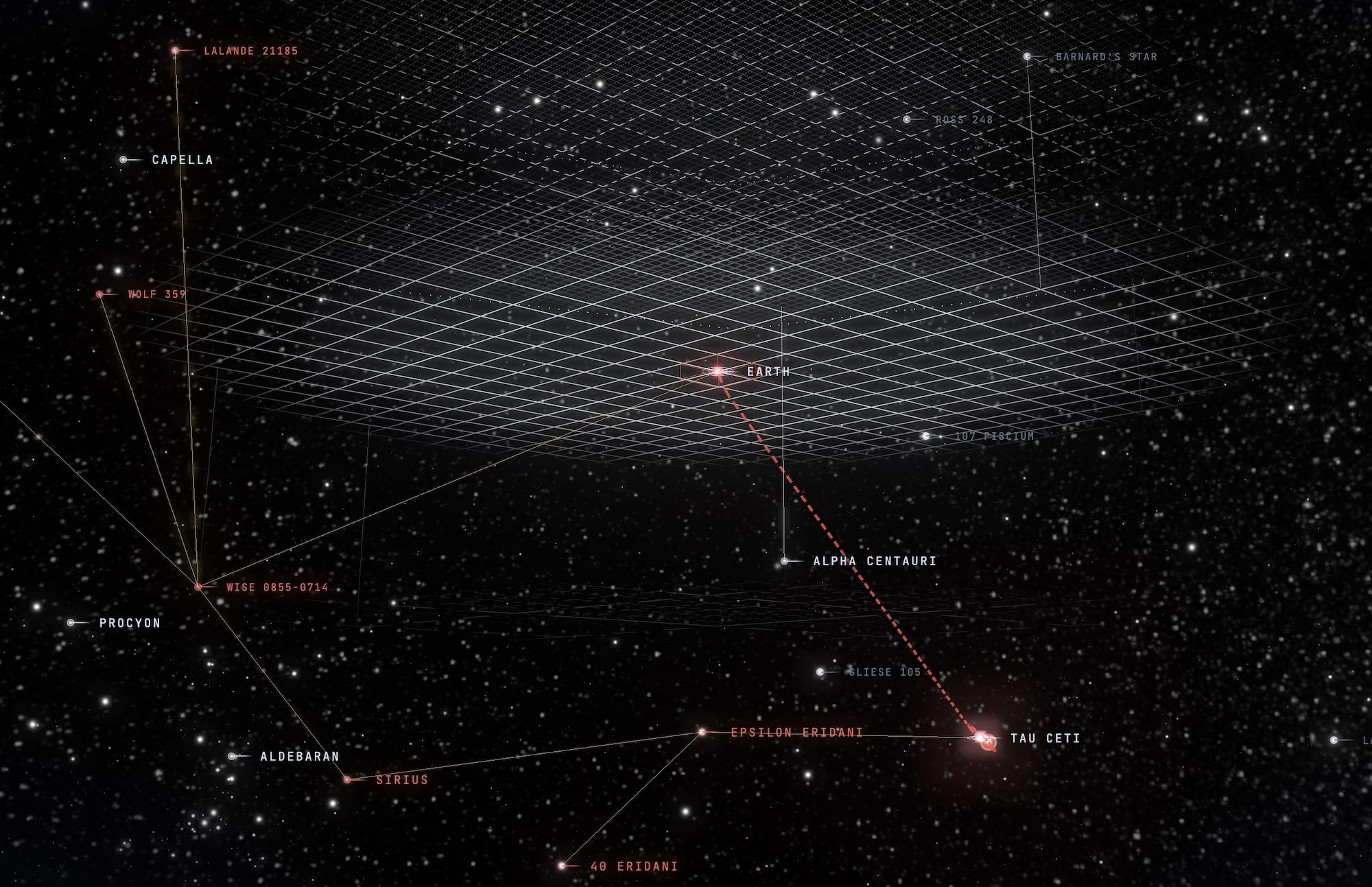
The developer also credited David A. Wheeler’s blog post, which goes into detail about the Astrophage infection path, for helping nail that part of the project.

If you enjoy open data projects, the GAIA DR3 dataset is publicly available through ESA’s Gaia Archive, and this project is a great example of how creative and stunning a well-executed open data project can be.

Rachit Agarwal
Rachit is a seasoned tech journalist with over seven years of experience covering the consumer technology landscape.
The Digital Trends App Bundle is yours to try for a whole week, free
Digital Trends App Bundle

Recently, we've entered an exciting collaboration with Maple Media, creating a bundle of 17 apps worth having on your phone. From relaxed fun to serious productivity boosts, these apps cover all your bases and provide a fun boost to your phone. Normally, the bundle is $9.99 per month (far lower than the cost of using the apps individually), but for your first 7 days you can get access to the bundle for free. View the full Digital Trends App Bundle for a complete list of the apps, or read on for a summarized take.

Start your free trial

Read more
The Galaxy S26 Ultra might not see much of a battery upgrade after all
It looks like it will stay the same as the last five years.
The back of the Samsung Galaxy S25 Ultra.

What's happened? This week, China's Quality Certification Center released information about a battery (EB-BS04898ABY) with a maximum capacity of 4,855mAh. That's the same capacity as was previously seen in the Samsung Galaxy S25 Ultra, and fans have taken this certification to mean the Galaxy S26 Ultra will not see a capacity increase after all.

The Samsung Galaxy Ultra models have had the same battery capacity for the last five years.

Read more
The Galaxy Tab S10 Lite is official, and it’ll be here sooner than you think
Galaxy Tab S10 Lite

What's happened? Samsung has officially announced the Galaxy Tab S10 Lite, a budget-friendly alternative to the Galaxy Tab S10. The device has been rumored for months, but this is the first time Samsung has officially acknowledged its existence.

The Galaxy Tab S10 Lite will have a 10.9-inch display and a peak brightness of 600 nits — a bit on the lower side, versus the iPad Pro's maximum brightness of 1,600 nits.

Read more