
Google may be the biggest and most popular search engine by far, but its data harvesting practices can leave a bad taste in your mouth. But it’s not the only search engine out there, and in fact, many of them can offer something that Google doesn’t: Privacy.
Here are some of the best alternatives to Google Search, with a collection of useful features and the option of remaining entirely anonymous, no matter what you’re looking for.
Startpage
Startpage is a Dutch search engine that was officially launched in 2002 after being merged with its sister company, Ixquick. It has privacy as one of its unique selling points and promises that it doesn’t store your personal information. It also claims that it doesn’t track, log, or share your search history. Since Startpage doesn’t store your previously-searched data, it does not show targeted advertisements based on it. The ads that you see on the site are strictly contextual based on the keywords you use to search for something.
This privacy-oriented search engine also leverages an Anonymous View feature that allows you to perform searches through proxy for an extra layer of security. A primary reason behind Startpage not being as artificial intelligence (A.I.)-loaded as Google is because it is based in the Netherlands and is protected by the privacy laws of the European Union. Hence, it isn’t victim to programs such as PRISM, a surveillance program from the U.S.
However, it is important to note that the information that you provide on these sites isn’t completely protected from external eyes. The Nine Eyes, an intelligence alliance working with Denmark, France, the Netherlands, and Norway, facilitates the sharing of information between the different countries. Companies headquartered in those countries can be compelled to share user data with their agencies, which in turn share it with other countries. That’s not to say there is much to share, but it’s important to take into account when your privacy is paramount.
DuckDuckGo
DuckDuckGo, like Startpage, is another search engine that has privacy as one of its primary distinguishing features. It promises the protection of your personal information and search data, thus guaranteeing that it won’t trap you in filter bubbles of highly customized search results. By profiling users, sites such as Google create a prototype of your identity in their databases. The faux identities that the sites create are not only highly reductionist in nature but also incomplete, stereotypical, and generalizing. DuckDuckGo’s main premise is that it doesn’t profile its consumers in categories and shows everyone all the available search results for a keyword on which a search is performed.
Similar to Startpage, DuckDuckGo also shows ads based on keywords, unlike Google, which uses past data and user patterns to choose which ads to show. The revenue the site earns is through affiliate relationships with Amazon and eBay.
Brave
Brave is another privacy-focused search engine that was recently launched and has its headquarters in San Francisco. Based on the Chromium browser, it is open-source software that gives you a free license to use, copy, study, and change it in any way. Its source code is openly shared, encouraging you to voluntarily improve its design. Because of Brave’s unique structure, it has successfully garnered more than 32 million active monthly users.
Like the other search engines on this list, Brave also prides itself on its privacy settings. It blocks site trackers and online ads as a part of its default settings. However, another very interesting feature of this search engine is that it features optional ads, which you’re paid to watch. Payment is made in the form of a cryptocurrency known as Basic Attention Tokens or BAT. You then have the option to use this currency to pay sites or your favorite content creators. You can also simply keep the money for yourself.
Brave Search is available globally on all Brave browsers (desktop, Android, and iOS) as one of the search options alongside other search engines and will become the default search in the Brave browser later this year. It is also available from any other browser at search.brave.com.
Qwant
Qwant, launched in July 2013, is a France-based search engine that also aims to keep you from being stuck in personalization hell. Operated from Paris, Qwant is also subject to the stringent privacy laws of the European Union, just as Startpage is, and guards your data according to the General Data Protection Regulation passed in 2018. The French website has its own indexing engine and promises that it doesn’t keep track of your search history. Available in 26 languages, Qwant now processes more than 10 million search requests per day and more than 50 million users a month.
According to its privacy policy, Qwant “does not collect data about its users when they search.” It also claims it doesn’t make use of any cookies or trackers. An interesting feature Qwant offers is limiting third-party sites’ insight into your search data. This means the websites providing results do not see what you search for, thus staying oblivious of your online identity, behavior, and search patterns.
It is worth mentioning that Qwant is a part of the Five Eyes intelligence alliance. It doesn’t necessarily mean it isn’t private, but it isn’t quite as protected from oversight as ones hosted outside the reach of these networks.
Microsoft Bing
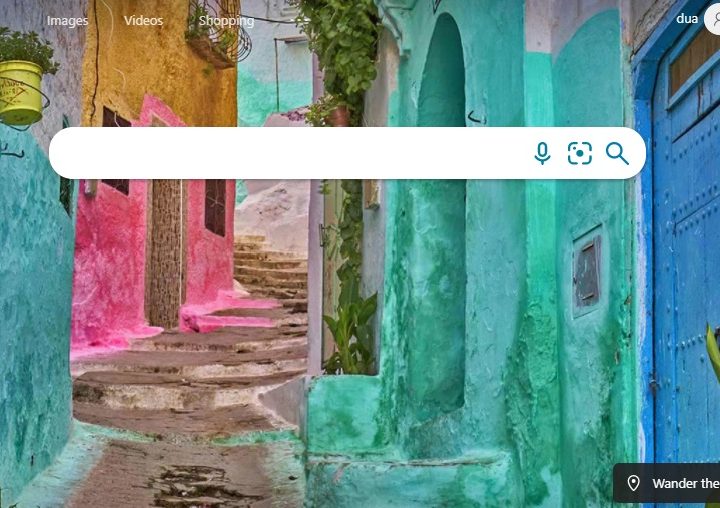
Previously known as Bing, Microsoft Bing is a search engine launched in 2009 and owned and run by, as the name suggests, Microsoft. Just like Google does, Bing provides web, video, image, and map results.
Bing claims it doesn’t track your search activities like Google does. It uses HTTPS that enables it to respond to your search queries securely. It also promises that it provides end-to-end encryption to offer extra security and make sure no third-party apps are using your data for their own advantage.
Bing’s unique feature is an option to sign in to an enterprise account, which could mean your work or school account. Bing never associates your search data with your workplace identity, nor does it provide you with targeted ads based on it.
Microsoft is based in the U.S., so it can be compelled to share data with law enforcement agencies if requested to do so.


