1. Home
  2. Computing
  3. News

Digital Trends may earn a commission when you buy through links on our site. Why trust us?

The new MacBook Neo charges faster than Apple claims

Testing exposes a surprising charging gap in Apple's newest budget laptop — and the fix costs just $59 at Apple's own store.

Add as a preferred source on Google
MacBook Neo
MacBook Neo Apple

Apple’s brand-new MacBook Neo runs on the same chip as the iPhone 16 Pro, but it doesn’t charge as fast as the 2024 flagship iPhone. Or at least that is what Apple tells you in the official spec sheet. 

The MacBook Neo comes with a 20W USB-C power adapter in the box, a choice that looks increasingly odd, especially since the device had the best Mac launch week ever with first-time buyers. 

The included charger with the MacBook Neo is too slow

According to ChargerLAB’s tests, the Neo peaks at just 18W with the bundled charger. Just another day, I saw a YouTube video about the Neo taking about four hours to fully charge, which, in my opinion, is freakishly long.

Recommended Videos

However, things get slightly more interesting when the Neo is plugged into Apple’s 35W dual USB-C port, as the charging speed jumps to 30W. If you do the math, that’s a 67% increase in the charging speed from a single $59 accessory. 

If you ask me, I’ll prefer fast charging speed any day over waiting for my MacBook to hit 90% while I’m getting late for school or work. Although ChargerLAB didn’t mention the time difference, the 35W charger should charge the device in significantly less time (around 20 to 30 minutes). 

Will purchasing an even faster charger increase the charging speed further?

Not even slightly. In the test, the Neo was also charged with Apple’s 96W and 140W adapters. But both of them deliver the same charging speed — 30W — as Apple’s 35W charger. More watts, same result; that sounds like a very Apple way to spend money. 

The good news? Third-party chargers from reputable brands rated 30W or higher can also hit the MacBook Neo’s peak charging speed, helping you reduce charging time from freakishly slow to moderately slow. So, instead of spending $59 on Apple’s 35W charger, you can spend half the money (or probably even less) on a 30W+ charger and live happily ever after. 

Shikhar Mehrotra
For more than five years, Shikhar has consistently simplified developments in the field of consumer tech and presented them…
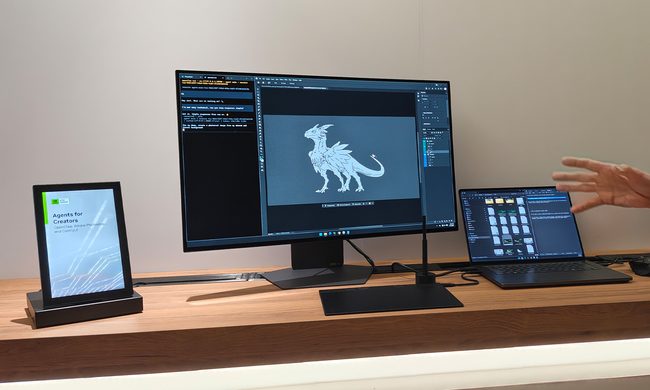
Nvidia’s RTX Spark made me hate content creation a little less
Adobe's AI-powered demos showed me a future where masking, rotoscoping, and scene detection might finally stop being a chore.
NVIDIA RTX Spark for Creators Image Generation Demo Computex 2026

Every video editor has a list of tasks they'd happily outsource to someone else. Exporting isn't one of them anymore because modern laptops are already plenty fast. The real-time sinks are the boring bits: manually masking subjects, finding scene cuts in long recordings, rotoscoping frame by frame, or wrestling with tedious edits that require more patience than creativity.

That's exactly why NVIDIA's RTX Spark demo at Computex 2026 caught me by surprise. I walked into the booth expecting another presentation full of AI buzzwords and benchmark charts. Instead, I walked out thinking that for the first time in years, hardware might actually be changing the editing experience itself, rather than simply making renders finish a little sooner.

Read more
I tried Acer’s new 5K MiniLED Gaming monitor, and OLED kept popping into my head
After seeing it in action at Computex, I finally understand where MiniLED shines and where OLED still wins.
MiniLED vs OLED Hands On Computex 2026

If Computex 2026 taught me one thing, it's that monitor makers are no longer interested in building one-trick ponies. They want displays that can wear multiple hats, seamlessly switching between work and play without making users choose. Acer's new Nitro XV345CKR P is perhaps the best example of that philosophy, and after spending time with it on the show floor, I walked away impressed by its ambition while also questioning whether MiniLED is really the future for gaming monitors.

I've always had a slightly complicated relationship with MiniLED. On a massive living room TV, it works wonders because you're sitting several feet away, and the local dimming zones blend beautifully. Put the same technology on a monitor that's sitting barely two feet from your face, however, and suddenly you're no longer admiring the display, you're inspecting the physics behind it.

Read more
Ugreen’s portable monitor is utterly sharp, sleek, and costs a pretty penny
Computer, Electronics, Pc

Portable monitors have become the Swiss Army knives of modern tech. They travel with remote workers, expand cramped laptop screens, and occasionally double as gaming displays in hotel rooms. Most of them also follow a familiar formula: a basic Full HD panel, a foldable cover, and a price that stays comfortably under $250. Ugreen clearly looked at that formula and decided to ignore it.

The company's new AP16 portable monitor has officially landed in the U.S., bringing a feature list that feels more like a premium desktop display than something designed to slip into a backpack. The catch is that it costs $350, placing it well above many rivals.

Read more