

If Computex 2026 taught me one thing, it’s that monitor makers are no longer interested in building one-trick ponies. They want displays that can wear multiple hats, seamlessly switching between work and play without making users choose. Acer’s new Nitro XV345CKR P is perhaps the best example of that philosophy, and after spending time with it on the show floor, I walked away impressed by its ambition while also questioning whether MiniLED is really the future for gaming monitors.
I’ve always had a slightly complicated relationship with MiniLED. On a massive living room TV, it works wonders because you’re sitting several feet away, and the local dimming zones blend beautifully. Put the same technology on a monitor that’s sitting barely two feet from your face, however, and suddenly you’re no longer admiring the display, you’re inspecting the physics behind it.
Acer is trying to build one monitor that does it all
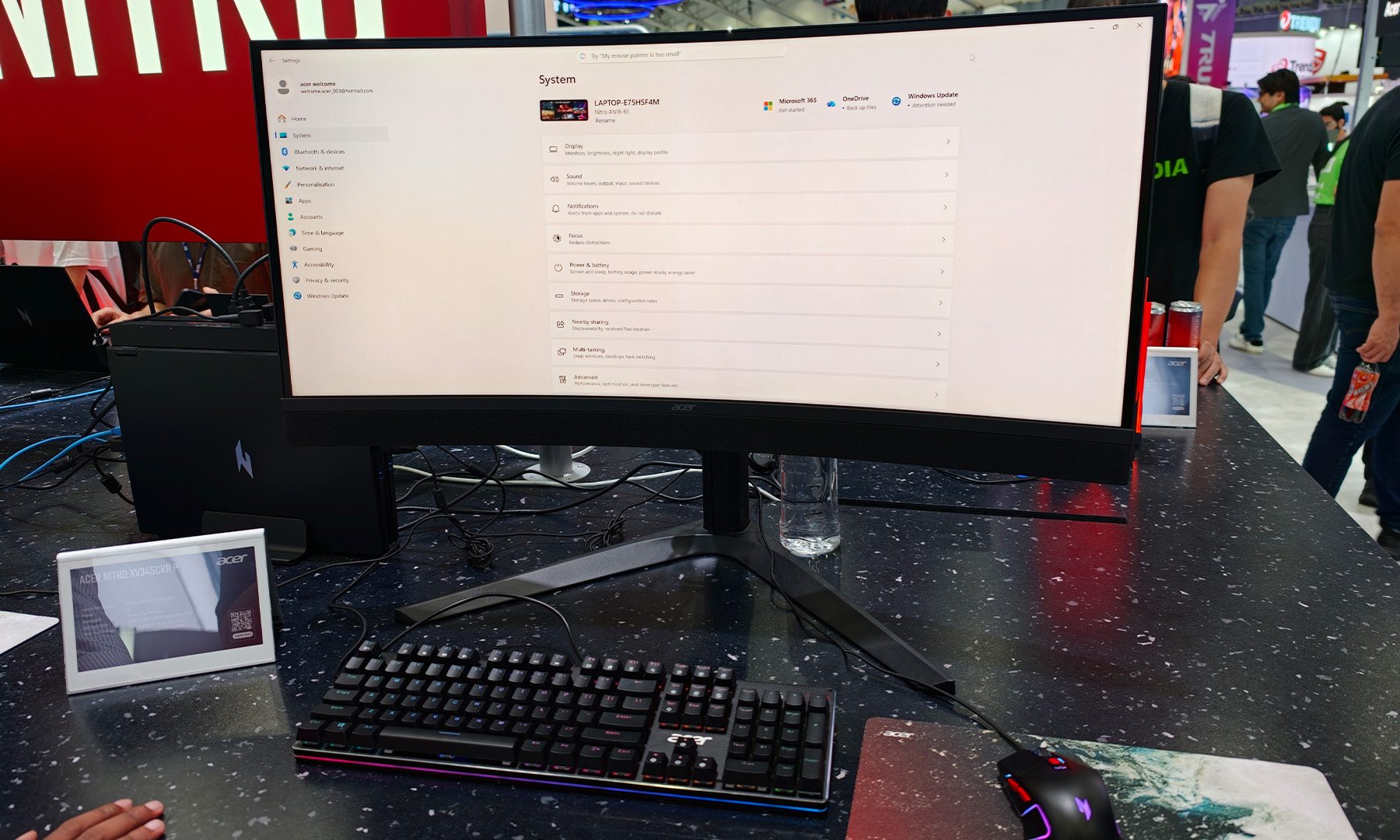
On paper, the Nitro XV345CKR P sounds almost too good to be true. It’s a 34-inch 1500R curved ultrawide with a 5K WUHD (5120 x 2160) resolution, making it considerably sharper than the UWQHD OLED ultrawides that currently dominate the market. That extra resolution doesn’t just make games look cleaner, but also results in noticeably sharper text and far more workspace for coding, writing, spreadsheets, or video editing.
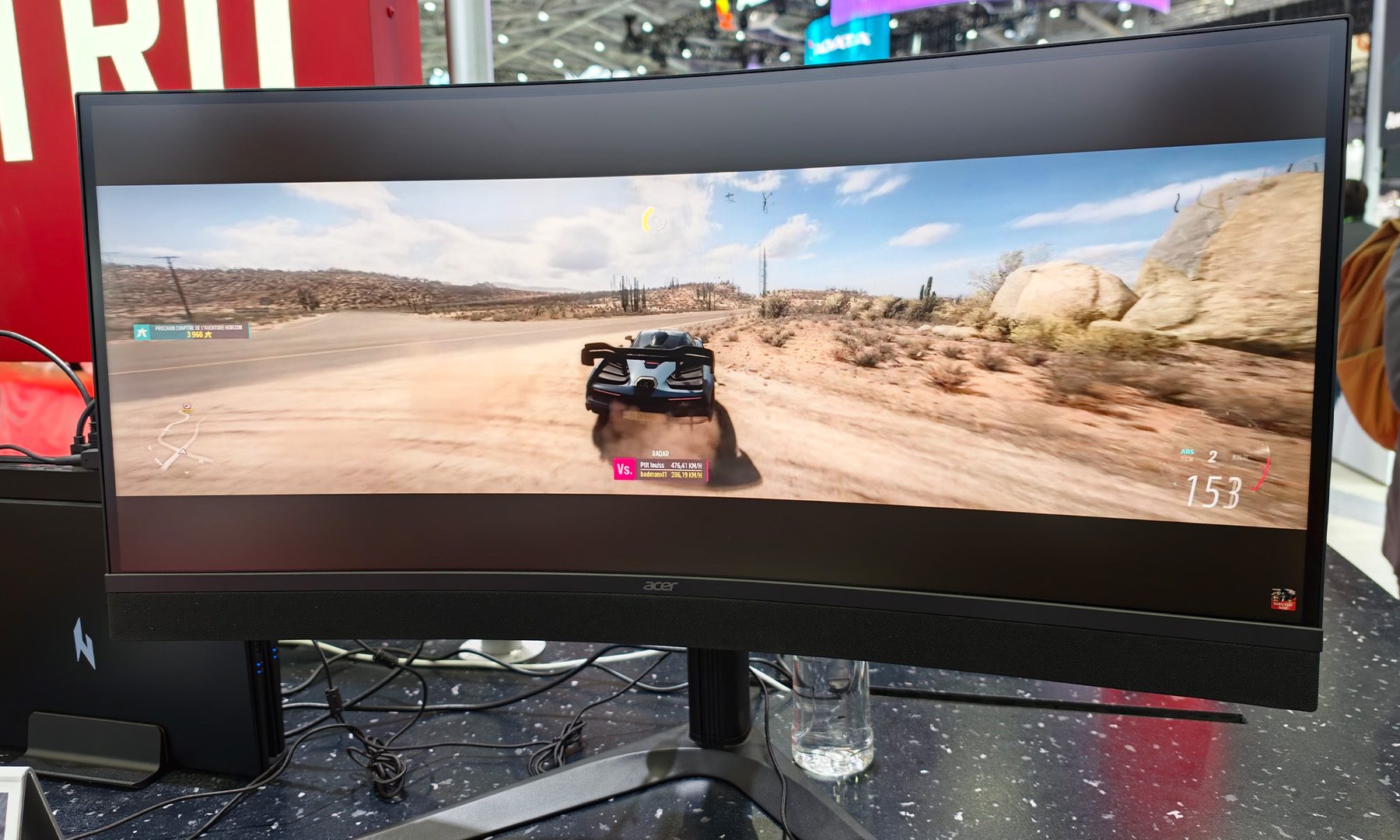
Then comes Acer’s biggest trick: Dynamic Frequency and Resolution (DFR). At the press of a button, the monitor can run at 5K and 180Hz for immersive single-player gaming or productivity, before switching to 2560 x 1080 at 360Hz for competitive titles where every frame counts. It’s an incredibly clever concept that feels like Acer trying to replace both your creator monitor and your gaming monitor with a single display.
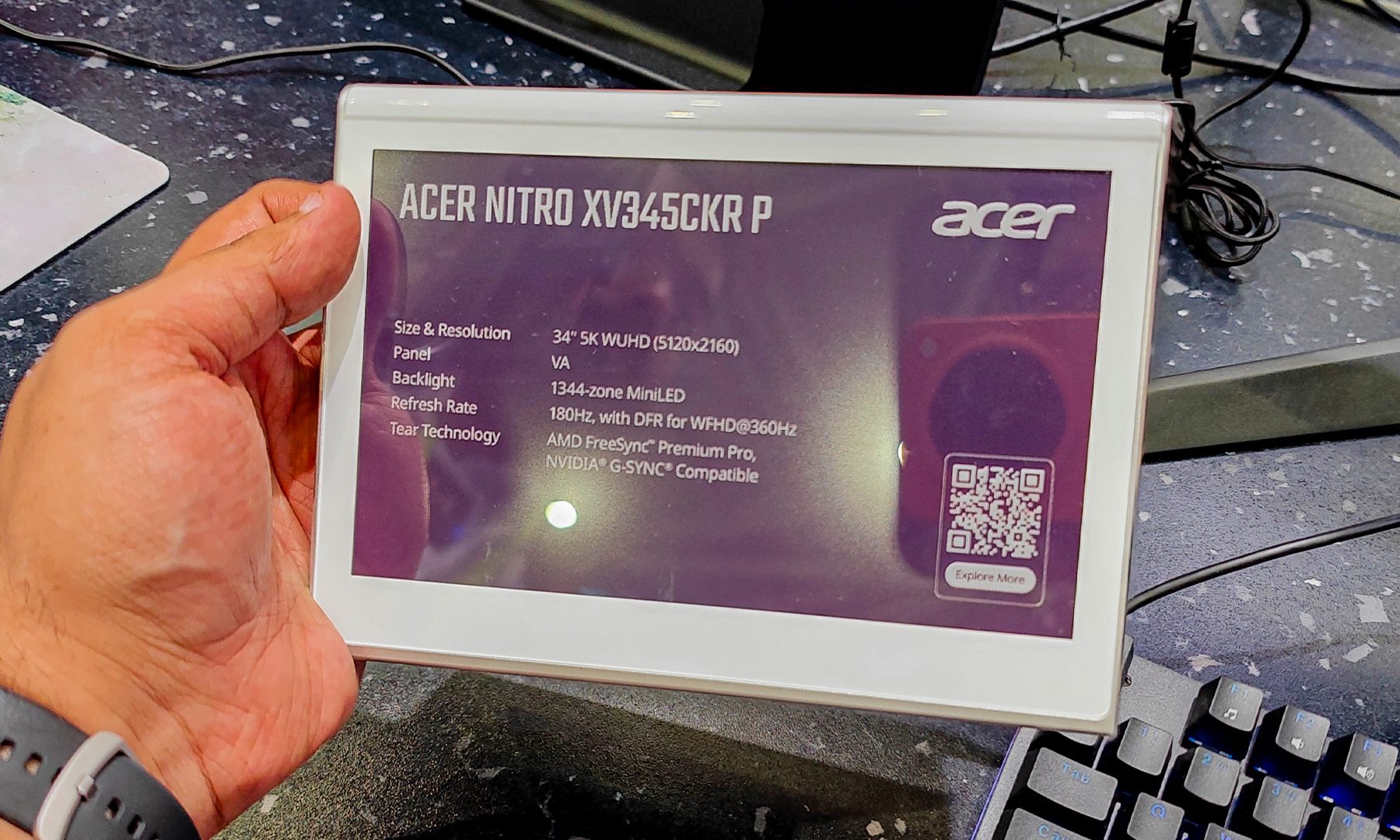
The MiniLED implementation itself is equally ambitious. Backed by 1,344 local dimming zones and certified for DisplayHDR 1000, the monitor gets incredibly bright and remained perfectly legible even under the harsh lighting of the Computex show floor. More importantly, this isn’t just another edge-lit VA panel with a fancy sticker slapped on the box. The dense local dimming array delivers significantly better HDR highlights and local contrast, making explosions, reflections, and bright scenes look far more impactful than they would on a conventional LCD monitor.
The technology impressed me, but OLED still lives rent-free in my head
As good as the hardware is, using the Nitro XV345CKR P also reminded me why MiniLED and desktop monitors remain an interesting combination. Because you’re sitting so close to the display, the limitations of local dimming become much easier to spot. During my demo, I could still notice blooming around bright objects against dark backgrounds, and while black levels were certainly improved over a standard VA panel, they never reached the pixel-perfect darkness that OLED panels have conditioned many enthusiasts to expect. That’s less a criticism of Acer and more a limitation of the technology itself.
At the same time, it’s important to give MiniLED the credit it deserves. Compared to a traditional edge-lit VA monitor, this implementation is in another league altogether, delivering excellent brightness, stronger HDR performance, and much better local contrast. It also avoids one concern that continues to make some buyers nervous about OLED: burn-in. For users who spend all day staring at static toolbars, spreadsheets, or editing timelines before gaming at night, that’s a genuine advantage.
Ultimately, I don’t think the Acer Nitro XV345CKR P is trying to dethrone OLED, and that’s perfectly okay. Instead, it’s carving out its own space with a unique blend of razor-sharp 5K clarity, impressive HDR brightness, and the flexibility to switch between productivity and high-refresh gaming in a single display. Most enthusiasts may still gravitate towards OLED, but if priced right, this ambitious MiniLED monitor proves there’s still plenty of room for innovation beyond self-lit pixels.