1. Home
  2. Computing
  3. News

This compact SSD enclosure has active cooling to sustain 80Gbps speeds for as long as you need

Satechi's DotDisk tackles the thermal throttling problem that plagues most compact drive enclosures.

Add as a preferred source on Google
Satechi DotDisk featured.
Satechi

Large file transfers have a habit of starting fast and finishing slow, and thermal throttling is typically to blame. Satechi’s new DotDisk SSD enclosure addresses that with a built-in microfan to keep your drive cool under load.

A built-in fan solves the problem passive cooling can’t

Most compact SSD enclosures rely on their metal shell alone to shed heat. That works fine for short bursts, but sustained transfers, large video exports, or back-to-back backups generate enough heat to trigger throttling, cutting speeds mid-transfer. The DotDisk pairs a microfan with a thermal pad to actively pull heat away from the drive, maintaining consistent speeds throughout longer workloads. The precision-milled aluminum chassis assists with heat dissipation and gives the enclosure its durability.

The enclosure supports M.2 2280 NVMe SSDs up to 8TB, but doesn’t come with a drive in the box, so users have to purchase their own. That keeps the entry cost focused on the enclosure itself, and means storage capacity can be upgraded later without buying a new enclosure.

80Gbps speeds across Mac and Windows

The DotDisk tops out at 80Gbps via USB4 V2, which is fast enough to make a real difference when moving high-resolution video files or large backups. It is also compatible with Thunderbolt 5, Thunderbolt 4, and older USB4 connections, so it works across most current Mac and Windows machines without adapters.

The enclosure features a small LED indicator that signals connection status, and the package includes a 30cm Thunderbolt 5 cable, screwdriver, and mounting screws for setup.

Recommended Videos

At £199 (~$270), the DotDisk is not the cheapest way to house an NVMe drive, but for anyone who regularly moves large files and has watched transfer speeds crater mid-transfer, active cooling is worth the premium. If that sounds like you, the DotDis is available now through Satechi.com and Amazon UK in Silver and Space Black.

Pranob Mehrotra
Pranob is a seasoned tech journalist with over eight years of experience covering consumer technology. His work has been…
Google responds to Chrome’s silent Gemini Nano install, stops short of addressing consent
Chrome's GM says on-device AI is central to the browser's security strategy, but did not explain why deleting it triggers an automatic re-download.
Google Chrome with Gemini

Google Chrome VP and GM Parisa Tabriz has responded to criticism over Chrome's practice of silently downloading a 4GB AI model onto users' devices, saying on-device AI is central to the browser's security and developer strategy.

What triggered the backlash

Read more
Anthropic just taught Claude to dream between tasks, and it makes agents meaningfully smarter
Dreaming turns Claude from an AI that forgets everything the moment a session ends into one that quietly gets better at its job every time it's not actively working.
Claude Dreaming featured image.

Anthropic just gave Claude something that sounds like a perfect science fiction plot: the ability to dream. The company has announced three upgrades to Claude Managed Agents: Dreaming, Outcomes, and Multiagent Orchestration. 

While I agree that the Dreaming clearly has the most evocative name, it’s also the one with the most practical implications for developers building AI agents that can handle complex, long-running work. 

Read more
Samsung patent shows a laptop with a clever touch-sensitive palmrest for shortcuts
This new Samsung laptop patent wants to rewire your typing habits
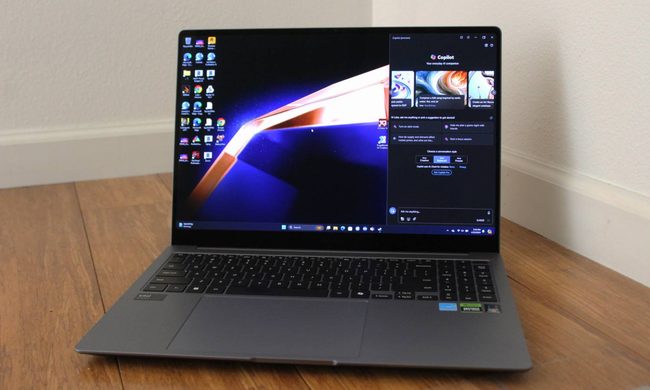
The screen of the Galaxy Book4 Ultra.

Samsung has been known to file some bizarre patents from time to time, including its ⁠multi-fold laptop and rollable smartphone concepts from 2022. A new patent from the company has recently surfaced, showcasing a laptop concept that could reduce the need for modifier keys like Ctrl, Shift, and Alt. The laptop in the patent is shown using built-in sensors in the palmrest to detect the position of the user’s arms and adjust the function of the keys accordingly.

Could your palmrest replace Ctrl and Shift?

Read more