
Epic just opened up Unreal Engine 5 to all developers, after releasing the game engine into early access in 2021. It’s being used to develop a new Tomb Raider game, and it promises to provide a true generational leap in how games are developed for PC and consoles.
Short of Fortnite, we don’t have any Unreal Engine 5 games at the moment. But there’s still a lot to get excited about. Here are the three most important Unreal Engine 5 features that will make PC games look and play better than ever.
Temporal Super Resolution
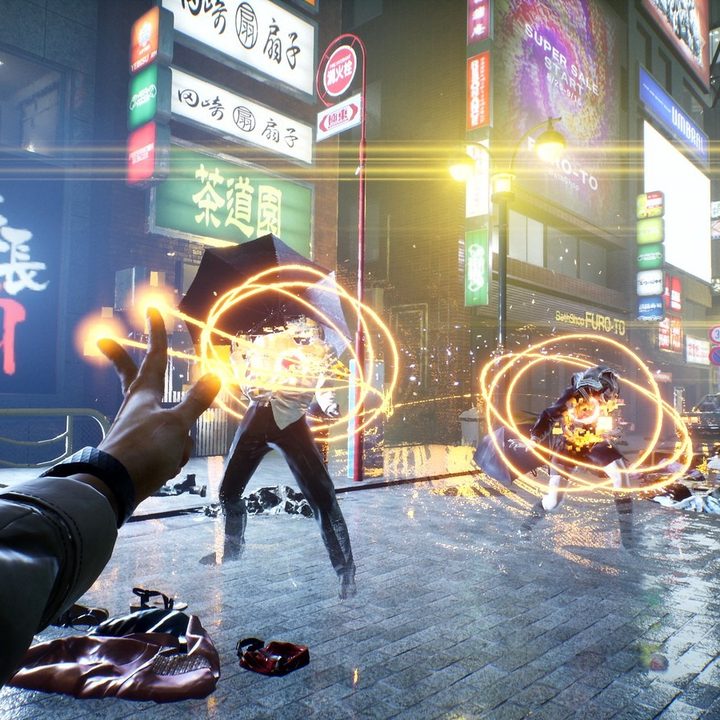
Temporal Super Resolution (TSR) is the defining feature of Unreal Engine 5, even if it takes a back seat to the fancy new lighting and shadow engines. TSR is an internal super sampling tool that allows the game to achieve near-native image quality while rendering at a lower resolution, which improves performance.
It was key to getting Epic’s The Matrix Awakening demo running, and we’ve already seen it in action in Ghostwire Tokyo. As features like Nvidia Deep Learning Super Sampling (DLSS) and AMD FidelityFX Super Resolution (FSR) have shown, supersampling is the linchpin for the next generation of graphics, offering the visual flare of features like ray tracing without the performance penalty.
TSR is special because it’s not caught up in the shenanigans of upscaling features from AMD, Nvidia, and Intel. It’s a general solution built into Unreal Engine 5, and it works across graphics cards and consoles. Developers can now easily integrate high-quality, temporal upscaling to their games without concern of vendor lockout.
Based on our early look in Ghostwire Tokyo, too, it offers similar image quality to native resolution while doubling performance, in some cases. For PC gamers, that hopefully means being able to jump up a resolution, or push more demanding features without the performance cost.
Lumen, Nanite, and virtual shadow maps

TSR is so important because of the improved rendering features of Unreal Engine 5. The three major new rendering features are Lumen, Nanite, and Virtual Shadow Maps (VSM), each of which works together to provide more accurate lighting and world detail at a lower performance cost.
VSM and Nanite have a similar idea behind them. Both virtualize highly-detailed rendering techniques and only feed the player the detail that matters. In the case of VSM, a massive shadow map is broken up into chunks, and only the chunks that matter to what the player can see are rendered. Similarly, Nanite is a geometry system that “intelligently does work on only the detail that can be perceived and no more.”
Bringing these two features to life is Lumen, which is a new dynamic global illumination system in Unreal Engine 5. It looks to strike a balance between cheaper screen space global illumination and the more demanding ray-traced global illumination. Similar to Nanite and VSM, it can break up fine details — such as diffused indirect lighting — and render them at a lower resolution. Critically, Lumen also supports hardware-accelerated ray tracing.
Together, the three features should bring a sense of depth we’ve never seen before in PC games. We only have The Matrix Awakens demo and Epic’s 2020 UE5 demo to go off of now, but both bring more realistic lighting than we’ve ever seen before. With features like TSR, as well as the performance-saving measures in Unreal Engine 5’s new rendering features, we may see real games that look as good.
Mass AI

We’ve focused mainly on graphics, but Unreal Engine 5 also includes some features that will improve gameplay. The new “Mass AI” system is what we’re looking at here, which provides a set of tools for developers to place dynamic characters in an open-world setting that each has its own simulations running.
The Matrix Awakens showed this system in action. Epic technical director Jeff Farris said in an interview that this A.I. system was used to simulate 35,000 crowd members, 18,000 vehicles, and 40,000 parked cars in the demo. Even more impressive, the system can simulate all of that regardless of where the player is.
Traditional open-world games only pull A.I. instructions based on where the player is, so an NPC on the other side of the map is just sitting and waiting for the player to show up. Epic is able to achieve large-scale A.I. simulations thanks to features like Smart Objects, which include instructions for interaction baked into the object, and Mass Avoidance, which is an avoidance system for large sets of NPCs.
That should translate into more dynamic open worlds. If you leave a group of NPCs and come back a few minutes later, you won’t see the same loop of characters performing the same tasks. The next entry in The Witcher franchise is using Unreal Engine 5, which speaks to the power of this A.I. system.


