
The Meta Quest Pro has finally been unveiled, and it’s more than just the latest VR headset from the industry’s biggest champion. It’s really a brand new category for mixed reality headsets, and offers a preview of what companies like Apple will likely release.
Apple’s mixed reality headset was initially rumored to launch sometime in 2022, but it looks like WWDC 2023 may end up being a more fitting window for its announcement. Regardless of the time frame, though, it’s clear now that the Quest Pro will be its direct competitor — and there’s a lot it may be able to tell us about the direction Apple is heading in. So let’s speculate, shall we?
Mixed-reality is key
Apple is rumored to have two products in the works that open up this new product category. First, a mixed reality headset — and later, a pair of AR glasses. This seems to be the road map for Meta too, and shows that the companies are very much on the same path.
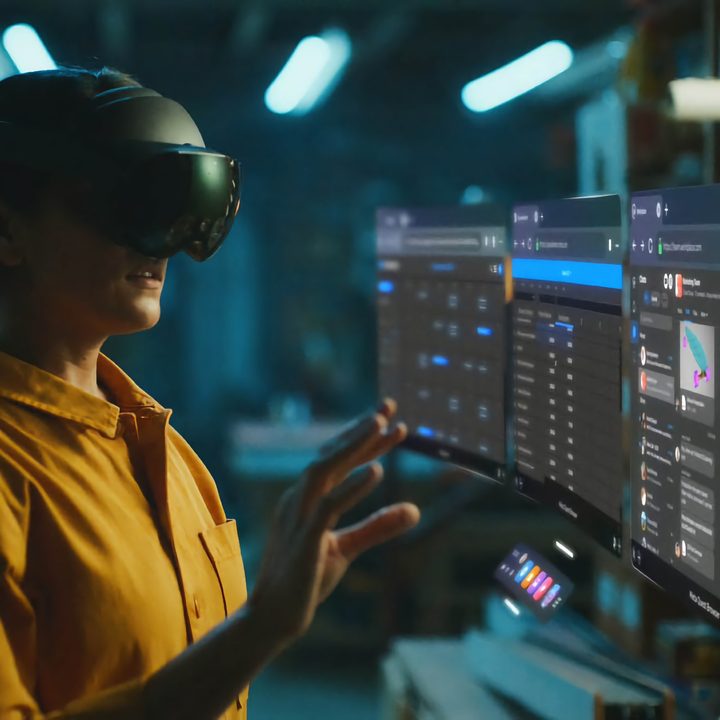
But as you’ll note, a cheap VR headset has never been in the lineup for Apple. The proposed mixed reality capabilities of Apple’s upcoming headset are key, and the Quest Pro demonstrates how that may work. By improving the passthrough cameras significantly over the Quest 2 (and making them color), the Quest Pro should work in AR just as well as it works in VR.
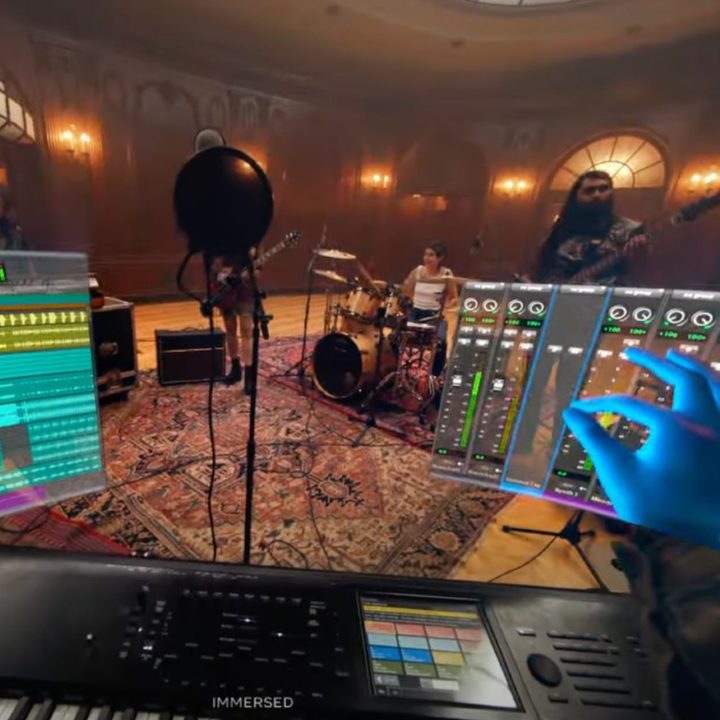
The Quest Pro uses stereoscopic passthrough, combining sensors and cameras to present the real world completely in 3D within the headset. That’s what allows the headset to place digital components on top of the real world that feel more lifelike (and with less distortion and depth perception issues). I’ll wait to try this out myself before I rave about how well it achieves this, but it’ll certainly be interesting to see if Apple takes a similar approach.
This is the area I can see Apple putting the most emphasis, especially since the company doesn’t seem as interested in fully virtual experiences. There’s more innovation to be done here, and I can see Apple making its push into mixed reality entirely defined by its AR capabilities.
It’s for work, not play
A focus on AR rather than VR makes more sense for Apple in terms of content too. Gaming has just never been a big focus for Apple, which has always made the idea of the company getting into VR and AR hard to imagine. Games have always been the most popular application of VR, after all, and will continue to be for some time. But seeing how Meta has positioned the Quest Pro clears that up a little bit.
It’s not that the Quest Pro can’t play games, it’s just that it doesn’t offer much more in that regard than the Quest 2. The improved performance and displays are helpful, yes, but you’d be paying a lot of money for a similar experience. The main purpose of the Quest Pro is for nongaming applications, such as socializing and work.

Through partnerships with Microsoft and Zoom (along with the advanced passthrough technology), the Quest Pro is designed to elevate both productivity and collaboration. Of course, taking video calls and putting them in virtual spaces is obvious, but the full suite of Microsoft 365 applications being available for Quest are key. Meta’s purposeful positioning is as the “open” version of the metaverse, and that’s what make these kinds of partnerships possible. Meta wants access to its avatars, meeting rooms, and applications to be as widespread as possible.
Apple will likely take a very different approach. Its focus on closed ecosystems means it’ll likely work hard to create a beautiful, seamless system for communicating and working in mixed reality environments, but it probably won’t play nicely with others. Get ready for the same iMessage debate to play out in the metaverse. Still, Apple’s huge success with developers is what will truly open up the platform,
It’s going to be expensive

A lot of people were surprised by the price tag of $1,500, creating a massive gulf in between the Quest 2 and the Quest Pro. But it makes the rumored price of the Apple Reality make a lot more sense. The last reporting from earlier this year was that the headset would land somewhere between $2,000 and $2,500, which seemed mind-boggling at the time. And while that’s still considerably more than the Quest Pro, it’s not hard to see how Apple might price its own premium headset 25% above the Meta option.
Other high-end AR headsets like the Magic Leap 2 or HoloLens 2 are already priced even higher than these, as high as $3,500.
Still, it will feel very strange for Apple to launch an entirely new category of products with something this expensive. Modern-day Apple is often not interested in building expensive devices for niche audiences, especially not in new product categories. For all we know, Apple has some kind of cheaper option in the works too. Either way, as a new product, it’s going to be something that has to evolve over generations — both in terms of technology and accessibility.


