Apple’s upcoming mixed reality headset is a hot topic in the world of leaks and rumors, with a big reveal potentially coming later this year. Now, a new report has claimed it will come with three screens for your viewing pleasure.
The report comes from the industry analysts at Display Supply Chain Consultants (DSCC) and outlines ten predictions the firm has for the display industry in 2022. In a section covering Apple’s forthcoming headset, DSCC indicates its belief that the device will incorporate three display modules, comprising two MicroLED panels and one AMOLED display.
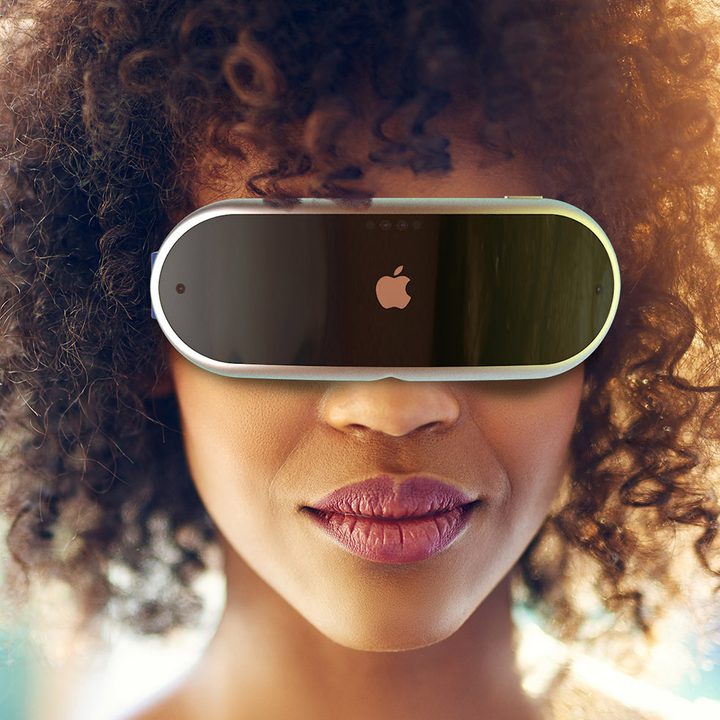
This is possibly the first time we’ve heard a claim like this. Previously, analysts have suggested Apple’s headset will come with two 8K displays (one for each eye) and could use an advanced array of cameras and sensors, but DSCC appears to be among the first to predict a three-display setup.
The report asserts there have been some tantalizing clues towards this possibility. For one thing, Sony recently unveiled a 4K MicroLED display aimed at virtual reality (VR) usage with a roughly 4,000 pixels-per-inch (PPI) resolution. According to DSCC, it’s possible this display was made for Apple’s headset. It adds that if we go on the assumption the headset screen array will be 4,000 pixels by 4,000 pixels, the display could measure 1.4 inches across. Interestingly, that contradicts an earlier claim that the displays will have a 3,000 PPI resolution.
So, that’s two MicroLED displays accounted for. What about the AMOLED screen? These have been rare in augmented reality (AR) and virtual reality (VR) headsets because of their relatively low resolution, the report states. However, Apple could put one to use for peripheral vision, where high resolution is less important. For instance, this would allow content directly in front of you to be in focus while peripheral content is blurred, enabling an immersive all-around experience where you can still focus directly ahead.
However, this kind of setup won’t come cheap, the report adds, asserting that Apple’s headset could set you back “several thousand dollars.” That’s roughly in line with an earlier report from The Information, which pegged the price at $3,000 but counters a more recent article by analyst Ming-Chi Kuo, who said the headset could start at $1,000.
DSCC’s report states that the first generation of the device will be aimed at professionals and developers and will help expand Apple’s AR and VR ecosystem. It will include a high-end CPU and GPU, multiple cameras, and potentially a LiDAR sensor to boot.
While this report throws some interesting ideas into the mix, it contradicts a few earlier claims and leaks. That does not mean it’s wrong but is an indication of how muddied the waters are with Apple’s headset. Hopefully, we will find out more later this year, when Apple is rumored to reveal the device to the world.