

“Apple no longer innovates.” It’s a line we’ve been hearing from naysayers EVER since Tim Cook took over the reigns from Steve Jobs. But is it really true? Just look at the Apple Pro Display XDR and its, err, $999 monitor arm. Actually, don’t look at that.
Apple does innovate, of course, and the latest MacBook Pro models — with monstrous eight-core i9 processors and Touch Bars aplenty — are no exception. There’s enough innovation in both software and hardware to impress even the most curmudgeonly of cynics.
So when the time rolled around for me to kit myself out with a shiny new MacBook, you would think I headed straight for the 2019 MacBook Pro and paid like it was going out of fashion. Wrong. I completely ignored it. In fact, I didn’t so much ignore it as turn around and high-tail it in the opposite direction. I bought a 2015 MacBook Pro instead.
Why opt for a four-year-old MacBook Pro instead of the latest and greatest model from just a few months ago? After all, this year’s model comes with a keyboard that’s even less likely to fail and ignore your key presses. How’s that for innovation?
Well, that seems like a good place to start.
The keys to success
That keyboard is certainly a sticking point, as it were. I’m a denizen of both the Microsoft and Apple worlds, and use a nice chunky mechanical keyboard with my Windows PC. Apple has always made fantastic keyboards, but these days going from a mech to a Mac is like being under house arrest — there’s just no travel.
That’s not the main problem for me, though. I used a 2018 MacBook Pro for work for a time and soon got used to the shallower key presses. I appreciated the larger keys and quieter tapping compared to the clattering cacophony of my mechanical board. But the feel and the travel were never the main problems for me; that dubious honor belongs to the keyboard’s infuriating unreliability.
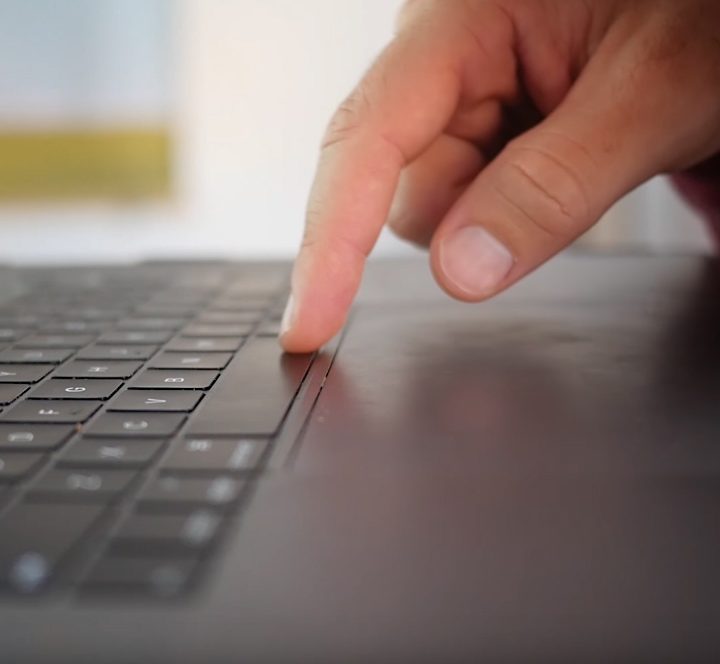
Apple first unleashed its “butterfly” keyboard on the world in 2015’s 12-inch MacBook, and the fact that it’s already on its third revision in a little over four years is not exactly encouraging. They’ve tried adding membranes and strengthening the mechanisms with different materials with every new release, but still the keyboards drop letters like a clumsy postman.
I had the joy of experiencing this firsthand when the “B” key stopped working on my work MacBook. The tranquil office air was pierced by my frenzied tapping as I attempted to spell ‘baboon’ or ‘flibbertigibbet’ without going mad. I have enough reasons to be angry (the economy, getting beaten by children at videos games, why I don’t have my own exotic menagerie, etc). I don’t need another, especially when you type for a living.
Why spend more?
A frequent topic that comes up in both casual conversations and online punditry is that you can get similar specs for less cash if you opt for a Windows laptop over a MacBook. One thing that always gets missed is that Apple’s portables last a lot longer than their Windows brethren — only 10% fail by the third year of ownership, according to Consumer Reports, around half that of Windows rivals.
My brother is still chugging along on a 2008 MacBook Pro, and it handles all his requirements — including high-end music production software — like a true champ. Meanwhile my old plastic-shelled Windows laptop from the same year died after a paltry 24 months.

In making its products so reliable, Apple has created something of a problem for itself. There’s just no need to upgrade to the latest and greatest unless you absolutely have to. It’s one reason the Cupertino giant is shifting towards services and relying less on selling phones: There are more than enough iPhones to go around.
A 2015 MacBook Pro has more than enough power for most people, and unless there’s a specific reason for you to get a newer model — the Core i9 processor, say — upgrading is not strictly necessary. My demanding workload of browsing cat videos in my pajamas does not require a Touch Bar.
With Apple saying MacOS Catalina will work on Macs all the way back to 2012, I’m not worried about being left behind any time soon, even though my MacBook is already four years old. Apple sticks by its older devices for a pretty long time, and even when I can’t get the latest OS, the MacBook will still be going strong.
Don’t get me wrong, I like the latest MacBooks. The build quality is superb, the trackpads are wonderful, and the software wipes the floor with Windows. But I can get all that — for a hell of a lot cheaper — in a 2015 model.
So, next time you’re considering a new MacBook, don’t forget the older generation. They may not be the newest, trendiest kids on the block, but they can type whatever you want without a hitch. Unfortunately, it’s a testament to the state of the current MacBook that being able to type reliably is a selling point.


