
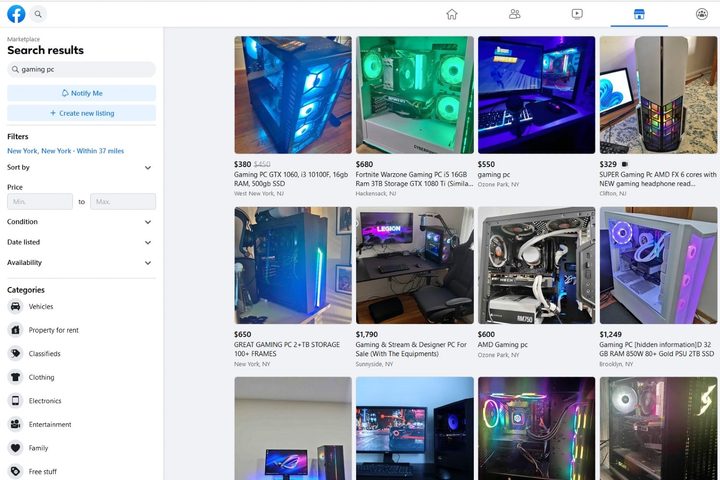
I moved to a new house a few weeks ago, and as part of the preparations I decided to sell a few old bits of tech that had been lying around unloved and unused in my old apartment. There was a MacBook Pro from 2015 and a gaming PC I built the year after, and the logical place to cash in on them seemed to be Facebook Marketplace. Big mistake.
Have you ever tried selling tech on Facebook Marketplace? Maybe an old forgotten phone, or a pair of underused headphones? If so, you might have had the same awful experience I did. If not, I’m advising you to stay well away.
Throughout the torrid process, I was constantly bombarded with obvious scam messages and harassed by people who wanted me to rush into a sale before I could do the proper checks. Finding genuine buyers was close to a fool’s errand, and the whole platform felt like it was utterly devoid of any kind of moderation or control.
Having spoken to friends and relatives who regularly use Facebook Marketplace, tech seems to be afflicted in a way that other item categories aren’t. If you’re trying to sell a few balls of yarn or some unneeded baby clothes, you’re unlikely to fall victim to these scams. But attempt to sell high-value gadgets and you’re in for a world of pain.
Scams galore
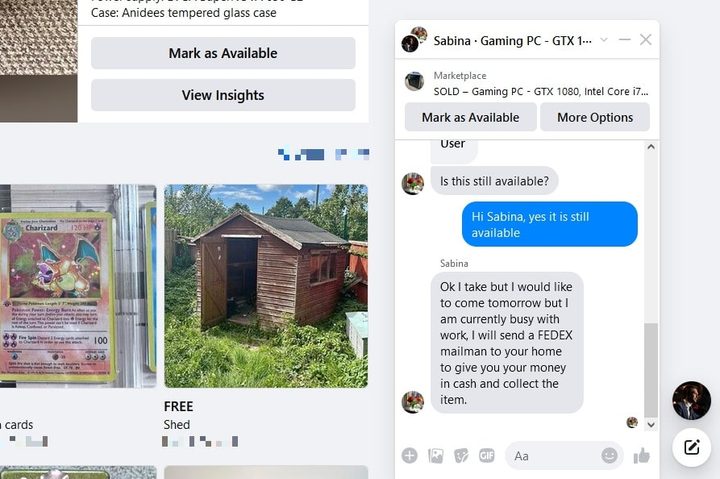
The PC I was trying to sell was built in 2016 but still performed admirably. Inside was an Intel Core i7-6700K CPU and an EVGA GTX 1080 graphics card, alongside 4.5TB of storage and 16GB of memory. It’s an excellent machine, albeit no longer a top-of-the-line gaming rig.
Since I was only about a week away from moving house when I listed the PC and wanted a quick sale, I priced it extremely competitively at 285 pounds (about $360). That was roughly 15 pounds ($20) less than the cheapest equivalent PC I found listed on the website. I didn’t mind losing a few bucks if it meant I could sell my tech in time.
Unfortunately, from the moment I uploaded the listing I was inundated with suspicious messages trying to get me to part with my PC for nothing in return.
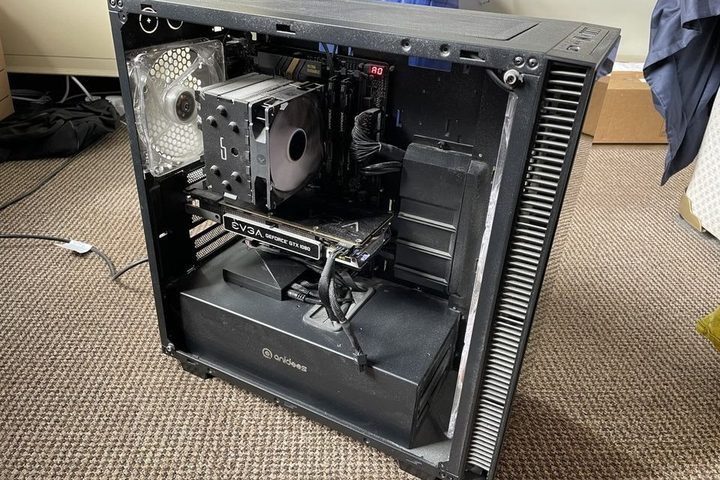
Right from the off, a pattern emerged from a network of similar accounts. Here’s one example, copied verbatim from the platform:
Scammer: Is this still available?
Me: Yes
Scammer: Ok I take but I would like to come today but I am currently busy with work, I would send a TNT postman to your home to give you your money in cash and pick up the item.
The messages from each swindler were word-for-word identical except for the courier company, which would vary. Each account shared a few key traits, such as an Eastern European name and a handful of photos (the message above was purportedly sent by an elderly lady, which I found doubtful). These similarities suggested an organized effort to steal account info, impersonate the victims, and then attempt to trick sellers using cookie-cutter messages.
Fortunately, it was fairly easy to spot these rip-offs once I knew the scammers’ blueprint. But the fact that the messages continued to flow in day after day showed it was all too easy for fraudsters to thrive on Facebook Marketplace. I knew what to look for, but I’ve no doubt many people will have been taken in and conned.
MacBook misery
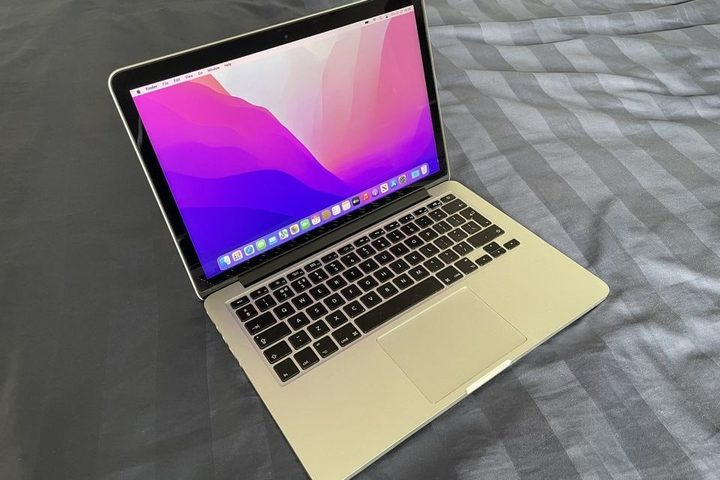
My troubles weren’t just limited to selling my PC. In fact, the very first message I got regarding the MacBook Pro — about two minutes after I listed it and before I’d even managed to finish setting up a paid boost — was (you guessed it) a scam. Only this one was markedly different from the ones I got concerning the PC.
The profile that messaged me — from a man supposedly named Peter — was private (in hindsight, a clear red flag). But they at least talked like a human, which was a refreshing change after days of formulaic scam messages. They quickly revealed their hand, however.
After agreeing to sell the laptop to what I thought was an actual, normal human being, they told me they had sent the payment. I waited and waited, but nothing arrived. I then checked my email, and quickly my disappointment became immeasurable and my day was ruined.

“ACCOUNT NEEDS TO BE UPGRADED,” the email blared at me. Despite purporting to be from PayPal, it originated from a Gmail account and claimed that “PERER” (sic) had sent me the required payment. However, there was apparently a “little problem” crediting my account because “your account is not a business account and this payment was made as a business payment which makes your account have limits.”
Continuing the broken English, it instructed me to ask the buyer to “send an additional payment of £300.00 GBP for your account to be fully expanded. Soon as this is done we will credit the total sum of 470.00 GBP.”
Sure, totally believable.
Peter (or should that be Perer?) attempted to convince me that this was completely normal and nothing to worry about, but by this point, I was wise to their antics and mostly just curious as to how they would try to spin this yarn. They claimed that they had done this before, which rang revealingly true, although not in the way they intended. I quickly blocked and reported them.
Stay away from Facebook Marketplace
In the end, I got two unbelievable strokes of luck: real people wanted to buy my tech. One of them was a college kid in need of a laptop. The other was my mom.
Yes, that means my mom is now the proud owner of a very capable gaming rig that’s far beyond anything she will ever need. But if it meant selling my old PC and not getting scammed in the process, I was happy for her to have it.
After this whole sorry saga, I’ve learned my lesson: I’m never going to sell tech on Facebook Marketplace again. It’s just too risky and too full of fraudsters and time-wasters to be even slightly worth it. All it gave me was a couple of sales that took far too much effort and a bunch of extra cortisol.
In the end, I got the best result by selling to someone I knew and cutting out Facebook Marketplace entirely. If you want to cash in your tech, chances are that’s your best bet too.


