  1. Home
  2. Computing
  3. News

A new Windows 11 hardware system requirement may be incoming

Add as a preferred source on Google
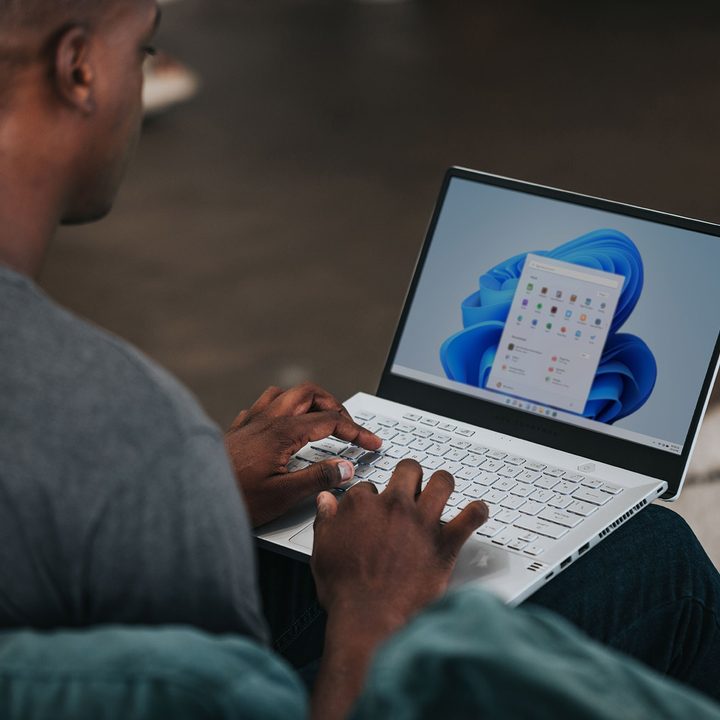
A man sits, using a laptop running the Windows 11 operating system.
Microsoft

Microsoft appears to finally be putting its foot down on how far back it’s willing to go when it comes to supporting older hardware. As of the upcoming Windows 11 24H2 build, Microsoft will require that your processor supports the POPCNT instruction. If you’re wondering what that is and whether this will affect you, you’re not alone.

This new addition was spotted by Bob Pony on X (formerly Twitter). According to the user, if the CPU doesn’t support the POPCNT instruction or it’s disabled, Windows won’t work at all. Multiple system files now require this instruction, starting with the Windows 11 kernel. Long story short — no POPCNT, no Windows 11 24H2.

Recommended Videos

But what even is this POPCNT instruction? It stands for “population count.” It’s a simple, but useful instruction that counts the number of set bits (ones) in a machine word. As software engineer Vaibhav Sagar explains: “For example (assuming 8-bit words for simplicity), popcount(00100110) is 3, and popcount(01100000) is 2.”

So HUGE discovery found in Windows 11 Version 24H2, since build 25905.
A CPU with the instruction "POPCNT" IS NOW REQUIRED!
There are various system files requiring the POPCNT CPU instruction, from the Windows 11 kernel to the USB XHCI drivers.

Without POPCNT, it doesn't boot! pic.twitter.com/vCWYvzfu6k

— Bob Pony (@TheBobPony) February 11, 2024

Suffice it to say, it’s really, really old — at least by computing standards. It was first introduced in the 1960s as a software solution, reportedly at the behest of the National Security Agency (NSA), as a tool to help decrypt messages. Much later, it became commonplace as a hardware solution in consumer CPUs in the early 2000s, starting with AMD’s Barcelona (Phenom II) processors and Intel’s Nehalem (the first Core series). Those launched in 2007 and 2008, respectively.

These days, POPCNT finds its uses in cryptography, data compression algorithms, bioinformatics, machine learning, and AI, among other things. It seems to be an important, albeit often overlooked instruction. Sagar also points out its usefulness in workloads such as running binary convolutional neural networks.

What’s the point of Microsoft suddenly making a 60-year-old instruction mandatory in its next Windows build? Tom’s Hardware points out that Microsoft might want to ensure that all Windows 11 PCs are capable of supporting binary neural networks.

The good news is that, unless your PC is pretty much ancient, this is nothing you need to worry about. In theory, the Windows 11 TPM 2.0 requirement already locks these computers out, as that is a much newer criterion to meet (although it can be bypassed). Enthusiasts who try to force newer operating systems onto outdated hardware may have a hard time getting past this one, though.

Microsoft might be determined to make AI PCs the norm and that’s that, with features such as auto upscaling said to be coming in the next big patch.

Monica J. White
Monica is a computing writer at Digital Trends, focusing on PC hardware. Since joining the team in 2021, Monica has written…
A Google Pixel laptop might be on its way, but does anyone actually want one?
A new Google laptop might be coming, and I hate to be the bearer of bad news, but the odds are not in its favor.
Google Pixelbook in silver.

It looks like a new member is joining the Pixel family, adding to its resurgent smartphone lineup. Code analysis of the latest Android beta points toward a new Pixel laptop that Google might be planning to launch in the near future. Google last launched a laptop, the Pixelbook Go, in 2019, an affordable version of the Pixelbook it put on the shelves back in 2017.

Both the Pixelbook and Pixelbook Go, along with the earlier Chromebook Pixel models, were not what you would call a smash hit with the audience or a runaway commercial success. Ultimately, they triggered Big G's departure from the laptop segment and a shift in focus toward Pixel smartphones.

Read more
AI is entering the Skynet debate moment in the social media hype circles
AI might end the world - but first, it’ll trend on social media
Representative Image

A growing wave of online voices warning about the dangers of artificial intelligence—often dubbed “AI doom influencers” - is reshaping how the public and policymakers view the technology. According to a report by The Washington Post, these influencers, including researchers, tech leaders, and content creators, are increasingly highlighting worst-case scenarios, from mass job loss to existential risks posed by advanced AI systems.

While critics argue that some of this messaging borders on alarmism, the conversation is no longer confined to speculation. Real-world developments in AI are beginning to mirror some of the concerns being raised, blurring the line between hype and legitimate risk.

Read more
You won’t believe it, but Motorola actually makes a terrific head-turner of a laptop
Motorola’s Moto Book 60 Pro is surprisingly stylish, and the pricing makes it even better
Moto Book 60 Pro in PANTONE Bronze Green

Motorola is not the name I expect to see on a genuinely good laptop. A stylish phone? Sure. A foldable with some personality? Absolutely. But a thin-and-light notebook that actually feels well judged on both design and value was a genuine surprise. And yet, the Moto Book 60 Pro is one of the more quietly impressive laptops in its segment.

With the broader laptop market being in a mess, Motorola's laptops feel refreshing. It is capable, attractive, and still approachable at a time when pricing elsewhere has become increasingly rough.

Read more