  1. Home
  2. Computing
  3. Legacy Archives

Meet the world’s thinnest and lightest laptop: Taiwan’s Inhon Blade 13 Carbon

Add as a preferred source on Google
Inhon-Blade-13-Carbon_f
Image used with permission by copyright holder

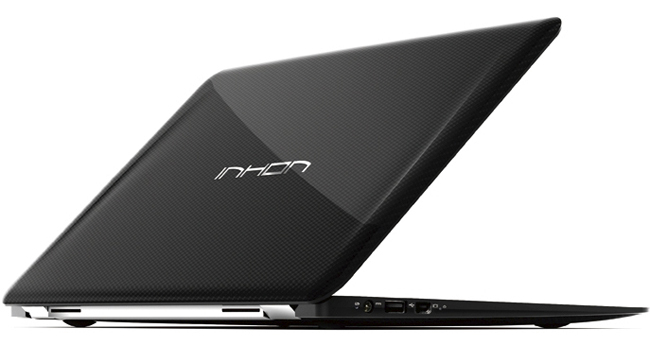
If given a choice between toting a chunky typewriter or a sleek Ultrabook in our bags all day, of course we’d go for the thinnest and lightest option available. As of late, this title firmly belongs to the Inhon Blade 13 Carbon that was unveiled in Taiwan last week.

At 10.7mm thick and 1.9 pounds, the Blade 13 Carbon is 7mm thinner and over a pound lighter than the 13-inch MacBook Air. Most importantly, it beats the previous lightweight champ, the 12.8mm-thick NEC Lavie X, by a 2.1mm. Inhon engineers studied the NEC Lavie X intensely to inform the design of the Blade 13 Carbon, according to Engadget Chinese.

Recommended Videos

The secret to the Inhon’s laptop’s incredibly light footprint lies in its choice of materials. While the laptop cover and bottom plate are made of carbon fiber (as its name suggests), the palm rest is made of magnesium alloy. Inside its all metal chassis is a full laptop with either a third-generation Intel Ivy Bridge Core i5-3337U or i7-3537U processor, 4GB RAM, a 13.3-inch 1080p HD display, a 128GB or 256GB solid-state drive, three USB ports (two are USB 3.0s), a Mini DisplayPort, a full-sized SD Card reader, and even NFC so you can easily connect to peripherals like headphones wirelessly.

If you don’t mind a little extra heft in your laptop, you could opt for the Blade 13 Carbon’s slightly chubbier brother, the Blade 13. Its body is made of fiberglass, which is why it weighs a healthy 2.6 pounds and is about as thick as the Lavie X at 12.6mm. According to Engadget Chinese, the Blade 13 is only available with a 1600-by-900 pixel display, the Core i5-3337U chip, and a 128GB SSD, but otherwise shares the same guts as its sibling.

Judging by Engadget’s photos, it looks like both Inhon laptops will run Windows 8. The sleeker Blade 13 Carbon will be available in Taiwan this June for $1,350, while the Blade 13 will retail for around $1,000 and will hit stores in May. Sadly, the Taiwanese company doesn’t have plans to bring either devices stateside yet.

Gloria Sin
Former Contributor
Gloria’s tech journey really began when she was studying user centered design in university, and developed a love for…
Intel Core 3 test shows it could give Windows laptops a fighting chance again MacBook Neo
Fresh PassMark scores suggest Wildcat Lake is closing the gap with Apple's A18 Pro.
Intel Core Series 3 Processors Featured

Apple's MacBook Neo has shaken up the budget laptop market with its $599 price tag and surprisingly capable A18 Pro chip. But if fresh benchmark numbers are anything to go by, Intel may finally have a worthy response. The company's upcoming Core 3 304 processor has surfaced on PassMark, and the results suggest that entry-level Windows laptops could soon be much more competitive.

Intel's Core 3 304 is closing the gap with Apple's A18 Pro

Read more
Hackers leak facial recognition records tied to millions of Madison Square Garden visitors
Facial Recognition Composite

Madison Square Garden has spent years using facial recognition technology to monitor who enters its venues. Now, that same surveillance system is at the center of what could become one of the year's most troubling privacy breaches.

The cybercrime group ShinyHunters has published a massive cache of data allegedly stolen from Madison Square Garden Entertainment after the company missed a ransom deadline. According to reports, the leak includes facial recognition records, customer information, internal security assessments, and other sensitive data tied to millions of visitors. While large-scale breaches have become depressingly common, this one feels different. Most data leaks involve passwords, email addresses, or financial information. This breach reportedly includes something far more personal: information connected to how people were monitored and identified in physical spaces.

Read more
Windows 11’s modern Media Player is somehow worse than the version from 17 years ago
The modern Media Player for Windows 11 is slower and heavier than the classic version
Windows 11 media player user interface

Microsoft has released a new Insider Preview update for the modern Windows 11 Media Player. However, the app is facing criticism after tests revealed it uses more memory and opens local video files more slowly than the classic 17-year-old Windows Media Player.

The update adds some useful fixes, including better captions, clearer codec errors, and improved file recognition. But the biggest complaints remain higher RAM usage and paid codec support for some common video formats. The update is not available to everyone yet. Media Player version 11.2605.14.0 has only arrived on Experimental Insider builds as part of Microsoft’s June 12 Insider Preview releases.

Read more