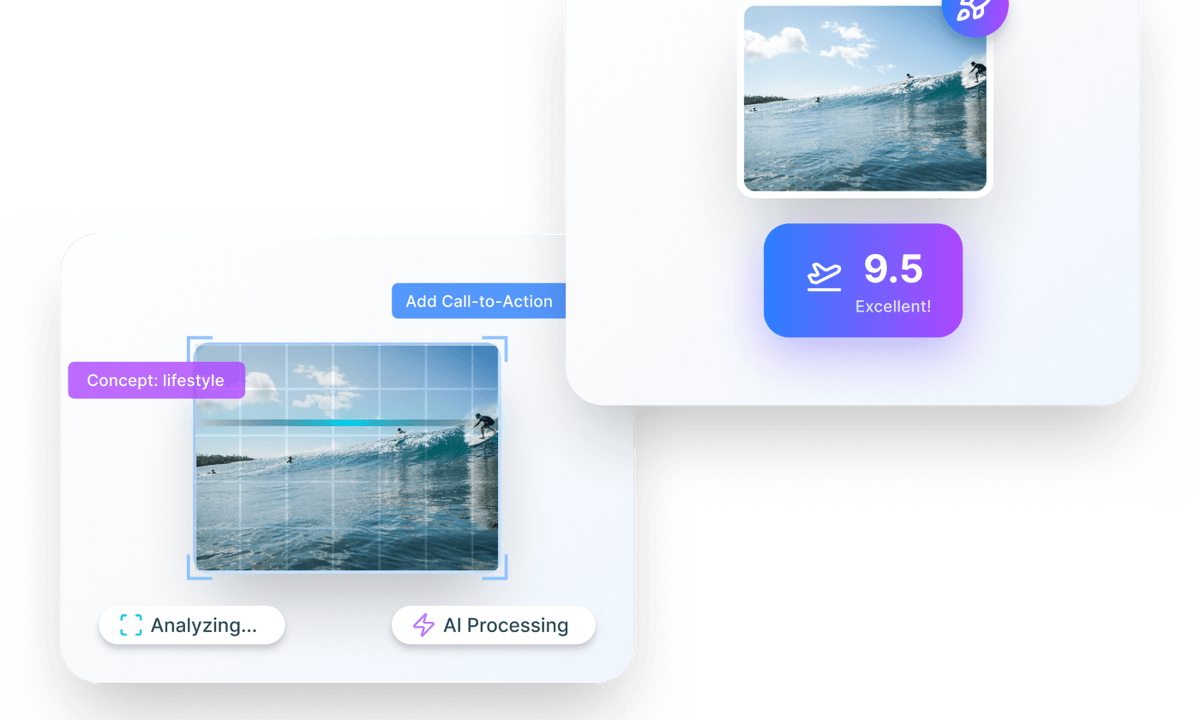
As video advertising output accelerates across platforms, a new challenge has emerged: volume alone no longer guarantees effectiveness. Brands are producing more content than ever, yet performance remains uneven – often because creative decisions are reviewed subjectively and far too late in the process. A growing class of AI-driven validation tools is attempting to change that by bringing predictive analysis earlier into the creative lifecycle.
Instead of relying solely on post-campaign metrics or human interpretation, these systems use machine learning to assess whether an ad is structurally sound before it goes live. The goal isn’t to replace creativity, but to give teams clearer, earlier signals about what works, what doesn’t, and why.
Why creative validation is becoming a tech priority
For many marketing teams, the bottleneck isn’t a lack of ideas – it’s a lack of confidence. Human review cycles are slow, subjective, and inconsistent. Meanwhile, performance feedback usually arrives only after media budgets have already been spent, meaning weak creative can slip through despite heavy investment.
AI-driven validation offers a different path. By analyzing large libraries of historical ads, these tools identify patterns linked to engagement, brand recall, and call-to-action clarity. The promise is consistency at scale – evaluating creative quality using the same criteria, every time, across formats and channels.
Merging production insight with media planning
A key trend is the integration of creative assessment directly into media planning workflows. Rather than treating production and distribution as separate stages, some platforms now evaluate creative readiness during planning itself, helping teams decide which assets are worth amplifying.
Alison.ai’s Preflight Plus tool exemplifies this approach. It runs automated checks based on Google’s ABCD framework – Attract, Brand, Connect, Direct – to determine whether a video ad meets foundational best practices. While not the only platform in this space, it reflects a broader shift toward validating creative structure before budget commitments are made.
How computer vision is transforming creative analysis
At a technical level, these systems rely heavily on computer vision, scanning video content frame by frame to identify elements such as logo visibility, pacing, facial presence, text overlays, and visual hierarchy. These signals are then quantified, enabling creatives to be scored and compared more precisely.
Alison.ai describes this as its “Creative Genome” – a model that breaks ads into discrete visual and conceptual components. Similar techniques are emerging across ad-tech, signaling a move toward more granular, data-driven creative decision-making.
Reducing bias and increasing alignment
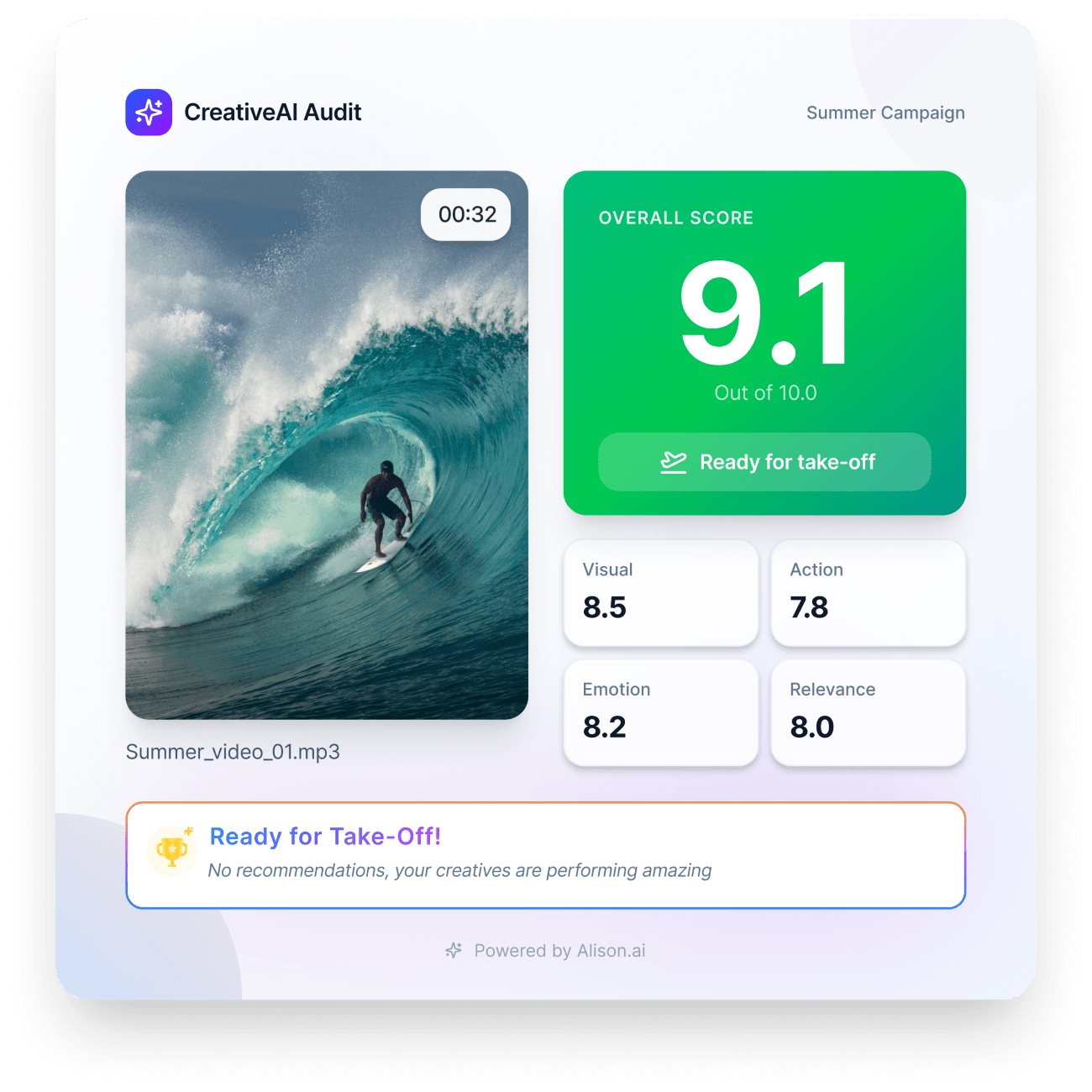
The practical benefit for marketing teams is alignment. Objective scoring helps bridge the long-standing divide between creative teams prioritizing storytelling and performance teams focused on measurable outcomes. Instead of debating subjective opinions, teams can work from shared data points that highlight where an ad may need refinement.
This shift also reduces dependence on multiple fragmented tools. When validation, feedback, and planning live inside a single workflow, teams spend less time navigating systems and more time improving the work itself.
Toward accountable AI in creative workflows
More broadly, this marks a push toward accountability in AI-assisted and AI-generated content. As generative tools speed up production, validation layers are becoming essential to ensure that increased output doesn’t come at the cost of effectiveness.
Preflight Plus – and tools like Alison.ai’s Agentic Video Ideation Flow – reflect an emerging creative model: AI that not only generates concepts but also evaluates whether those ideas are structurally prepared to perform. While implementation varies across platforms, the direction is clear – creative technology is moving upstream, closer to the moment decisions are made.
In a landscape where attention is expensive and mistakes are costly, early-stage creative intelligence may soon shift from competitive advantage to industry standard.