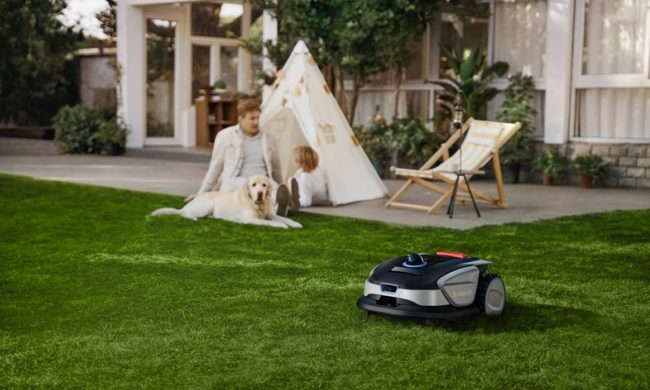
Robotics already has applications in many industries, from manufacturing to healthcare. That is to say, this futuristic technology has been deployed and proven its capabilities; what comes next is the socioeconomic response. In the same way that the early internet and smartphone technology were normalized in local and international culture, such a level of transformation may be seen in robotics.
The Shift From Novel to Normal
One might argue that the most important phase of any technology is when it becomes commonplace. Society has watched this shift with the rise of the internet, currently observes it with the propagation of artificial intelligence (AI), and may soon see the same from robotics, or “embodied AI.” When these systems move into industry and household spaces, it is not a signal of innovation, but of normalization. Conversely, it is at this point that a technology becomes truly disruptive.
Already, robotics companies like AGIBOT are announcing a shift from development toward the so-called “embodied AI deployment phase.” The new strategy of these institutions is to build systems for reliable real-world performance; for instance, AGIBOT’s architecture is already designed for locomotion, interaction, and manipulation. Each robot is intended for a different operational environment.

Infrastructure and Reorganization
Of course, deploying robotic solutions will require more than a decision; it will be necessary to develop data pipelines, maintenance environments, and software standards. Where cloud computing has enabled online AI technology, physical infrastructure must now meet the needs of embodied AI.
At the same time, this emerging infrastructure must challenge the narrative that “robots take jobs.” Instead of replacing employees, these machines ought to automate certain tasks, freeing up employees to handle the more nuanced aspects of their profession. This may also lead to the development of hybrid roles, such as robot supervisors or fleet managers; ultimately, the definition of “work” could change.
A Model of Access Over Ownership
Broadly, the global economy has been moving toward a system of subscription rather than a one-time purchase. While sentiments surrounding this shift vary widely, it is likely that this will lead to “robot-as-a-service” models instead of single robot purchases. This lowers the average barrier to robot access, but ultimately increases dependency on platforms; less than a new household appliance, robot access may be positioned as a long-term service or utility.

Reliability as the Key
Today, the technical challenge of robotics is no longer its capacity to complete a given task. Rather, the question is whether it can be done with safety and consistency at scale. Demos and active use have proven the applicability of these kinds of embodied AI, but reliability exists within a much larger timeframe. As such, the consequences of robotics technology becoming standard remain to be seen.
Taking a system-level view of embodied AI, one understands that robots do not operate in isolation; neither can the systems that support them. The result reframes what progress looks like within this space: it is a system that can be deployed, iterated, and scaled reliably. Upon adopting this approach, it is possible that the industry enters a phase where AI becomes readily, physically available.