All organizations seek to improve their bottom line. Unknown to many, this goal entails more than streamlining processes or cutting costs. It requires understanding the employees, the driving force behind a company’s success. Given this fact, leaders must focus on their needs, motivations, and challenges—a challenge especially evident in the information technology (IT) industry, where technical efficiency is typically prioritized over employees’ well-being. D.J. Eshelman, founder and president of Thrive-IT, has made it his mission to change how organizations support IT professionals, starting with leadership.
Decades of experience have made Eshelman a respected figure in the IT sector. He led high-stakes projects and mentored consultants at Citrix Consulting Services, giving him a rare perspective on workplace engagement. Here, he better understood what motivates IT professionals and the factors that encourage them to stay (or leave).
The industry expert also served as a solutions architect and director of technology, roles that enabled him to translate complex IT challenges into innovative strategies. His books Be A Citrix Hero and Just Do This were born from these experiences, capturing the lessons he learned about effective leadership and workforce empowerment.
Eshelman has seen the disparities in the landscape. One of the issues is how IT lags behind many sectors when it comes to embracing initiatives that improve work-life balance, mental health support, and professional development. Organizations assume that teams will be satisfied as long as they receive technical training. This narrow focus ignores that IT professionals are not mere problem solvers but individuals who deserve growth opportunities.
Another inequality Eshelman has witnessed stems from stereotypes of a standard IT employee. These outdated perceptions alienate underrepresented groups and create barriers to inclusion. In 2022, women made up only 25% of the tech workforce. The numbers are even lower for leadership positions. In addition, research shows that workplace culture is the primary reason employees leave tech jobs. What does this mean? The industry is losing talented individuals because they don’t feel welcomed, valued, or supported and not because they lack skills.
Eshelman states that leadership needs to shift its mindset. Many organizations hesitate to invest in their IT employees for fear that they’ll take their newfound knowledge elsewhere. Moreover, there’s the issue regarding the lack of succession planning in IT. Leaders fail to prepare their teams for long-term growth. This creates instability when key employees move on. “Employees are more invested in the company’s success when they see a path for advancement,” he supplies.
The strategist also warns against prioritizing artificial intelligence (AI) over human innovation. Many companies are allocating more resources to training AI models than to mentoring their employees. “If we continue this trend, we’ll end up with highly sophisticated technology but at the cost of a workforce that’s disengaged and stagnant,” Eshelman remarks. “If we want IT teams to stay, grow, and contribute at their highest level, they shouldn’t be treated like machines. The companies that thrive are the ones that invest in their people—not just their technology.”
Eshelman offers the CoachSulting Program for organizations that desire to succeed, based on the RiskLESS™ methodology from his book Just Do This. This initiative provides a structured, repeatable framework for developing IT leaders who can align technical execution with business objectives. It takes a hands-on approach to ensure that leaders understand their role and implement strategies that drive measurable business outcomes.
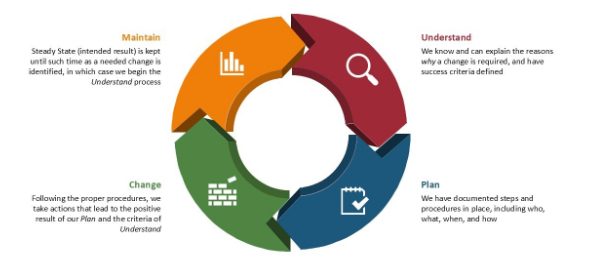
The innovative program is built on four interconnected pillars: Understand, Plan, Change, and Maintain. The first phase, Understand, involves defining the current state of leadership within an IT team. Many IT leaders are promoted based on their technical expertise but are unequipped to handle leadership responsibilities. Eshelman recalls his own experience of being promoted into leadership with little guidance, thrown into a position with a vague directive to “figure it out.” This phase, therefore, clarifies their role by identifying risks, business priorities, and areas of misalignment. Eshelman facilitates intensive discussions with upper management so that leaders are set up for success.
The program moves into the Plan phase once the core understanding is in place. Here, leaders transition from identifying challenges to creating a structured strategy for overcoming them. Each team lead works individually with Eshelman to develop a strategy tailored to their team dynamics, business objectives, and areas of personal growth. The coach states that a huge part of this phase entails shifting IT leaders’ mindsets from being the primary problem solvers to being effective facilitators.
“IT leaders are typically promoted because of their technical expertise. Many of them struggle with delegation, that’s why they take the bulk of the workload themselves instead of empowering their teams. It’s a lose-lose situation overall,” Eshelman explains. The coach introduces tools (e.g., a customized time management matrix) during this stage so leaders can learn to balance hands-on work with high-level strategic thinking. With these, they can prevent burnout and create a culture where team members are encouraged to step up and take ownership of projects.
The next phase is Change. Leaders take everything they’ve learned and begin implementing real, sustainable change within their teams. “This is the make-or-break moment for many leaders,” Eshelman adds. “The previous phases give them the knowledge and structure, but actual leadership transformation happens when they begin applying these insights consistently.”
The final and most important phase is Maintain. Through ongoing communication, support, and empowerment from Eshelman, the newly equipped IT leader is poised to truly transform the plan into a sustainable daily practice. “The most important part of any transformation is having a clear way to sustain the success that you have achieved throughout your training. Many a time I have noticed that insights are given and left in the conference room,” Eshelman states. “Many have expressed their frustration of the finality of their training, not feeling supported in maintaining their successes.”
The impact of Eshelman’s RiskLESS™ methodology is massive. Many companies that underwent the process reported improvement in leadership confidence, team productivity, and strategic execution. It’s worth noting that the motivation behind this work can’t be attributed only to Eshelman’s desire to improve leadership metrics. “Deep inside, I want to leave the world better than I found it,” he passionately shares.
D.J. Eshelman ensures that companies prioritize leadership development in IT through the four pillars of the CoachSulting Program. Doing so allows him to create a ripple effect, ensuring that leaders at all levels are empowered to catalyze impactful change.